By Dr. Trina Mackie, Associate Professor of Public Health at Touro University California
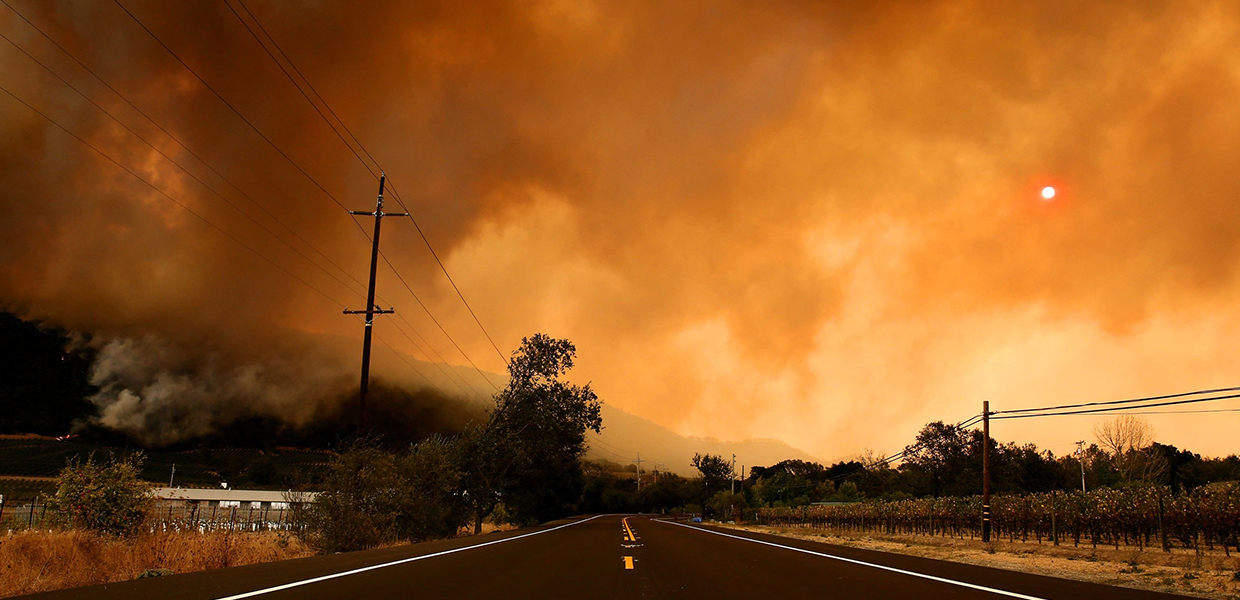
With the California wildfire season already taking an early start, climatologists anticipate that this year’s fire season may be among the worst on record. While difficult to pin to any one event, climate change is likely playing a part in the overall number, size, and timing of the recent fires. As these events become a new normal for our area, it is important to know what we can do to protect our health when air quality suddenly declines.
In the event of a fire in your area, smoke and particulate matter can severely impact outdoor air quality. After making sure that you are in a safe location, the first step is to reduce the time that you spend outdoors. Any outdoor exercise that would raise your breathing rate should especially be avoided. The next step is to prevent the hazardous outdoor air from moving indoors. Make sure that windows and doors are well sealed. Newer homes with central air conditioning can be set to re-circulate indoor air, but rolled towels around door and window frames can also serve as an extra protective boundary. If your home is not air conditioned and temperatures are high, it might be most appropriate to shelter inside the air-conditioned home of a friend or family member. Consider organizing in advance with your neighborhood or community to identify suitable cleaner air shelters.
Unhealthy chemicals can also reach air indoors from many sources. When staying sheltered indoors, it is important to keep indoor air pollutants to a minimum. Because pollutants often stick and settle in dust, it is important to keep your home clean with wet mopping and dusting. However, vacuuming is discouraged when air quality is poor as it can re-suspend the dust and particles unless the vacuum has a high-efficiency particulate air (HEPA) filter. These guidelines are not only important when the air quality is unsafe, but they can also improve indoor air conditions year-round.
Further preparation can be done by purchasing a HEPA filter air cleaner, which may make sense, particularly for those who are the most sensitive to poor air quality conditions such as children, seniors, and individuals with cardiovascular disease or asthma. If you are an at-risk individual, consider setting up a “clean room” in your home. Choose an interior room with few windows and doors that you can easily keep clean and equip with a portable air filter.
In summary:
- Stay indoors
- Reduce activity
- Reduce other sources of indoor air pollution
- Use air conditioners and filters
- Use room air cleaners
- Create a clean room at home
All of these steps should be taken before considering a special type of mask called a NIOSH N95 or P100 Particulate Respirator. Although they can be purchased at most hardware stores, these respirators need to fit properly to the face to work best. These masks must have two straps that both go around the head with clearly labeled NIOSH certification. These respirators are different from surgical masks and other one-strap paper masks which do not protect the wearer from harmful particles in smoke.
Despite the challenges and upsetting tragedies that come with each wildfire, there is much we can do as individuals to be better prepared for unsafe air conditions. Our local governments are collectively working to do more in urban management and land planning that can reduce fire hazard and wildfire risk going forward.