
[weaver_extra_menu menu=’featuresMenu’ style=’menu-horizontal’ width=’100%’ css=’menu-horizontal’]
 Drinking Sunshine
As grapes grow on the vine they both ripen and sweeten with each day under the gentle rays of the sun. Each winemaker fusses over the brix (the measure of the sugar content in the grapes) to determine the precise time they should be harvested to create their particular blend. Some are looking to harvest earlier so the residual sugars are not as high (the lower the sugar content the “drier” the wine) and some are looking to create a sweeter wine.
There are, of course, many factors that control how sweet a particular wine is when it is bottled—from the type of grape, the level of alcohol, the fermentation process, the aging method, etc. The sun, though, is critical. To make a truly delicious sweet wine, the grapes must ripen in the sun. The sugars need to build up in the grape and the water also has to leave it. The less water the greater concentration of sugars. The grapes then must sit on the vine as long as possible to achieve the highest level of sugars and sweetness. You can’t just add sugar at the end as you would a glass of Kool-Aid or tea. The sugars must develop naturally. Depending on the type of sweet wine you are making, a particular fungus, Botrytis Cinerea—which results from just the right amount of moisture from either rain or humidity—must also be present. If the weather is too rainy and/or humid the grapes will simply rot on the vine and be lost. The yellow jackets then become a problem as well, drawn by the sweet smell. If the conditions are perfect though and the sun warms them just right over the season and just the right amount of rain falls the grapes will achieve what is known as a “noble rot” and they will become incredibly sweet to the taste. Therein is the challenge: everything “must be just right” just as Goldilocks had professed.
One could say that winemaking is simply a science experiment and you would be right. Making wine is a science experiment and a tremendous amount of science goes into making a great wine. Making great wine though is also an art. Making a late harvest dessert wine takes a blend of science, art and a touch of luck. Making an awarding winning, late harvest wine year in and year out – now that is something akin to sorcery or black magic. How else could one explain making a superior late harvest wine year in and year out with all the variables that one must manage and be subjected to? Just as the classic song the “Candy Man” asks, “Who can make the sunshine?” That, my friend, is exactly what the late harvest wine maker is doing. He is not only making the sunshine but he is capturing it in a bottle and serving it up as a sumptuous treat – just like the fictional Candy Man.
So, I asked the question who then does that? Who makes a great late harvest wine year in and year out? Who is the “Candy Man” of the wine world? Who can make the sunshine with just a sprinkling of rain? Well, Dolce Winery, it seems, can. That was the answer I received back from my friends and family in the wine world. So, I paid them a visit to see if I could ascertain the secrets of their dark arts and how they are able to capture the sun in a bottle.
Dolce winery is part of Far Niente Winery and their sister winery Nickel & Nickel. I sat down with Greg Allen, their winemaker to learn how he uses a mere 20 acres of Semillon and Sauvignon Blanc grapes to produce this magical elixir each year. Ironically, Greg did not grow up yearning to be a wine maker. He was raised in San Diego and has a degree in mechanical engineering. He came to Northern California to work, not on grape harvesting equipment, but rather submarines at the Mare Island Naval Base in Vallejo. His small exposure to wine was nurtured there just south of one of the greatest wine growing regions in the world. As Mare Island wound down operation, Greg saw the writing on the wall about his life in Northern California and submarines. He started looking around for a new gig and he found one – in Cambridge, Massachusetts. Yes, as you might expect, he went back to school to earn a PhD in the well known field of biomechanical orthopedics – he started studying human cartilage. Well, as Greg puts it; “After awhile I just found that I was not really dreaming about a life in biomechanical orthopedics, I was dreaming about one in wine”. In a sudden about face he found himself in a short internship at Far Niente and I would like to say that the rest was history, but it wasn’t. Time in Australia working at a small family winery and in Switzerland again with the cartilage interceded for a bit before he confirmed to himself that wine was his true calling – though his mother and family were a bit dismayed at his overall decision making process. He started far down stem, so to speak, in the hierarchy of Far Niente upon his return but his background of science and clinical study served him well and he rose quickly to the position of Assistant Winemaker for Dolce and then the official “Winemaker”. Greg, of course, brought the science to winemaking but his love of wine showed that he was also a natural artist in the process.
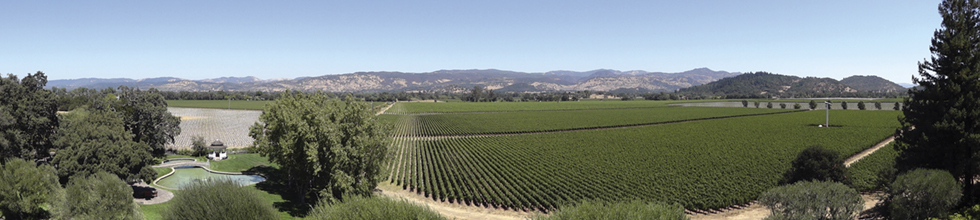
On to the grapes and how they grow them “just right” year in and year out. If you have ever been to a vineyard you know a tremendous amount of time and care is taken in how the vines are planted, trimmed and watered. They are protected from birds, bees and the frost. Lots and lots of time and energy goes into protecting and nurturing them. A lot of thought and science goes into improving quality and yield. At Dolce they have taken that science and reverse engineered it so they can consistently produce the Botrytis fungus, which all other vineyard managers are trying to avoid. They created special “T” trellis as an example so they would encourage overhang and shade on the grapes. They planted them where the evening fog would be particularly heavy and stay on the grapes later in the day. They also found that if the grape cluster hung too close together once the fungus started to form those grapes would rub against each other and it causes the skin to rupture and the grapes to develop a vinegar taste to them. They combat that by cutting a surprising 50% of their grape clusters off so they do not rub and the plant can focus its energy on fewer grapes – helping to make them even sweeter. This, of course, means they also have 50% fewer grapes to work with, further reducing their yields.
Typically most grape growers will harvest shortly after the grapes have fully ripened. Greg and his team wait until a few weeks after the first rain of the season – whenever that may be – to harvest so that the Botrytis fungus can take hold. This also means more time for the yellow jackets to find them. The yellow jackets will also rupture the skin when they bite into them as they steal the grapes’ sweet sugars. This, of course, has the same effect as rubbing and the grapes take on the same vinegar qualities. So they have to work on keeping those pesky yellow jackets at bay from the sweet smelling grapes which are calling to them like the mythical sirens called out to the ancient mariners. It’s no easy task to keep thousands of hungry predators away from their dinner.
The rain – when does that first sprinkle occur so that the Botrytis can take hold? You can often find Greg out in the vineyards come mid-September working on his Native American Rain Dance though, to date, he has not yet perfected it. So they wait and wait and sometimes wait some more. They watch the skies and the humidity, which can in some cases help to bring forth the Botrytis. They have harvested in mid-September and as late as early December. The biggest sin here is to harvest too early. If the brix is not high enough when the grapes are harvested there is not much they can do to make the grapes or the wine sweeter. So they wait and they test and they test again. As a carpenter would say; “measure twice and cut once.” They measure far more than twice and when they measure they take large samples from throughout the vineyard, further reducing their yield.
Once it is determined that the majority of the grapes have reached the pinnacle of sweetness and the order has been given to start the harvest, even then they must be careful. Each cluster is quickly scrutinized by the trained harvesters and only the best grapes are deposited into the crates. The rest fall back into the soil. The harvest therefore is far slower than with other grapes and far fewer make it to be processed. Once the first day’s grapes are brought back to the winery they are quickly squeezed and cooled. They are also tested once again to ensure the level of sugar is high enough. If the sugar level is not high enough the clusters must be scrutinized even more to get only the absolute sweetest grapes. If the sugars are higher than desired they can keep a few more of the grapes to balance out the sweeter ones. Each day of the harvest, juice is kept separate from the preceding days and will remain so until they perform the final blending prior to bottling. They keep them carefully separated not only so they can use them in varying quantities in the final product but just in case something goes wrong during fermentation or any other step and that batch might not be able to be used. This harvesting can take as long as six weeks to accomplish. Once harvested, juice then begins its fermentation process to produce alcohol and become wine. During the fermentation process (and this is true for all wines) yeast eats the sugars and produces alcohol as a byproduct. This is why the level of sugars the grapes have at the start is so critical. Too little sugar means the yeast will consume too much and the result will be a drier wine (dryness in wine means a lack of residual sugars) not the sweeter wine which, they are trying to create
Once the fermentation is stopped it enters new French oak which the wine will call home for the next five years. Each day’s harvest remains separated and carefully cataloged. The wine then is aged in the oak, taking on both flavor and color. The taste and sugars are measured, monitored and cataloged carefully so Greg can contemplate how much of each batch should be combined to achieve the flavor, aroma and taste he wants. As the time grows near for bottling, Greg carefully creates and tastes varying blends of each batch. As I sampled his 2006 creation I can fully attest that their careful steps have yielded a fabulous wine. It is not a heavy or syrupy concoction that one might expect from a “sweet” wine but rather one that is sweet but with a clean finish. I found wonderful flavors of fruits within the wine that I would describe as apricot with a touch of citrus. Flavors of honey and vanilla were also present in the wine. The wine coated my tongue and mouth with flavors without feeling heavy. It would be the perfect pair with créme brûlée, as the flavor of the wine does not have a heavy sweetness but rather a refreshing one. Dolce has been working on pairing wine with desserts and savory dishes as well. I definitely can see this working throughout the meal and not just at the end.
There then are “dark arts” that Dolce and Greg are practicing – hard work, patience and a whole lot of science. They hope that their incredible, uninterrupted streak of successful bottlings will continue unabated but Greg concedes there may be a year in which they do not have enough usable grapes to produce a vintage. In the interim he will continue to work on his rain dance and his careful process. Greg is also working on bringing two more acres online and, while I was there visiting with him, he received his newest toy – giant cement eggs. The eggs are actually hollow inside and will be used during the fermentation process this year for one or two batches to see if they improve the quality or flavor of the wine. I will have to make an appointment to check that out in 2017 when this year’s grapes go into the bottle and get back to you on that. In the meantime, cheers! Enjoy a little Dolce tonight for dessert and let Greg know what you think.
 Robert Briseño – When not chasing after his three little children he enjoys taking a moment to savor a nice glass of wine with his lovely wife.