By Nate Gartrell
In case the literal clouds of smoke that billowed up from San Francisco’s Hippy Hill last April 20th weren’t enough to tip you off, marijuana is now legal in California. And while some cities and counties have resisted the change, many others (especially around the Bay Area) are doing just the opposite, clearing the way for existing medical pot dispensaries to start selling to the recreational 21-and-up crowd.
Vallejo is certainly in the latter category; in February, the Vallejo City Council passed an ordinance that opened the city’s 11 dispensaries up to recreational sales. But if you thought that the emergence of recreational marijuana, however, was going to kill the black market, think again. Added taxes that came with the new legalization laws have led to grumblings among legal pot sellers about a decline in foot traffic since the New Year, and they think off-the-grid dealers are picking up that demand. Despite the challenges the industry faces, marijuana grow sites, dispensaries, and delivery services are popping up all over the state, and that shows no signs of stopping. At the same time, cannabis products that do not induce a “high,” like CBD oil, are gaining more acceptance among mainstream doctors and catching the eye of the country’s top medical researchers.
If there was anything surprising about California legalizing marijuana, it was that other states—Colorado, Washington, and Oregon—beat us to the punch. When voters turned down Prop. 19, the 2010 legal marijuana initiative, it ended a streak of California pioneering new liberal marijuana laws. In 1977, comedian Steve Martin joked to a crowd of San Franciscans that he wouldn’t want to be caught smoking marijuana out there, because “you might get a ticket for that.” Martin got laughs, but he wasn’t wrong; the year before, a state law came into effect that made possessing less than an ounce punishable by no more than a $100 fine. Twenty years later, California enacted the country’s first medical marijuana laws, which quickly became the butt of jokes around the nation and late night talk show hosts theorized what crazy medical maladies pot heads from the Golden State would concoct to get their weed cards. As it turned out, it didn’t take much; saying you suffer from chronic headaches sufficed just fine.
For a perspective from within the marijuana industry, we spoke with Maurice Solis, one of the operators of a Vallejo cannabis club called ReLeaf Alternative Healing, who told us that he entered the business with the same type of cynicism about the medical marijuana laws: that they were being abused by the overwhelming majority of “patients.” He reluctantly entered the cannabis industry after leaving a career he enjoyed, car sales, and he said at first his cynicism was confirmed right off the bat.
“The first dispensary I worked in was in San Jose in a part of town that was not good, not even a little bit,” Maurice recalls. “But as I started getting rare patients that did have a medical need, I would work with them and begin tracking their symptoms, figuring out what worked and what didn’t, and I started to get real joy out of that.”
As Maurice began to study up on medical cannabis, the dispensary began to change its product line, and his thinking began to transform as well. “As my business partner and I learned more about the medical benefits, different types of people started to see us and it totally changed our clientele,” Maurice said. “It made me a believer in the fact that cannabis can be a medicine and we wanted to expand on that.”
ReLeaf, Maurice and his co-founder, Ayn Nguyen, have the motto that “we wanted to be more medicinally-based and do as much research on it so we could help patients.” This includes partnering with neuroscientists for a research project through Stanford University, which has studied the benefits of dronabinol and other cannabis products to patients with epilepsy and autism.
“Our main focus is happiness,” Maurice said. “We are almost like the local corner store; we know our customers, we know our patients, we know when they’re going through tough times in their lives and when they’re going through great times. We’re very social and our main goal is to see them happy.”
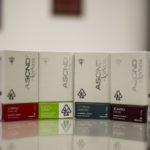
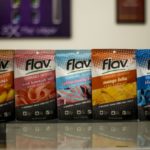
With legalization of marijuana for adults 21 and up, the market for recreational cannabis has been something analogous to wine tasting. There is an endless amount of indica and sativa strains, each with different densities, textures, and smells. Search across the Bay Area’s numerous dispensaries, and you’ll also find a wide range of cannabis oils and waxes, vaporizing pens, THC-laced snacks and candies, pills, pre-rolled cigarettes, joints, and even palm tree leaf cigars, not to mention a hard-to-find, semi-legal, pre-rolled marijuana cigar line named after one of Vallejo’s most famous rappers. There are even marijuana syrups that one can pour into a soda, juice, or drink straight up.
Nowadays, since co-founding ReLeaf, Maurice gives public talks on his transition and the future of medical and recreational marijuana, and he’s gotten involved in the community in ways that would have seemed unthinkable in the “Reefer Madness” era. ReLeaf has joined up with the Vallejo Chamber of Commerce and participates in community events, also making a point of opening its walls for local artists to hang their work.
“I don’t blame people for having those stigmas associated with cannabis,” Maurice said. “I came into the industry with a bias; and I know if I came into it like that, then other people are going to also. My job is to shed a better light on it and be a better example.”
“One of the most common things I hear is that it’s going to attract teenagers to start using marijuana, but statistics show there is no correlation between legalization and teen use,” he continued.
Another of the biggest misconceptions Maurice has heard, he said, is that marijuana dispensary owners are “all millionaires.” However, he said that is far from the case. “I would probably be making more if I stayed in the car industry,” he said. “But I don’t get that type of joy from helping people; it’s not the same when you’re selling a car compared to when someone comes in really sick and in tears, and for the next months you see them when they are coming in happy and relatively free.”
The City of Vallejo was unquestionably resistant to medical marijuana a few years ago, but Maurice said that times have changed over at City Hall, and with the passing of several ordinances that paved the way for cultivation and distribution within city limits, that seems to hold true. Of course, on a national level, there are growing concerns throughout the “weed legal” states that the US Justice Department might begin to pursue criminal prosecutions against growers and dispensary owners. In the Bay Area, the top prosecutor in the federal district that oversees the East Bay and San Francisco resigned shortly after the DOJ announced it was expanding the breadth of marijuana cases it would pursue. In California’s eastern federal district, where Vallejo sits, the top US Attorney is McGregor Scott, who led the 2006 prosecution of two dispensary owners in the Modesto area who were granted clemency under President Barack Obama. And while Californians have a lackadaisical attitude about marijuana, the federal penalties remain stiff. “It’s always something that you have in the back of your mind,” Maurice said, but he thinks cities throughout California would “go to bat” for dispensaries, which bring in lots of tax revenue.
“There are tons of things you can do with the plant itself,” Maurice said, citing the litany of known uses for the hemp plant, which doesn’t yield usable amounts of THC. “This is why we feel that the federal government has a big fight on their hands if they push against it.”
While marijuana does bring in tax revenue, the New Year also brought new pot taxes, which has opened the door for the black market to undercut legal marijuana businesses. There is also a well-documented surplus of marijuana statewide; weed grows like, well, a weed, and the state is producing more marijuana than Californians can smoke. As a result, dispensaries are pickier about what marijuana products they buy from distributors, and illicit growers are more tempted to transport their product across state lines. “A lot of folks who weren’t able to get a state license, they were sitting on millions of dollars worth of inventory,” Maurice said. “They’re not just going to leave it on the shelf.”
ReLeaf is open from 9 a.m. to 8 p.m. daily. It is located at 1 Benicia Road in Vallejo, with plans to expand into Monterey and Dixon. For additional information and for the daily menu, visit weedmaps.com/dispensaries/releaf-alternative-healing or releafalternative.org. Reach them at (707) 980-7868 or email them at releaf4life@gmail.com.
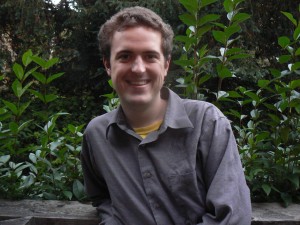
Nate Gartrell grew up in Benicia, studied journalism in college, and has written for a handful of media outlets since age 15. He aspires to visit all 30 Major League Baseball stadiums and to hit the trifecta at the horse track.

By Karen Paulk
Summer is here, and half the year has flown by. I am sure that a certain percentage of the population has started thinking about the holidays; and even scarier, some of you even have your holiday shopping started or done. Not me! I am still trying to figure out what happened to spring. Now that summer’s here, I want to appreciate the season. I want to celebrate summer with all the fresh produce and fruit the season brings. Our local farmers markets bring us all types of choices. With all these choices, we could talk about so many things, but I decided to stay with the subject I wrote about last issue, and that would be grilling. Not grilling protein, but the great side dishes you can create while your main course is also on the grill.
Grilling vegetables is so simple! The hardest part is prepping the vegetables, but the results are great. With grilling, the colors and the flavor of the vegetables seem to intensify when their sugars caramelize. The great part about grilling vegetables is it only takes 3 to 10 minutes, depending on the produce:
Onions: Grill 5 minutes on each side
Corn: 8 to 10 minutes
Eggplant (my personal favorite): 2 to 3 minutes on each side
Sweet Bell Peppers: 5 minutes skin side down then flip and grill for 2 minutes on the other side
Summer Squash: 2 minutes
Asparagus: 3 to 5 minutes
Portobellos: Grill sides up for 3 minutes, flip, and grill for additional 2 to 3 minutes.
Prep is easy: simply toss your vegetable of choice in a bowl with a little olive oil, garlic, and your choice of herbs, or you can do a simple marinade. You then grill and eat.
If you need a carb fix, just have some cooked pasta ready (cold or hot) and add it to your vegetables, and now you have a great side that takes no time at all to prepare.
Another interesting side is a grilled salad. Substantial and slightly bitter greens in the romaine and chicory families are perfect for the grill. Iceberg lettuce is also a great choice because its sturdy wedges grill up nicely. Radicchio has a bitter flavor, which marries well with a little smoke, and sweet, orange balsamic vinaigrette. Endive pairs well with an herbal dressing. Little gems work like romaine, but they are a bit sweeter.
Grilling your greens is both easy and fast. They absorb other flavors very easily, so a clean grill is a must. If you use charcoal, avoid lighter fluid, which can leave a chemical taste. You should have your dressing and toppings ready, as grilled salads are best served immediately.
A grilled Caesar salad is a very tasty choice. A grilled iceberg wedge with tomato, bacon, and blue cheese will also be a winner.
Another great choice for the summer grill is pizza. A wood-burning pizza oven would be a dream, but all you really need is a grill. At first, grilling dough was a little intimidating to me, but give it a try. You will be a pro once you grill or burn one or two pizza doughs (just a little practice is needed). You can make your own dough (which is very easy) or save a little time and buy pre-made pizza dough at the store. You should be able to find pre-made dough at almost every grocery store now.
You will want to start with a hot grill. Turn the heat on high for one side and the other as low as possible. If you’re using charcoal, get the coals white hot, and then brush them into a ring around the perimeter of the grill. You won’t need to invest in a pizza stone, but a pizza peel is very helpful.
First, roll out dough that best fits your grill. Fold the dough in half, lift it, place it on the coolest part of the grill, and unfold it so the whole crust is on the cool side. NOTE: there is no need to oil the grill.
Cover and wait about 3 minutes. Inspect to see if the dough has started to bubble on top. Once the bubbles appear on the top, carefully lift an edge with a spatula to check for grill marks (make sure they’re not too dark). Once you have the color you want, pick the dough up with a couple of spatulas. Have your peel readily dusted with cornmeal or flour, set the dough on the peel, raw side down. Away from the grill add your toppings. You can add the toppings over the grill, but that does take some skill not to burn yourself. Once you have placed your toppings, slide the dough back onto the grill (cool side) and close the lid. You will need about 10 minutes to finish the pizza to get nice grill marks, though not burnt. The toppings, sauce, and cheese are your call; however, I would recommend taking advantage of your grilled vegetables to also use as a topping.
Let’s not forget dessert. Grilled peaches with a nice balsamic reduction topped with vanilla ice cream would complete any meal.
Enjoy your summer days and stay out of the hot kitchen because before you know it, fall will be here.
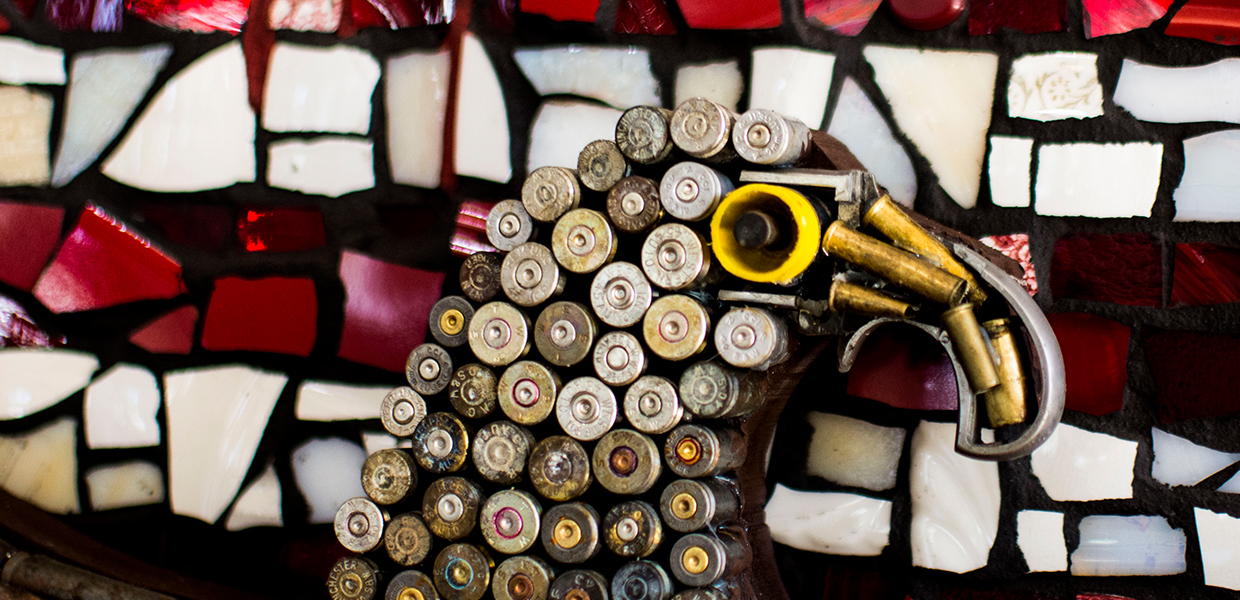
Art by Sherry Tobin
Safer Streets, The Robby Poblete Foundation takes a fresh approach toward reducing gun violence
By Matt Larson
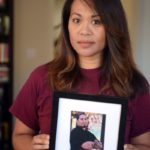
Robby Poblete was working for a biotech company, training to become a welder, and had dreams of opening up his own welding shop. On September 21, 2014, he was shot and killed in the city of Vallejo. The perpetrators used an illegal firearm that was later resold on the streets.
A single gun falling into the wrong hands has the potential to cause immeasurable harm. Are fewer guns the answer to reducing gun violence in America? That could certainly fix at least part of the problem, but Pati Navalta, Robby Poblete’s mother, considers why people resort to using guns in the first place.
“Even if you take the weapons away, it still doesn’t address the underlying cause of why people turn to violent crime,” she said. “Barring mental illness, a lot of it is because of desperation, and hopelessness, because someone doesn’t have access to a good job, or they didn’t get a good education … I just thought, if these four men who were arrested in my son’s case had just learned a job skill along the way, or if they were like my son and were on the verge of getting offered a great job, we could have avoided all of this.”
With a mission to reduce gun violence and increase opportunities in our communities, Pati created the Robby Poblete Foundation, a registered 501(c)(3) nonprofit organization. They have three distinct methods of approaching this issue: gun buybacks, The Art of Peace, and vocational awareness.
“Gun buybacks, to me, were low-hanging fruit and common sense,” Pati said. “The more research I did, the more I found that a lot of crimes are committed by illegal firearms, and firearms that are stolen from homes. Gun buybacks allow gun owners to get rid of firearms they no longer want, and get them out of circulation so that they can never fall into the wrong hands.”
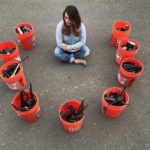
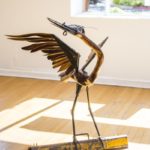
When she was researching how to recycle the guns they’d be bringing in, Pati discovered that they’re often sent to a weapons destruction company where they’re recycled or sold for scrap metal. “My son, at the time he was killed, was gathering a lot of scrap metal for the purpose of creating art,” she said. “I knew that Vallejo and Solano County as a whole has a burgeoning art community, and I know a lot of them work with metal. So I thought to repurpose these metals that were once used to harm people, and create art out of them. From that art, we could create a community discourse on the impacts of gun violence.”
Now on display at the Temple Art Lofts at 707 Marin Street in Vallejo, the Solano County Art of Peace exhibit was unveiled on May 11th, and it is currently open for public viewings on select dates and times through June 28th. To book a private showing for classes, groups, and organizations to come and discuss the impacts of gun violence among youth, young adults, and the community as a whole, email info@robbypobletefoundation.org.
Many high school graduates are often presented with only two options for how to guide their future, being told it’s either college or the military. As we all know, there are many respectable occupations that don’t require a college degree, but they don’t get nearly as much attention in the classroom. “That’s a real gap that I see in our education system,” Pati said. “I hope to fill that gap by letting them know that there is an alternative to college; there is an alternative to the military; and they are good-paying jobs.”
The Robby Poblete Foundation has partnered with local unions, workforce development agencies, and county offices to help educate students about their options for working in the skilled trades. “I think we have about seven apprenticeship centers in Solano County,” Pati said. “These apprenticeships pay you to learn. When we surveyed students throughout all districts in Solano County, most came back saying ‘I’ve never heard about these apprenticeships,’ and more than half of them said they were interested.”
With so many accomplishments already it’s hard to believe that the Robby Poblete Foundation is only just beginning its second year of operations. “When I created the foundation, I put in a three-year plan,” Pati said. The first year she planned to meet with community leaders and forge partnerships, the second year was to be the beginning of the gun buybacks and maybe the start of transforming collected weapons into art, and the third year was to be about the vocational aspect and possibly expanding their efforts to other counties. “What I didn’t expect was that it all happened within the span of 10 months,” she said. “All of it.”
Not only did they have a gun buyback event in Solano County, but Pati also was contacted by leaders of the City of Richmond who wanted to partner for a gun buyback event of their own, so they had one in Richmond as well. The Art of Peace (RPF’s program of turning guns into art) has inspired Alameda County to do the same, and they’ve already selected artists for their own Art of Peace exhibit. And the foundation has already co-sponsored or solely sponsored three career fairs, where hundreds of students have come to learn about the trades. They’ve even gone so far as to partner with the probation department in Solano County Superior Court to help ex-offenders learn about these vocational opportunities as well.
“Honestly, when we had our launch event and I was saying what we wanted to do, I was worried that by year two I wouldn’t be able to say that we delivered,” Pati said. “But we went beyond what we said we were going to do.”
The artists that create works for the Art of Peace do get stipends for their work, but people bringing in their guns for the buybacks aren’t offered cash in exchange. “The problem with giving cash is they could just go right back out and buy another gun with it, and that’s not what we want,” Pati said. “We give them gift cards, mostly from local businesses, so that the money goes back into Vallejo’s economy.”
To top off the list of major accomplishments for year one, the Robby Poblete Foundation has also received its first big grant. “Two days before our one-year anniversary I got a call from the California Wellness Foundation that we were approved for our request, and we got $150,000 for our first grant,” Pati exclaimed. And it’s an unrestricted fund, which means it can be used for the gun buybacks, the career fairs, paying their Art of Peace artists, anything. They still need sponsorships, but this will provide a nice cushion to ensure that they remain fully operational for the next three years.
After her son’s death, creating this foundation was the last thing on Pati’s mind. She had to get her emotions out, so she decided to write down what she was going through. “You see the headline when someone’s shot, but a lot of people don’t understand the effect that it has on that family when it’s over, and people aren’t coming anymore with their casseroles and their well wishes,” she explained. “What does it do to a family? And to a mother? And to a community? That’s the story that I set out to write.” Writing this story from her home in Cordelia is what led to her creating this foundation. A longtime Vallejo resident of more than 30 years, Pati couldn’t return there after her son’s death. “I just remembered driving toward tragedy, and driving toward that moment when I lost my son … But maybe, if I could create a foundation that could help the community, to help other parents avoid having to go through what I went through, maybe then I could return to the city if I know that I’m returning to something positive and not something tragic.” And that’s how the foundation was born.
A Better Place: A Memoir of Peace in the Face of Tragedy by Pati Navalta is being released nationally to time out with Gun Violence Awareness Day on June 2nd, available at Barnes & Noble, Amazon, and Target. The Robby Poblete Foundation’s second annual fundraiser, Phoenix Rising, will be held on June 30th from 6-10 p.m. at the Mare Island Brewing Company, 851 Waterfront Avenue on Mare Island in Vallejo. The event will be catered by League of Chefs and will feature a live auction where you’ll have a chance to bid on the artwork from their Art of Peace exhibit. Proceeds will benefit the Foundation’s three programs: gun buybacks, Art of Peace, and vocational. Tickets and sponsorships can be purchased at rpfphoenixrising.brownpapertickets.com and, at this writing, they are still looking for donations for their silent and live auctions. If you have donations, or any questions, please email info@robbypobletefoundation.com. To learn more about the Robby Poblete Foundation, and to learn how to donate your time or money toward helping reduce gun violence in our communities, please visit robbypobletefoundation.org.
-
-
-

-
Art by John Ton
-

-
Art by John Ton
-

-
Art by Nick Fullerton
-

-
Art by Tsungwei Moo
-

-
Art by Jean Cherie, Carmen Slack and Erin Bakke
-

-
Art By Karen Lewis
-

-
Art by Carmen Slack
-

-
Art by Sherry Tobin
-
-
Art by Joel Stockdill
-

-
Art by Jean Cherie
Larson is an actor/comedian/director from Vallejo who lives a double life between the Bay and LA. When he’s not writing for Local Happenings Magazine he could be editing a short film or working on his next rap album—who knows!
Keep up with all things Larson at: www.MarsLegstrong.com.

By Dr. Page Hersey, Assistant Professor and Program Chair of the Single Subject and Multiple Subject Programs at the Touro University California Graduate School of Education
No more pencils, no more books, no more teachers’ dirty looks! We can all remember the freedom of the long days of summer vacation. Students and teachers need a break from the classroom routine, and kids need time to play and explore. However, spending more than two months out of school can cause students to lose the gains they have worked so hard for during the past school year. The effect, called summer slide, means that some students will start next school year with lower achievement levels than they had at the beginning of summer break.
While the research is mixed on which students lose the most learning over the summer months, there is clear evidence that students can lose the equivalent of one to two months of instruction. These learning losses are bigger for math than reading and increase as students get older. However, the good news is that there are many ways to curb the summer slide effect and help students return to school ahead of where they ended the school year. Below are five ways to keep students learning over the summer months, while still having fun:
- Spark Curiosity and Set Goals: Involving kids in their own learning is one of the best ways to ensure they are engaged. Help children think about topics they are curious about. What would they like to learn about or learn to do? Learn to swim backstroke? Master those times tables? Set two to three goals for learning and make a plan for how to achieve them.
- Summer Programs: Choose a summer program that blends academic learning with hands-on or recreational activities. Through quality programs, students will be learning math and science, developing their vocabulary and cooperation skills, and having fun at the same time.
- Read: Set up daily time for kids to read material of their choice. Reading just six books over the summer can keep a struggling reader from regressing! Whether they choose comic books, chapter books, or magazines, reading high-interest material helps students maintain the progress they’ve made in reading. Take advantage of your local library to find new books and enroll in summer reading programs to earn prizes. And don’t forget to talk with children about what they read in order to develop reading comprehension skills.
- Everyday Learning: Turn everyday tasks into learning opportunities. Challenge kids to add up the cost of items at the grocery store. Involve them in planning and packing for trips, cooking a new recipe, or creating a summer schedule. All of these everyday activities develop a range of critical thinking skills.
- Local Learning: Solano and Napa counties have tons of free and low-cost attractions that can become learning opportunities. Check out Mare Island. Try a new fruit or vegetable at the farmer’s market. Check the Local Happenings Events page for more ideas.
The brain is a muscle that needs to be exercised to grow stronger. The more you involve children, tap their curiosity, and give them choices about their learning, the more engaged they will be in preventing summer learning loss. A little planning and creativity can make summer a time for learning and enrichment and set kids up to return to school on the right foot.
More Local Happenings for kids and families!
 First Am Napa is now closing deals beyond Napa’s borders by the name of Cal Land Title
By Matt Larson
Buying or selling a home is no easy task, and when it comes to the paperwork—particularly with title and escrow—there is zero room for error. The mission of First American Title Company of Napa is simple: to be the leading title and real estate settlement service provider in the Napa area and throughout the State of California.
After 55 years of trusted service in Napa, they’ve certainly accomplished their goal. Now, they’re taking things to the next level. Last year, for the first time ever, First American Title Company of Napa opened an office outside of Napa County, and it was a grand success. Located in Benicia and doing business as Cal Land Title, this location is their cornerstone office for venturing beyond Napa County, and into Marin, Solano, Sonoma, Mendocino, and wherever else the wind will take them.
Many of their clients have crossover work between Napa and Solano Counties, as well as in Sonoma, Marin and Mendocino Counties, and all over. So this addition is a very welcome expansion for their regular clientele. “We’re going to be able to tell those clients, who have become so comfortable using us over the past 5 decades, that we can now help them in all these counties,” said Owner and CEO Jonny Karpuk. “We’d like to carry our reputation and build on it throughout the rest of the North Bay.”
Karpuk’s grandfather was on the ground floor of starting First American Title Company of Napa in the mid 1960s, and became the sole owner a couple decades later. His three daughters assumed ownership of the company and his middle daughter, Andrea, ran it until 2013. That was when Karpuk purchased it from his aunts. His ownership began effective January 1, 2014.
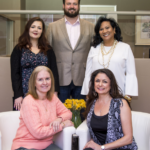
“We’ve been tremendously successful over the past four years,” he said. “We’ve seen our market share increase by orders of magnitude: from just over 40% in 2014 to 47/48% last year in Napa County.” And now that they’ve started Cal Land Title in Benicia, exponential growth is on the horizon. Karpuk is very proud of what their Benicia location has accomplished in their first year. “Christina, Tessie, Tricia, and Dayana are all first rate, and incredible teammates,” he said. “We’re lucky to have them as a part of our family.”
For some specifics on their reputation, Karpuk said, “We are regarded as the preeminent title insurance company in Napa County, and our market share speaks to that.” He explains how your average title company is often part of a big box corporate conglomerate, so it’s nice to be able to have easy access to whomever you need to talk to if something comes up. “They’ve got direct access to me,” he said. “We have the ability to make decisions, and to help people right here on the grounds. We don’t have to go down to Santa Ana or off to Sacramento; if they come up, we can resolve title issues right here, directly.”
Being locally owned is a huge part of the culture at both First American Title Company of Napa and Cal Land Title. Not only is it good for the client to have 55 years of local expertise, but the community as a whole benefits as well, as unlike some of those larger conglomerates that offshore many of their jobs, Karpuk makes sure to keep everything close to home. “As a locally owned, family business, we’re employing people who are also part of our local community,” he said. They currently have about 40 employees, who each support at least one to two family members of their own. “So, probably more than 100 people are dependent on this company for the income it provides to their families. That’s a significant contribution that we’re making to the community in terms of employment.”
Closing people’s transactions via title and escrow services are what First American Title Company of Napa and Cal Land Title are most often asked to do, but Karpuk and his team look at it a little differently. “We like to say that we’re providing peace of mind,” he explained. “Homes are the largest investment most people will have in their lives. You want to know that your money’s in good hands, and you want the peace of mind that it’s being handled well.” First American Title Company of Napa has the proven track record to keep your mind at ease throughout the entire closing transaction process, and that extends directly to Cal Land Title as well.
A key element to the success of First American Title Company of Napa over the years has been the positive culture of their company as a whole. “I feel, personally, like my job is to keep us committed to being the best place to work,” said Karpuk. “Being a family-owned business, we really try to connect with our staff, and welcome their families into our company … title and escrow is really hard work and a lot of our staff has to spend big chunks of time committed to their desk, so we are incredibly grateful to the families of our staff that support them and help them to be successful.”
At this writing, Karpuk was looking forward to a companywide town hall meeting where all the staff gets together to just hang out with pizza and beer. Always looking for ways to bring the employees together, First American Title Company of Napa recently helped build a house for Habitat for Humanity in February of this year. “It was an awesome family/team experience,” said Karpuk. “Sometimes there are people you work with, but they’re at a totally opposite end of the assembly line, so it gave us an opportunity to collaborate and work together in new ways.”
They’re also big financial supporters of Napa’s Salvation Army, as well as a nonprofit called Warrior Rising, which is not a local nonprofit, but they are active locally. “Their mission is to help veteran-owned small businesses through membership, partnership, and funding,” said Karpuk. “I’m a big believer in that cause.” Karpuk, a married father of five, is a decorated Army veteran. He served in Korea, Iraq and Afghanistan, received two bronze stars for service in combat, and is a veteran of both the Iraq and Afghanistan wars. And his grandfather, who helped start the company, served in World War II with the Navy, so First American Title Company of Napa and Cal Land Title are locally owned, family owned, and veteran owned as well.
Realtors, consumers, and lenders alike have all relied on First American Title Company of Napa for all their title and escrow needs. With offices in St. Helena, three locations in Napa, and now in Benicia as Cal Land Title, call their Solano office today at (707) 361-5760 or visit Cal-Land.com. “We’re the most trusted provider,” said Karpuk. “At the end of the day, when you’re talking about something as significant as a real estate purchase—you want to be dealing with the most trusted provider.”
 Larson is an actor/comedian/director from Vallejo who lives a double life between the Bay and LA. When he’s not writing for Local Happenings Magazine he could be editing a short film or working on his next rap album—who knows!
Keep up with all things Larson at www.MarsLegstrong.com.”
 Sparkly Ragz is a luxury consignment and artisan boutique with an eclectic twist
By Matt Larson
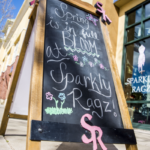
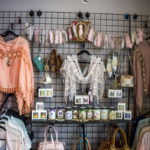
Whatever comes to mind when you think of a consignment shop, nothing can prepare you for the pleasant surprises you’ll encounter when visiting Sparkly Ragz in Suisun City. They specialize in luxury consignment, are extremely selective on what they bring in, and because of their high turnover rate and 60-day product expiration, the store is constantly evolving.
“If you pop in once a month, once every two weeks, even once a week, it’ll look different to you,” said Co-Owner and Store Manager Salina Conse. “Anything that we take into the store has to be cute and current,” she said. “It needs to be in good condition and purchased within the last three years.”
Louis Vuitton, Gucci, Chanel, Prada, Valentino, Christian Dior, Burberry—if those brands have always been on your bucket list but just out of reach of your wallet, you may very well find that deal of a lifetime when visiting Sparkly Ragz. Every Tuesday night they take in new consigners from 5-8 p.m. “I’m very selective,” said Conse. “We’re only 500 square feet, so anything I take is what I see being the trend and what works for my clientele.” Please note, Sparkly Ragz does not do vintage, and it is not a thrift store.
Chances are pretty good that Sparkly Ragz will carry something you like and, more importantly, something that fits. “Really anyone can shop with us,” said Conse, who’s helped customers from as young as six, to as wise as 98 years old. “We carry sizes extra small up to 3x; prices start at $6 and can go up to the hundreds and thousands.” She’s done her research with other consignment stores in the bay, so she’s confident that when you make a purchase at Sparkly Rags, you’re getting a very fair price. “I do have to say, we have the best prices in the Bay Area.” Even if you find something you love but it’s still a bit too expensive, check their website to read about their layaway options.
Sparkly Ragz is the kind of place where being a regular customer truly has its benefits. Conse will gladly cater as best she can to specific requests, and she will also try and source a certain product for her regular customers by reaching out to her consignment base. She has a comprehensive customer list and can keep specific notes for each of them.
“Let’s say I get a Louis Vuitton bag,” she explained. “All I have to do is go to my customer list, type in Louis Vuitton, and there’ll be a list of 40-100 ladies looking for Louis Vuitton.” If the bag happens to be the specific style that a customer was looking for, then they’ll get a phone call right away. “One of the Louis Vuitton bags I had in the store sold, literally, within one minute,” she said. “I had a Chanel bag at the beginning of this month, brand new with tags, and couldn’t even get it out on the floor before it was gone. It is very good to be a regular with me!”
Certain shoppers won’t buy a thing unless Conse picks it out for them, and she does a lot of personal shopping for her clients as well. Sometimes, if she gets a new item that she knows would be perfect for a particular customer, she’ll give them a call for first dibs before she even puts it on the shelf.
A great way to get involved with the Sparkly Ragz community is to follow them on Facebook. They also have a Facebook group (search “Sparkly Ragz VIP Group”) which you should join right away. “I do live videos on there, I show all the inventory, new arrivals, do special sales, and you can make purchases right then and there!” said Conse. They also ship nationally, with regular customers on the East coast and the Midwest, so if you want to share this awesome place with your distant friends and family, you can!
On the second Thursday of every month, from 6-9 p.m., Sparkly Ragz invites you to their Girls’ Night Out event where the entire store is on sale. They’ll also serve champagne, feature small bites from a local restaurant, do a raffle, and just have a great time. They can also take that whole event to you; “We’ll bring it to your home!” said Conse. “If you want to have a small gathering of girls (anywhere from three to nine guests) we can bring a small selection from the store to your home and do a home party that way.” For more details on that please refer to their website.
In addition to carrying women’s clothing, shoes, handbags and accessories, Sparkly Ragz partners with more than 65 local artisans throughout the Bay Area—mostly from Suisun City, Fairfield, Vallejo, Walnut Creek, San Francisco, Vacaville, and Benicia. They provide handmade jewelry, soy candles, bath products, gift cards and more. “So on top of partnership with the community, helping them clean out their closets, local artisans can also consign with the store,” said Conse. They don’t buyout anything, it’s all consigned. So shopping at Sparkly Ragz is truly shopping local; in fact, it’s next-level local, as you’re supporting a pretty vast community of local artisans and consignors all at once. Also, it’s a family-owned business, as the other co-owner is Salina’s mother, and best friend, Holly.
If the store is open, Salina will be there, as she’s really the only employee. With that being the case, she emphasizes “ish” hours, as sometimes the store will open 15 minutes late, or will close 15 minutes early, because life. If you’re running late and want to catch them before they close, you might want to give them a call first. In most cases they’ll even stay open a little later just for you! Located in Suisun Harbor Square at 700 Main St., Suite 114 in Suisun City, they’re open Tuesdays from 11ish to 8ish, Wed-Fri from 11ish-5ish, Saturdays from noonish to 4ish, closed on Sundays and Mondays. Visit their website at sparklyragz.com, call them at (707) 426-4303, follow them on Instagram and Pinterest, and don’t forget to join their Facebook group! They’re the only “Sparkly Ragz” in the world, so they should be easy to find.
 Larson is an actor/comedian/director from Vallejo who lives a double life between the Bay and LA. When he’s not writing for Local Happenings Magazine he could be editing a short film or working on his next rap album—who knows!
Keep up with all things Larson at www.MarsLegstrong.com.”

By Richard Riemer, DO, Senior Associate Dean of the College of Osteopathic Medicine at Touro University California
You may think that the current epidemic of drug addiction in the United States is limited to adults. After all, whether it’s addiction to cigarettes, alcohol, gambling or drugs, cultural norms hold these to be the moral failings of our older population. But scientific research has confirmed that addiction is a brain disorder and that immature and developing brains are especially vulnerable to the unhealthy effects of these drugs. Complex interactions between the two “B’s”, your biology and biography, contribute to your personal risk of addiction, including your genetic makeup, where you were raised, exposure to physical or psychological trauma, even your family structure. Since our brains do not fully mature until age 25, it would make sense that a young person’s brain is most vulnerable to the ravages of these drugs.
Brain maturation does not occur to all parts of the brain at a uniform pace and at the same time. The last portion of the brain to mature is called the prefrontal cortex, located just behind your forehead, and it is a one of the key actors that plays a role in substance abuse and addiction. Science first dismissed the prefrontal cortex as silent or insignificant. But on September 13, 1848 at 4:30 pm in Cavendish, Vermont, a 25-year-old railroad foreman named Phineas Gage was severely injured in a construction site explosion which launched a 3.5-foot iron rod through his head. This tamping iron damaged his frontal lobes, and miraculously, Phineas still walked away from the work site. Soon after the accident he seemed completely healthy. But friends who knew him noticed a big change in his personality. While there were no overt signs of brain damage, friends who knew him best recognized a big change in his personality. No longer patient and agreeable, he was impulsive, moody, restless, obstinate and childish. He disregarded advice which conflicted with his own personal desires. In fact, Phineas manifested behaviors which we often observe in an addicted personality, such as the inability to make decisions in their best interest and carry through on plans, as well as the inability to control cravings.
Illicit drugs in vulnerable populations are the equivalent of a chemical tamponing rod. They cause brain destruction and rewiring of formerly healthy brain circuits. Just like Phineas, the addict has difficulty sustaining attention, concentrating, reasoning, and solving problems. He also loses the daily struggle to resist urges to pursue and use drugs despite knowing their unhealthy consequences.
Our observations prove the point that immature brains are at risk. Consider that substance use often starts during adolescents. Approximately 7.9% of adolescents or 2.0 million adolescents aged 12 to 17 in 2016 were current users of illicit drugs according to the National Survey on Drug Use and Health (2017). It would then make sense that strategies that foster brain health and healthy brain maturation will reduce risk for substance abuse and addictive disorders.
So how do we personally curb the stem of illicit drug use, particularly in our most vulnerable populations? Interventions introduced as early as the prenatal period and throughout the brain’s developmental years may prevent many of these risks according to the National Institute on Drug Abuse’s Principles of Substance Abuse Prevention in Early Childhood. Early intervention can increase protective factors and reduce risk, have positive long-term effects, increase physical health, and even reinforce positive behaviors in the social environments where children interact like home and school. Themes of healthy nutrition during infancy and toddlerhood, a nurturing parent, a supportive and sensitive home, school and community environments, school readiness, and maternal avoidance of smoking, excessive alcohol use, illicit drug-use and prescription drug abuse, all reduce the risk to our children. Mental illnesses that affect our youth such as anxiety disorders or impulse-control disorders also increase the risk for drug abuse. Deploying these strategies and practices in our homes, communities and schools will stem the tide on the opioid epidemic and in particular, reduce the risk to the most vulnerable in our society, our children.
Learn more by visiting www.drugabuse.gov.
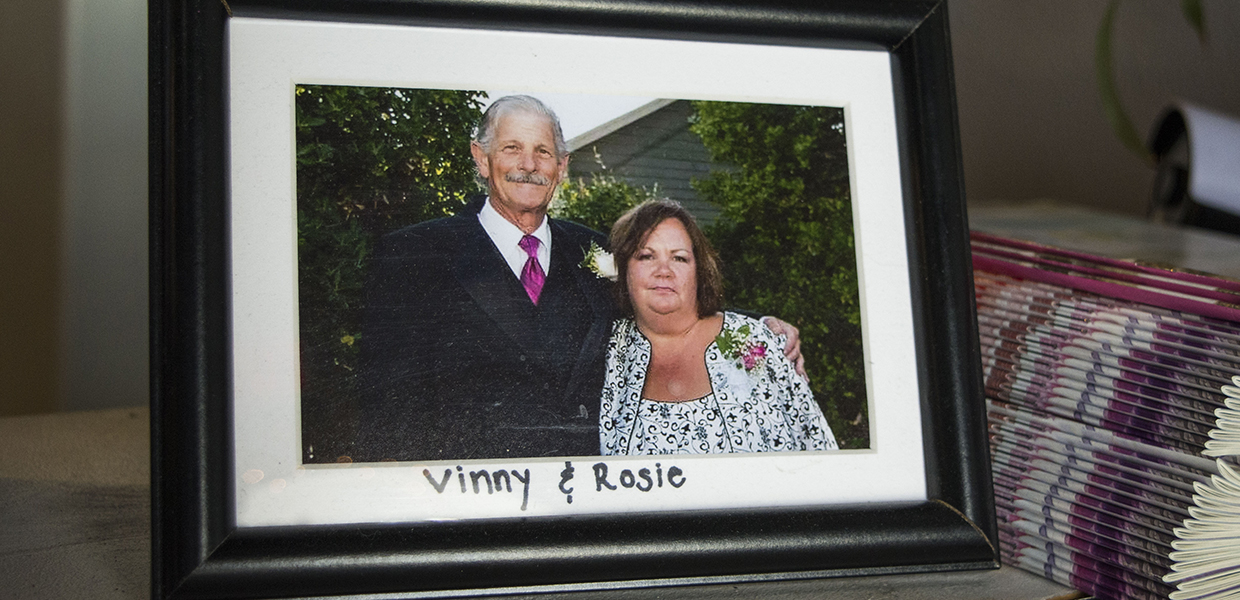 Vinny & Rosie’s in Suisun City may be your newest go-to American restaurant
By Matt Larson
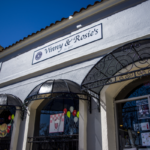
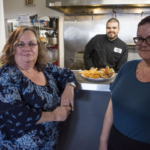
Opening a restaurant is a dream many of us have, but few of us ever achieve. Every new restaurant you see probably has a long story behind it of how it finally came to be, and Vinny & Rosie’s in Suisun City is no exception. Owner Roy Salvemini had the restaurant dream for years. When the opportunity presented itself to finally do it, he took the chance and went for it. They’ve been open since September 1, 2017, and they’ve since been making waves throughout Solano County and beyond as being known for some of the best burgers around. So what makes them so good?
“They’re quality,” said Salvemini. “100 percent ground sirloin; no fat filler. Probably the most expensive burger you can get on the market, but we don’t charge that for it.” We all know how expensive restaurants can be; it’s just the way it is. But now that Salvemini has his own place he’s made a point to offer the fairest prices that he can for his customers. “I wanted to keep our prices reasonable,” he said. “Customers are getting something good for what they’re paying for. It’s what I enjoy most about having the restaurant at this point.”
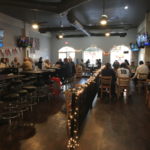
Providing more than just burgers, Vinny & Rosie’s specialize in American fare. Fan favorites, aside from the burgers, include their pulled pork, and tri-tip sandwiches. A big part of opening the restaurant was that Salvemini wanted to share the wealth of his mother’s cooking with his greater Suisun City community. Named after his father, Vinny, and his mother, Rosie, this restaurant exists truly in their honor. Salvemini grew up going to football, baseball, and basketball games with his father, so he installed a bunch of TVs to give the restaurant a sports theme. And the menu is heavily inspired by his mother’s cooking, some of which are her actual recipes. So with the sports theme from his father, and much of the menu from his mother, Vinny & Rosie’s is a pretty fitting name for this restaurant.
“A lot of our menu items are homemade recipes, based on my mom’s cooking,” said Salvemini. The meatballs, potato salad, macaroni salad, meatloaf, pulled pork, stuffed mushrooms, and marinated shrimp for their shrimp skewers are all prepared according to Rosie’s specifications. Salvemini’s favorite menu item is the potato salad; it’s something he grew up with, so it’s close to his heart. But the burgers are really their calling card these days.
“It’s hard not to get the burger because it’s so good!” he said. “It’s the first thing you think about when you go there. Honestly, it’s something that most places can’t really compete with.” They provide plenty of variety with their burgers, like the Jalapeño Jack (pepper jack, bacon, jalapeños, lettuce, tomatoes, guacamole), the Pineapple Teriyaki (pineapple, teriyaki sauce, lettuce, tomatoes, jalapeños, mayo), and, their most popular, the Great Western (cheddar, bacon, onion rings, barbecue sauce). You can also build your own.
“We also have a burger called the Ultimate Western,” Salvemini said. “It’s on the menu, but people get a little nervous to try it.” That could be because not only is it a half-pound burger with cheddar, bacon, onion rings and barbecue sauce, but it’s also topped off with a couple slices of tri-tip steak. “People have been very happy after they eat that one,” he said. “I’ve actually had a guy walk up to my cook and just handed him money after he was done, saying it was the best burger he’s ever had. I’ve never seen that happen before, it was pretty cool.”
Something else that you don’t see happen too often, is that on Mondays here at Vinny & Rosie’s, kids eat for free! As long as they’re with an adult purchasing a meal, your child is welcome to join at no extra cost. So if you’re having a “case of the Mondays,” Vinny & Rosie’s could certainly brighten your day.
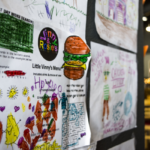
Vinny & Rosie’s isn’t like your average restaurant. They just had their first “Chow Down Comedy Show” in March, they have regular trivia nights every Tuesday (at this writing) which have been pretty popular, and they also offer monthly paint nights.
“We’ve done [a paint night] once a month since we’ve been open,” said Salvemini. “We have a regular paint night, and then we have a ‘Mom & Me’ one—those are super popular.” Both paint nights you’ll have an instructor, and a provided canvas, paint, and brush for you to follow along with the class. At the Mom & Me paint night your child gets a smaller canvas, so they can also participate, and if it’s on a Monday, yes, your child eats for free. At the regular paint nights your ticket also gets you an appetizer and a drink (beer, wine, or well … or soda).
Salvemini always looks for special event opportunities, like having corned beef and cabbage for St. Patrick’s Day. They’re also preparing themselves for Mother’s Day and Fourth of July, both of which are very popular events in downtown Suisun City.
Vinny & Rosie’s is also connected to Jack’s Pub, and they work together to share their menus with customers on both sides. “We serve food into the bar, and you can order their drinks from our restaurant,” said Salvemini. “It’s all one in the same, you can walk in between, go back and forth, and sit in the bar and order food if you don’t want the restaurant experience.”
Active in his local community, one of the greatest perks with starting this restaurant for Salvemini has been being able to support local community organizations by providing catering for their fundraisers. They’ve already catered events for the Crystal Music Boosters, Holy Spirit School, Armijo Water Polo, and they’re sponsoring a fundraiser for the Suisun American Little League. Salvemini’s currently president of the Armijo music boosters. He’s been involved with these types of organizations throughout his kids’ childhood, who are now in high school, and he knows how much these programs need help. “One of the best things about this restaurant is being able to help other people out when we can,” he said. “If you want to do a fundraiser, let us know.”
Open every day but Wednesday, come check out this great new restaurant, and give these burgers a try! They’re located at 603 Main St., Suisun City. Call them at (707) 803-5404 or visit vinnyandrosies.com. To keep up with all their local happenings, follow them at facebook.com/VinnyandRosies.
 Larson is an actor/comedian/director from Vallejo who lives a double life between the Bay and LA. When he’s not writing for Local Happenings Magazine he could be editing a short film or working on his next rap album—who knows!
Keep up with all things Larson at www.MarsLegstrong.com.”