Is Touro University California (TUC) just that place over on Mare Island, or will your next checkup be in the hands of one of the university’s many alumni? Did you receive a consultation on your medications from one of TUC’s doctors of pharmacy? Maybe your child has been impacted by a teacher who received a credential or master’s degree at TUC, or your community has been significantly improved thanks to the efforts of the school’s alumni in public health. Enriched by the mosaic of those who have walked through its halls, TUC is a school that’s deeply rooted in history and its longstanding commitment of service to others.
TUC began on August 18, 1997 in San Francisco as the Touro College of Osteopathic Medicine, where it first shared classes with a podiatry school. In 1999, the osteopathic medical school moved to the spacious and historic Mare Island. Home to the first permanent Navy installation on the West Coast, Mare Island had served as the area’s center for Naval interests and shipbuilding from 1854 until the base closed in 1996. TUC restored and repurposed the base’s old buildings into classrooms and facilities that have been bustling with students since.
Today, the fearless spirit of these historic buildings is alive with a renewed sense of heritage. Home to Mare Island Base Hospital, a National Historic Landmark that was constructed in 1899 on the foundation of an even older Navy hospital, Mare Island has a long history of providing medical care to military service people. The base also housed one of the Navy’s premier prosthetic design facilities, which is now a TUC research facility.
With more than 1,500 students, the university is organized into three colleges: the College of Osteopathic Medicine, the College of Pharmacy, and the College of Education and Health Sciences. The TUC learning experience is student-centered, enriched by research and scholarship, and driven to prepare professionals for rewarding lives in service to others both locally and around the globe.
Concerned for the health of local communities, TUC students collectively volunteer more than 22,000 hours of work each year. Students from all three colleges volunteer at the Student-Run Free Clinic, located at the Norman C. King Community Center, to provide services such as health screenings, osteopathic manipulative treatment, and diabetes prevention to low-income families in Vallejo. The clinic was founded in 2010 with a grant from Target, and its presence continues to help keep the center active.
“We wanted to increase access to healthcare, especially in South Vallejo, which was identified as an area in need,” said Student-Run Free Clinic co-founder Joy Dugan, MPH, PA-C.
This summer, TUC will be celebrating 20 years in education. On September 17th, TUC’s 20th Anniversary Gala will be held in the Farragut Inn Ballroom, the former Officer’s Club of Mare Island. Guests from the community and university will come to honor TUC’s tradition of bringing education and healthcare together to produce medical care providers, pharmacists, public health practitioners, and educators who are eager and equipped to impact the lives of those in need. Information on ticket sales will soon be available at tu.edu.
In celebrating its 20 years of serving, leading, and teaching, TUC is focused on its future for the next 20 to come.
We are well into 2017 now and on the second quarter of the year. We trust all of you are sticking faithfully to your New Year’s resolution … and if not there’s always 2018! The rain has certainly been a factor this season, and we hope that all our readers have come through this rainy season without any damage from flooding. We love the water, just not when it’s knee deep in the kitchen.
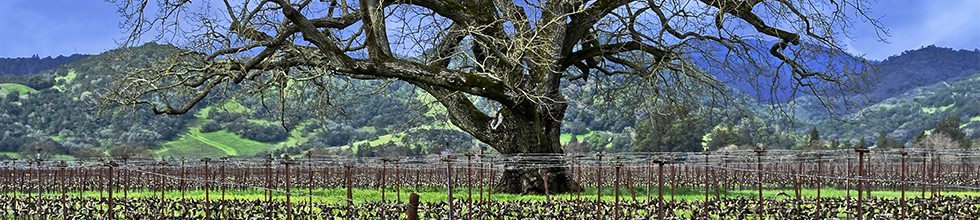
The abundant amount of rain has made for a wonderful wildflower season. Make sure to take a hike or two before the season ends to take in all their beauty. Keep in mind that the extra vegetation also means a higher risk of fires in the summertime, so stay vigilant and safe.
We know the political scene has stayed active this year—and will probably remain so. The best way to handle it, we have found, is to ignore all the news and hype that is going to stay constant and to just get out and enjoy yourself. With daylight savings in place and warmer days ahead, there is plenty of time to enjoy the outdoors with so many things to do. Our calendar has more and more great events in it since we partnered with CitySpark to help us highlight all there is to do in this wonderful area that we call home. It’s now even easier to narrow down the choices based on where you live and what you want to do. The best part is that you can do it while you’re out with your smartphone.
April is a busy birthday month for us over here at Local Happenings Magazine. We celebrate our father’s birthday (we: Deanna & Robert, we are brother and sister as well as business partners and creators of this “Happening” publication) as well as Deanna’s, and Robert’s eldest son, Ramon’s, all in April! To our friends and family, Happy Birthday! Which includes, but isn’t limited to: Jackson, Debbie, Lindsay, Judy, Bonnie, John, Eric, Ronda, Juanita, Dennis, Shawn, Donna, Greg, Stacey, Dave, Carol, Sherri, George, Jim, Adam, Jimmie, David, Norman, Leeann, JD, Michael, Dan, Mike, Leonard, Amber, Benny, Steve, Joey, Tom, Scott, Renee, Kelly, Leah, Cathy, Jonathan, John, Leanne, Russ, Colleen, Leslie, Kathy, Wanda, Kim, Jeanne, Miguel, LaGuan, Marc and all the rest of you wonderful people out there that make our community so amazing. We hope each of you has a fabulous birthday and great year!!
Until next issue, cheers!

Robert Briseño
& Deanna Troupe
Editor’s Note: Yes, a name change for Deanna after her February nuptials – enjoy some pictures of the very casual event in the calendar section!
Nice and Slow
By Chef K. Marie Paulk
This winter has been a cold and rainy one. While we waited patiently for March 20th, when spring bloomed, what did we do in the kitchen? Some of us, during this cold rainy time, tend to put on our winter coats and sweaters and sink into some yummy comfort food to enjoy by the fire. This is the time to braise, make stews, soups, a savory pie and cook with one of my favorites (and perhaps yours)—the slow cooker AKA the Crock-Pot. Except for savory pies, you can cook pretty much all of them in your slow cooker. In one of my favorite cooking magazines, Fine Cooking, I’ve read that 80% of households in the United Stated own one. Did you pull it out this winter? Don’t depair, we might have hit spring but I believe we still have some more cold and rainy days to come.
I personally have never tried this, but I know this technique is in my future. An all-time favorite meal of mine is spaghetti and meatballs. Just think, after a hard day’s work you can come home to a great meal with very little work. Cooking the spaghetti should take a mere 11 to 14 minutes. The meatballs should be tender and tasty after slow cooking in the sauce for several hours.
In making your meatballs you should use a good grind. I personally prefer a mixture of both ground beef and spicy sausage. For your herbs, you should use dried herbs in a slow cooker, their concentrated flavors and aromas bloom in the cooker’s high-moisture environment. Fresh rosemary is pretty much the only herb that can stand up in a slow cooker. Just remember, dried herbs have a shelf life of about one year. This time of year, it might also be a good idea to refresh your dried herbs; remember that they do not last forever. Once you have your meatball mixture thoroughly mixed you should chill it for about 30 minutes, so it will make it easier to roll the meatballs. When rolling, just remember to have cold water nearby to wet your hands before rolling each meatball. Roll the meat lightly between the palms of your hands so that it holds together but is not too firmly compacted. A little trick to use for these as well is an ice cream scoop for your meatballs — use the kind with the thumb trigger, which will help release the meatballs as you scoop them. Not only is it easier, but you get much more uniform meatballs.
For your marinara sauce, you can make this in advance and store it in the freezer until you are ready; make sure to defrost it in the refrigerator at least a day in advance. Once the sauce is in, you can place your meatballs in the sauce, cover and cook for three to four hours on high, or eight hours on low. The meatballs may still be a little pink in the center, even when cooked through. If you are in doubt just use your thermometer and insert into the center of a meatball, if you get 160° or higher you are ready to eat.
Some other useful tips for the slow cooker:
- Don’t overfill the cooker. Half to two-thirds full is best so moist air can circulate.
- When in doubt, over-season, but don’t over-salt. Always under-salt. As I said earlier, dried herbs bloom, but salt gets intense.
- Lift the lid as little as possible, as newer models re-stabilize the internal temperature more quickly than older models. Only lift it up if you think there is a problem. This is also true for stirring. Stir only if the recipe calls for that. The less action the better.
- If you’re going to use frozen ingredients, either defrost before use or be prepared for them to slow your cooking time.
- If you have a ceramic insert, treat it with care. Abrupt temperature changes may cause it to crack. When ready to serve, set the hot insert on a towel or trivet instead of directly on the counter.
- You can even cook chicken wings or ribs in your cooker. Once they are done cooking you can crisp them up in your broiler.
The whole time I have been writing this, I have also been thinking about potpies. Potpies, or shepherd’s pies, are just great in the winter. I also don’t know too many people who can resist a meal where the main dish has a crust. One of my favorite dishes is short ribs. There is nothing better than a short rib falling off the bone with a good glass of cabernet. I think a good combination for the Crock-Pot is a short rib potpie. This would be good for a Sunday when you have extra time. Even better would be two days ahead in your Crock-Pot, then all you would need to do is make the crust when you have a little more time but don’t want to be in the kitchen all day. You could also make your crust ahead of time. It will hold for a couple of days in your refrigerator. If you want to try this just remember the short ribs should be dry and seared before you start the process. Once they are browned, take them out of your Crock-Pot and make your sauce. This dish is normally made in a Dutch oven and kept at 375° for three to four hours. If you are going to do this, though, remember the tip about keeping the lid closed.
Well, that’s it! For now, stay warm, and enjoy this cooler-than -normal spring. Hey, food for thought—I didn’t even talk about soups in your Crock-Pot!

5 Things We Can All Do to Maximize the Quality of Life for Individuals with Autism Spectrum Disorder
April is National Autism Awareness Month. Autism Spectrum Disorder (ASD) is a lifelong neurological disorder that can impair communication and social interactions, and often includes repetitive behaviors and/or focused interests. This month is dedicated to increasing the inclusive practices, self-determination skills, and awareness of ASD to ensure all individuals are able to achieve the highest quality of life.
Youth, families, educators, community-based organizations, and government-supported agencies are dedicated to supporting individuals with ASD in becoming productive members of society. Specific needs change over time, however, five factors we can all do that make a difference in the lives of individuals with ASD include: 1) learning about the individual, 2) supporting parents and families, 3) understanding positive behavior supports, 4) teaching self-determination skills, and 5) providing opportunities and access to the community.
All individuals can learn. In fact, in schools and communities, a child’s potential is often affected by the ability of the people around them to respond appropriately to the child’s uniqueness. We can all learn about the strengths, preferences, interests, and needs of all children. Parents are knowledgeable about their child and are often willing to share about how their child experiences the world; we just need to take the time to ask, listen, and adapt our responses to support their children.
Children with ASD who are identified early and provided with interventions in verbal and nonverbal communication and social interactions benefit from the training, especially when families are educated as well. These families’ schedules are often very full due to multiple appointments for services, in addition to providing consistent supports for their child. There are many ways we can all give these families support, including offering flexibility and understanding for the stress of juggling additional duties as they support their child’s development.
Positive behavior supports are an effective research-based approach to behavior management for individuals with ASD. The alternative, punishment, has been shown to be ineffective in the long run and may even cause increased aggressive behavior. Parents, educators, and support personnel who provide on-going support and feedback to individuals with ASD work hard to plan effective behavior support systems that are clear, consistent, simple, and on-going. Working with families and support persons, we can all adhere to the routines and structures established for our youth with ASD.
Children who are able to shape their own outcomes in life are more successful as adults. By explicitly teaching self-determination skills such as self-awareness, self-advocacy, decision-making, and problem solving, we can increase positive post-secondary outcomes and encourage a better quality of life for all children. Effective ways of teaching self-determination skills include patiently providing opportunities for the youth to learn more about themselves and how they work best within various settings. Role playing to practice talking with others about their strengths, preferences, interests, and needs is effective for learning about self-awareness and self-advocacy. Youth with ASD may struggle with problem solving or decision-making. We can all help children generate multiple solutions, allow additional time for processing, narrow down the options available, talk out our process aloud, and use visual cues to support individuals with ASD in becoming active participants in the community.
Finally, by increasing opportunities and access to the community by welcoming all individuals to participate in local events, we can support inclusion for all. We can be thoughtful in our use of language by using specific words to express our expectations while gently guiding all children and adults in socially acceptable norms. Additionally, we can work to not take things an individual with ASD says or does personally, thereby, understanding their differences in communication. We can provide employment and volunteer opportunities to aid individuals with ASD in learning workforce skills.
Making small changes, such as the five factors mentioned in this article, can have a large impact on individuals with ASD and their families. Within and beyond this month, we can all work at increasing the inclusive practices, self-determination skills, and awareness of ASD to benefit the quality of life for all members of our communities.
By Rebekka Jez, PhD,
Assistant Professor of Special Education
Touro University California
Graduate School of Education

Shaken But Not Toppled
Most Bay Area residents probably don’t think about the South Napa earthquake of August 2014 often, but the owners of several wineries definitely still do. While the quake only lasted seconds, it was enough to cause millions of dollars in damage to some of Napa’s most historical structures that have taken years to repair. In particular, one winery—which was among those hardest hit—is celebrating its triumphant return in early May.
If you were in Solano, Sonoma, or Napa counties in the summer of 2014, you probably remember a loud rumble jolting you awake one early August morning. As Californians, earthquakes have become an accepted part of living, but this particular quake was pretty memorable.
While most recent Bay Area quakes have generally been weak, this quake packed a punch. I remember it well. I was fast asleep, probably having a wonderful dream, and then in the next second I was wide awake wondering why my home’s foundation had turned to spaghetti. I knew what was happening before I could comprehend it in words. My fiancé, who’s a bit of a night owl, came rushing in from the other room. Our German shepherd started freaking out. Then it was over. After establishing that I was still alive, I nodded off about two minutes later, despite the chorus of howling dogs that had begun throughout the neighborhood. And, that’s more or less how it went for most Bay Area residents.
Experts say the quake lasted about 20 seconds, and it was the strongest one that the Bay Area had felt since the infamous 1989 Loma Prieta earthquake, which brought down the Bay Bridge, killed 63 people, injured more than 3,700, and postponed the World Series; however, unlike the Loma Prieta, the 2014 quake’s strongest reverberations were felt in the Napa Valley.
In the Napa Valley, things were a lot more intense. The quake critically injured three people—including a boy who had a chimney fall on top of him—while others showed up to medical centers with scrapes and bruises. Homes caught fire and power lines ruptured, but nobody died.
Weeks after, as the dust settled, folks began to realize the quake had taken its toll on not only its beloved vineyards and wineries, but also Napa’s historical structures. Much of Napa’s downtown, built in the 1800s, was badly damaged or destroyed. Roads were cracked, and that’s not all: the quake revealed that many wineries weren’t keeping their bottles in earthquake-proof storage. Thousands of bottles of some of the world’s finest reds and whites were smashed to pieces (take a minute right now to try and visualize what that might have looked like). After people reported the damage, news reports surfaced, saying many wineries had not been insured for earthquakes.
That’s where the Trefethen Winery enters our story. Originally founded by a Scottish sea captain in 1886—just 21 years after the end of the Civil War—the winery thrived for decades, until the Prohibition era. Back then, it was known as the Eshcol Winery.
When the Prohibition era began, the Eshcol Winery tried to limp through on selling sacramental wines. Obviously this market is a lot smaller than the wine connoisseur market, so things started to deteriorate. When Prohibition ended, the damage had already been done. When a Kaiser executive named Eugene Trefethen and his wife Catherine moved to purchase the winery and vineyard in 1968, the family says the winery’s headquarters, “had fallen into serious disrepair.”
Eugene and Catherine’s plan was to grow grapes and sell them, but they hadn’t counted on their son, John. While studying business at Stanford, he decided to start doing a little winemaking on the side. Before long, John and his wife, Janet Trefethen, produced their own batches with the family name on them. They’re still running the winery and vineyard to this day.
Their varietals include a 2015 Dry Riesling which, according to the Trefethens, “Captivates with aromas of orange blossom and lime zest. Fresh and flavorful, the wine is fermented in stainless steel to preserve varietal character.”
Another is the Cabernet Sauvignon, described as having a “beautiful nose, featuring aromas of blackberry, red currant, and dried fruit. The palate is round and luxurious with earthy/herbal tones and well-integrated oak.” However, they’ve hit a few bumps in the road, both metaphorically and literally. In August 2014, the Trefethens arrived at their winery, and it was immediately clear something wasn’t right. While the building, named a historical landmark in 1988, had survived past quakes, this one hit too close to home.
Here’s essentially what happened: the first floor of the winery and tasting room stayed put while the second floor shifted four feet west. Obviously, this wasn’t going to fly too well with the local inspectors, and it was abundantly clear the winery would have to be shut down.
“You could imagine seeing it through the reflection of a mirror in a fun house. It was surreal,” Janet Trefethen said. The Trefethen family, however, didn’t let that get them down because they were feet-pressing grapes three days later. They also soon started the painstaking process of renovating the winery, which by the end will have lasted about 20 months.
So how do you reset a building when the second floor gets a mind of its own? In this case, it first required caging the building in as a safety measure, and trying to then pull the second floor back by installing large cables to—slowly but surely—tug it into place. They expected it to move at a rate of about one inch per day, taking about seven weeks. Instead, it only took seven days before they secured the second floor back to its old resting spot. From there, they installed a steel moment frame, rebuilt walls, and made other improvements. By Fall 2016, the winery’s owners had announced they were ready to open the tasting room in 2017. In a news release, announcing their grand reopening on May 6, the winery credited the hashtag #Napastrong—formed in the wake of the quake to help rally the community—as a source of inspiration.
“The Trefethen family is ready to celebrate once we open the grand doors to this Napa Valley icon,” said Mimi Gatens, marketing director for the Trefethen winery. “The party will be filled with great entertainment and wine and food.”
The reopening celebration will start at noon on Saturday, May 6. Of course, it will symbolize the winery’s restoration to its former glory. However, in another sense, the Trefethen winery never left: they quickly moved to resituate a temporary tasting room—a large tent known as “the Villa”—to fill the 1886 building’s shoes.
“We opened the Villa in June [2016] to rave reviews,” Gatens said. “The Villa has held up well in the midst of all this heavy rain—and has even been visited by a few curious wild animals.” One drawback, though, is that the Villa can’t accommodate anyone under 21, not even babies or toddlers. However, the Villa has been such a success that the Trefethens have called its “temporary” status into question.
“The Villa will remain open after the historic winery opens for more intimate experiences,” Gatens said, “featuring library wines and reserve tastings by appointment only.”
The Villa is open by appointment from 10:00 a.m. to 4:30 p.m. each day. To schedule an appointment, you can call the winery at (800) 556-4847 for reservations, or book online at www.cellarpass.com. Tastings start at $25.00 per person, and go up to $40 for the winery’s reserve tastings.
The grand reopening of the historic Trefethen winery will kick off at noon on May 6 and will last until 4 p.m. The Trefethen Family Vineyards are located at 1160 Oak Knoll Avenue in Napa, and the Cellar Pass site is a great resource for exploring the Napa Valley in general.
Tickets cost $75 for members of the Trefethen winery’s wine club and for supporters of the winery’s foundation. For everyone else, tickets cost $95.
Guests are encouraged to confirm their reservations. You can do so by emailing the winery’s staff at visitus@trefethen.com or you can book online by visiting www.cellarpass.com/trefethen. You can also reach Trefethen by phone at (866) 895-7696.
Visitwww.trefethen.com

Nate Gartrell grew up in Benicia, studied journalism in college, and has written for a handful of media outlets since age 15. He aspires to visit all 30 Major League Baseball stadiums and to hit the trifecta at the horse track.

When Frank Kennedy first spoke of opening a winery on Vallejo’s Mare Island, people told him he was nuts. Mainly accessible by drawbridge, the area was better known as a defunct US Navy base, rather than the hotspot for new homes and businesses as it’s known today. Plus, many wondered how a wine tasting room could compete with the nearby Napa Valley, an internationally known attraction for wine lovers.
That was roughly 18 months ago. Now, more than 10,000 customers later, Kennedy and his business partner, Twila Nixon, seem like trailblazers. Their winery and Mare Island tasting room, known as Vino Godfather, was set up in October of 2015. Though their last names might suggest they’d get along about as well as a couple cats in a bag, Nixon and Kennedy have worked together to build Vino Godfather into a local favorite. Their efforts haven’t gone unnoticed. In fact, there are whispers that several wineries––as well as a distillery––are looking to follow suit and set up tasting rooms on the island.
“I’d love to see a whole winery row here, where people can go from winery to winery,” Nixon said.
The success of Vino Godfather––as well as the nearby Mare Island Brewing Company––may have opened the door for the possibility of a wine and restaurant boom on the island, but not just sellers of intoxicating beverages are setting up shop there. For years, Vallejo relied on the Navy base as its lifeblood, and the local economy struggled to recuperate after the base closed its doors. However, Mare Island––which now has Touro University, an athletic center, a prefab home business, and much more––seems to be testing new waters. The last three years have seen an increasing number of new business applications on the island, and the Solano County Department of Transportation has talked about expanding freight service there as well.
“There is a revival going on here,” Kennedy said. “It’s fun to be a part of it. We bring people in from all over the place, not just Solano County.”
Before Kennedy was known for Vino Godfather, he was known for the wine it now provides––released four years before Vino Godfather’s opening––called Prohibition Wines. The name is a tribute to Kennedy’s ancestors, whom he said, “did a little bit of bootlegging” during the Prohibition Era. Kennedy, following in his family’s footsteps, spent 20 years working in the business. He started working on Prohibition Wines in 2008, years before the first batch was released.
Now, Kennedy and Nixon have teamed up with longtime Bay Area winemaker Warren Smith, who heads production at Vino Godfather. The winery is planning to fill thousands of bottles this year, and it recently signed a contract for distribution with Costco. Kennedy said he thinks their success is dependent on their ability to consistently produce high quality wine.
“We want to put the best wines we can in the bottle,” Kennedy said. “We use real corks so you can get bottle aging—we don’t skimp on anything.”
It took months for Nixon and Kennedy to build Vino Godfather’s tasting room, which is located at the former home of a US Navy commander. The building is one of several historical mansions on the island. Trees surround it, and Roman-style pillars hold up the porch. Visit the tasting room, and you might hear some Frank Sinatra, or notice plaques commemorating the Godfather film series as you order your wine. The porch is furnished with fluffy couches, and folks are encouraged to come by with takeout food, sit on the porch, and enjoy a glass of wine and the summer breeze.
“It’s beautiful out here, and you’re totally protected,” Nixon said, while sitting on the porch during a sunny afternoon in early March. “People will come out here when it rains and watch the rain for hours.”
They also do what they can to preserve Vallejo’s history: the walls are covered with pictures of old navy boats, including one that transported an atomic bomb during World War II. Behind each picture, there is a story where Vallejo history and US history intersect. Like what has happened with the Mare Island Brewing Company, customers at Vino Godfather occasionally offer to bring in their historical artifacts or photos for display.
“One of our clients is a navy historian, and actually grew up in one of the homes around here,” Kennedy said. “We became good friends with him and when we told him we’d love to turn this room into a historical room, he gave us all these pictures. They’re wonderful.”
Vino Godfather’s wines are priced around $20-25 a bottle. Nixon and Kennedy have recently started a wine club as well. The club offers a discount of three purchases a year––typically coming out to around a case of wine, according to Kennedy.
“We’re priced right, we’re not pricing ourselves out of the market,” Kennedy said. “We aren’t catering to people who pay $100. We want people to be able to drink our wines all the time, not just on special occasions.”
Vino Godfather has year-round events, and they kick it up a notch during spring and summer. On Saturdays, the winery hosts live music events on an outdoor stage, adjacent to the island tasting room. They offer two glasses of wine, and food that is provided by a local cafe for a $15 entrance fee.
Vino Godfather’s tasting room is located at 500 Walnut Avenue on Mare Island (the closest cross street is Kansas Street), across from the VA Clinic at the first mansion on Mansion Row. Its hours are 2 p.m. to 6 p.m. on Tuesdays and Wednesdays, noon to 8 p.m. on Thursdays and Fridays, noon to 6 p.m. on Saturdays and Sundays. On Saturdays, they also have live entertainment, and pizza that’s cooked in a brick oven outside. For more information, call (707) 552-2331 or visit them on the web at: www.vinogodfather.com.

Nate Gartrell grew up in Benicia, studied journalism in college, and has written for a handful of media outlets since age 15. He aspires to visit all 30 Major League Baseball stadiums and to hit the trifecta at the horse track.

Walnut Creek Art & Wine Festival is Back for its 36th Annual Event
There are typical art and wine festivals, and then there’s the 36th Annual Walnut Creek Art & Wine Festival, presented by the Walnut Creek Chamber of Commerce. Held the first weekend in June since 1981, it features a variety of wine, beer and food vendors, live music, your friends, family, neighbors, and glorious sunshine at the beautiful Heather Farm Park.
“I couldn’t imagine a better way to kick off the summer,” said Jay Hoyer, President and CEO of the Walnut Creek Chamber of Commerce and Visitors Bureau—the entity that’s presented this event spanning all of its 36 years. “It has so much to offer. There really is something for everybody.”
With such a happy, familial, positive vibe, some of the “cool kids” might not want to attend the festival simply because children and wholesomeness run amok at events like this. Similarly, families might think twice about attending with their kids since there’s sure to be a lot of alcohol served. This is exactly why the event is held at Heather Farm Park.
“It’s spread out for that particular reason,” said Hoyer. “We have many activities grouped within one umbrella, and the park kind of lets you do that. An attendee has the opportunity to walk around and experience different areas and explore the place.” One moment you could be at the beer garden watching sports on a 50’ Diamond screen, then suddenly you’ll find yourself at the main stage watching a live band for free, keep walking and find a smaller stage reserved for local acts, and soon you’ll notice the children’s area with happy, carefree kids at play. Plus, there’re arts and crafts vendors galore!
If you’re into crafts, then you must attend, as more than 200 artists will be contributing to the creative vibe at the festival. Exhibitors include fine arts, accessible arts, gourmet foods, DIY kits, lifestyle products, and much more. This year they’re reaching out to innovative craft and indie fashion communities, and they’re hoping to attract some “maker’s market” vendors that create high-end utilitarian items for your household. It’s still too early to tell if they’ll get the “maker’s market,” but chances are you’ll be pleasantly surprised by some unexpected crafts vendors.
Main stage musical acts include Erica Sunshine Lee, GRAMMY-nominated Andre Thierry playing accordion soul music, Neon Velvet, and Zepparella on June 3rd, followed by Civic Arts Band, Lumberyard, Boombox, and Jambalaya on June 4th. The Rising Stars Stage will be returning for the second year showcasing up-and-coming talent from all over the Bay Area, including Studio A Dance Team, Mystique Ballroom, High Five Music Academy, Diablo Women’s Chorale, and more—at the Rising Stars Stage you’ll find nonstop entertainment all festival long!
In the children’s area, which is made easy since some play structures are already fixated at the park, kids can look forward to such attractions as the big slide, water walking, and the ever-popular electric train ride around the lake!
For some, the most exciting feature added to the festival this year is the ability to watch the NBA Finals at the beer garden—in case you haven’t noticed, the 2017 Finals tip off on June 1st, and the festival is held that very weekend: June 3rd and 4th. “So you can be at the event and watch the game with a craft beer and a hot dog!” Hoyer exclaims. “We’re going to have a beer garden and turn it into a kind of sports bar.” As if you needed any more persuasion, the NBA Finals should do it for you; unless you’re not a basketball fan, in which case, you should still be watching the Warriors anyway, because they’re amazing. Craft breweries currently signed up to attend include Calicraft, Schubros, Eight Bridges, EJ Phair, Black Diamond, Faction, Highwater, and more.
One of the greatest aspects of this festival is the Chamber’s decision to have it at Heather Farm Park. Many other festivals are held on closed-off city streets, which is just fine, but they have a much different vibe. Having things all spread throughout the park like this creates a sort of miniature amusement park showcasing the absolute best of the greater Walnut Creek area. Plus, the East Bay heat is a bit less intense on grass as opposed to pavement, so you’ll feel more inclined to just lounge around in the comfort of the park, plus you could ride a bike, take your dog, and park more easily. In fact, easy parking is one of the many ways that the Chamber goes above and beyond for the community regarding this festival.
“We make a concentrated effort to make parking easy and inexpensive,” Hoyer explains. You can park right onsite and pay the price, about $8, or you can come by BART, hopping off at the Walnut Creek stop and then catch a free shuttle! Or, you can find free parking at the Shadelands Business Park and take a shuttle from there as well. Hoyer adds, “We have continuous shuttles going all throughout the weekend so that people don’t have to wait, they can hop on and away they go!”
Since this event doesn’t have an entrance fee, they don’t have specifics on exactly how many people attend every year. However, as a general estimate, they expect at least 85,000 attendees over the weekend. This is the real deal, folks!
While this festival is really all about fun and games, it does also function as a major fundraiser for the Walnut Creek Chamber of Commerce and Visitors Bureau. Funds from this event over the years have contributed to supporting the Leadership Contra Costa program, the East Bay Women’s Conference, as well as the economic development at the aforementioned Shadelands. “We’ve created a Shadelands Business Improvement District and are helping to reduce the vacancy rate there,” Hoyer said. “We also do probably the biggest marketing effort for Walnut Creek of any group or political subdivision through our convention and visitors bureau.” Not to mention the business networking opportunities (provided by the Chamber), monthly mixers, trade fairs, training workshops, and more. Supporting the 2017 Walnut Creek Art & Wine Festival is truly supporting the local community.
So get the summer started out right and take the friends and fam out to the festival! Drink some beer, eat some food, critique some art with a glass of wine in your hand and pretend like you know what you’re talking about, and even watch the NBA Finals in true community fashion. Take the kids, invite your friends, or go stag—anyone and everyone’s invited.
Admission is free! Heather Farm Park is located at 301 N. San Carlos Dr., Walnut Creek. Mark your calendars now for Saturday and Sunday, June 3rd (11 a.m. to 7 p.m.) and 4th (11 a.m. – 6 p.m.). For additional information, visit www.walnut-creek.com or call (925) 934-2007.

Matt Larson is an actor/comedian/director from Vallejo who lives a double life between the Bay and LA. When he’s not writing for Local Happenings Magazine he could be editing a short film or working on his next rap album—who knows! Keep up with all things Larson at
www.MarsLegstrong.com.

The 30th Annual Solano Wine & Food Jubilee is More Than Meets the Eye
Where can you find our region’s best wine, food, and beer, all in one place? At the Solano Wine & Food Jubilee, of course! One of Solano County’s most anticipated events is back again on Saturday, May 20th, celebrating their 30th annual jubilee! As it is the 30th anniversary, they need to do something special, so they bumped up the event date a month later than usual and moved it to the Harbison Event Center at Nut Tree Plaza in Vacaville. Guests will be able to enjoy the outdoor atmosphere while comfortably wearing more casual, but still classy, attire.
Many people look forward to the Solano Wine & Food Jubilee as their favorite community event of the year, a feeling that can certainly be attributed to all of the high-end food and wine vendors that come and support. However, what makes this event even more special is that, amidst all the fun over these last 30 years, the jubilee is a major fundraiser for NorthBay Healthcare’s Hospice and Bereavement program.\
“That’s what this has always been about—to support those folks in Solano County who really need help at the most difficult time of a family’s life, when they’re losing a loved one,” said Colleen Knight, Foundation Program Coordinator who’s been coordinating the Solano Wine & Food Jubilee for NorthBay Healthcare for the past 10 years. “The last thing our family members should have to think about is how they’re going to pay for these services at the end of life.”
NorthBay Hospice and Bereavement is all about living, not dying, and they neither hasten nor postpone death. Their purpose is to simply make the final days of someone’s life as comfortable as possible, emphasizing care over cure.
NorthBay Healthcare is the only independent nonprofit healthcare system in Solano County, and it’s one of only a handful across the US. Larger companies, like Kaiser or Sutter, own most other similar organizations, but NorthBay remains their own independent entity. “Our mission is to remain independent so that all of the decisions can be made right here,” said Knight. They’ve been in business more than 60 years and have had the same CEO for 35 years, which is—in and of itself—an amazing feat.
“We take care of anything here,” she added. “We have about 1,400 babies a year that are born within our organization. We take them literally from birth to death here; that’s very important to us, so that family members can remain close to those they love—whether it be hospitalization, hospice, or babies in the NICU—and they don’t have to leave Solano County.”
Many of the services offered by NorthBay aren’t the types of services that are traditionally covered by insurance, making the fundraising efforts of the Jubilee all the more essential. “Hospice services are something that could be a challenge for many families if they had to pay for all the care that they get,” Knight explained. “We’ve made a commitment to maintain that service, so that people in our community know that we take care of those who might not otherwise be able to have the same dignified care that they need, especially at the end of life.”
Come celebrate life with all your friends and family at the Jubilee on May 20th! Life is short, or life is long, that’s always up for discussion. However, we can agree that life is better with the Solano Wine & Food Jubilee. We know this event is amazing because it sells out every year! This year should be no exception; so before you read on, go lock down your tickets at www.wineandfoodjubilee.org.
Got them? Awesome! We’ll see you there. Great times are sure to be had. “You rarely talk to anybody who hasn’t had a fabulous time,” Knight said. “One young woman said the Jubilee is her favorite holiday of the year! It’s one of those events that it doesn’t matter what age you are. Everybody comes, everybody has a good time, and everyone knows that they’re there for the same reason. It’s purposeful fun.”
Doors open to the public at 6:30 p.m. If you see people going in before that, don’t worry! Sponsors of the event get earlier admittance because, well, they’ve earned it. The Jubilee will have live music, and this year they’re probably going to have two bands instead of one, as the outdoor scene sort of calls for it.
Your $125 ticket gets you access to everything within the Jubilee—totaling to about 100 food, wine, and beer vendors—so you can have free range and indulge as you wish! The only in-event purchase will be raffle tickets—if you’re feeling lucky—which you should be, as odds of winning the raffle here are pretty amazing. One raffle ticket is $50, if you buy two, you get the third free, so that’s three tickets for $100 and they’re only selling 2,500 tickets, so with three tickets those odds are less than 1 in 100. With the opportunity to win cash prizes up to $2,500 or even a new car—might be worth the relatively small risk if you can afford it. Besides, don’t forget that the proceeds go to the NorthBay cause.
So of those 100 tasty vendors, where to begin? Well no matter where you go you’ll find nothing but quality, but we can offer you a little direction. One of the most popular Jubilee stops is Hurley’s Restaurant who brings their famous wild boar and polenta. “There’s always a line at that booth,” said Knight. “Fenton’s is another.” Fenton’s Creamery doesn’t just give you a small taste of their product, they practically give you an entire sundae, and you can have all you want! Knight can attest: “I’ve never seen them run out and people just keep going back and back for more ice cream.”
We can only presently announce so much, but an exciting winery that’s coming aboard the Jubilee train this year is Rombauer Vineyards. Knight explains how, in addition to all of the awesome Solano County wineries, the Jubilee has been attracting some of the larger brands in Napa and beyond as well. “We’re they’re demographic,” she says. “We’re the people that go wine tasting up in their area on the weekends, so why not support those who are going to support them? It really has become a wonderful collaboration with many organizations.”
So that’s one recommendation for dessert, one for food, one for wine… and beer! That’s right, how could we forget. The event should have about 20 beer labels, and you can sample all of them! Lagunitas, naturally, is always a big hit.
Bear in mind that if you don’t drink alcohol, the Jubilee is still for you. “We always have plenty of non-alcoholic beverages as well,” Knight assures us. For instance, one year Nestle came and brought chocolate milk for everyone. You never know with the Jubilee, as there’s always a surprise, and everybody who attends can always find something they like. So if you don’t like ice cream, or wild boar, or beer or wine… there’s dozens more options to choose from. “Nobody ever goes away disappointed because they couldn’t find something to eat or drink that they liked,” she adds. “And nobody goes home hungry. If they do… it’s their own fault!”
Dress code for this year’s Jubilee will be “Wine Country Casual.” In the past, it’s been black-tie optional, but since this year’s event is held outdoors with walking surfaces that may not be ideal for stiletto heels, they wanted to make things a little more casual. Not too casual! Leave the tattered jeans and flip-flops at home. Just, you know, come presentable. “We want them to dress like it’s a nice outdoor garden party,” said Knight. “We want everyone to be safe and comfortable so they have a wonderful and enjoyable evening.”
Decades of success with the Solano Wine & Food Jubilee have helped NorthBay Healthcare thrive within our community, supporting ourselves and our family and friends every step of the way. Lately NorthBay Hospice & Bereavement has taken up a heightened focus on working with veteran groups, trying to offer help to those who have been a bit underserved in our community, despite their service to us all. “We want to make sure they get the care they need, as they have different needs than other people do,” said Knight. “There’s other issues going on besides just physical. We want to be there for that group as well. Especially with Travis Air Force Base right here, it makes perfect sense.” NorthBay Hospice and Bereavement is in the final stages of becoming a Partner Level Four in the We Honor Veterans program. To learn more, visit their website at www.northbayc2c.org.
Your $125 ticket to the Solano Wine & Food Jubilee is going toward one of the best causes you can find. Mark your calendars for May 20, 2017, and direct your friends to get tickets at www.wineandfoodjubilee.org. For more information call (707) 646-3133.
Matt Larson is an actor/comedian/director from Vallejo who lives a double life between the Bay and LA. When he’s not writing for Local Happenings Magazine he could be editing a short film or working on his next rap album—who knows! Keep up with all things Larson at
www.MarsLegstrong.com.