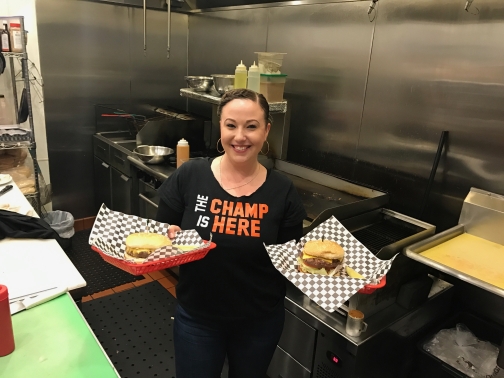
Any local Benicia resident is no stranger to Bottom of the Fifth Sports Bar & Grill, maybe because this is their third straight win? Or maybe because this place is hailed as being Benicia’s oldest bar! And the roots run deep in this family operation. Owned by Bruce Adams who’s been operating there on Military East since 1990, he had co-owned and operated JM’s on First Street for 10 years before that. Bruce’s father Harold Adams was the owner of Towne Club at 500 First Street from 1961 to 1979, and Bruce’s grandfather, George Wolff, was the owner of City Drug Store on 801 First Street from the early 1930’s until 1975. They proudly tout that they’ve been “medicating” Benicia for more than 80 years now, and with Bruce’s son Samuel tending bar here and there, and currently acting as marketing manager, it looks like the family tradition is going to continue. “We can’t say enough to thank our customers for being as awesome as they are,” said Samuel. “We really are one of the last true neighborhood joints around, and it wouldn’t be worth it if it wasn’t for the awesome people. Our customers make us who we are.” Head Chef Leslie Imamura also helps their reputation, and rest assured that quality comes with every order. They don’t even own a freezer! Which means you only get the best. “We only serve what we can make fresh to order,” said Sam. “If there’s anything we can’t do that with, then why have it on the menu?” Burgers, tacos, potato balls, 9 TVs, 4 beers on tap … need we say more?
498 Military East, Benicia, CA 94510
707-745-9949
www.bottom5th.com
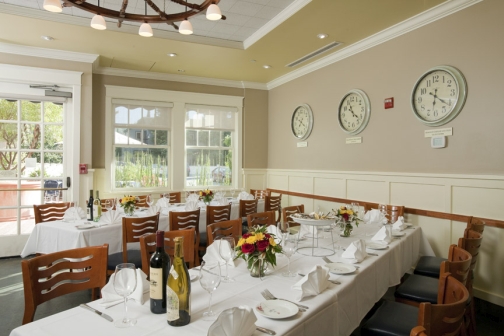
You may recognize the Yankee Pier brand from its location within the United Domestic Terminal (post-security) at SFO, but our readers have voted for the Lafayette location as the best restaurant in Contra Costa County. Executive Chef Michael Romak’s ocean-fresh seafood keeps guests lining up at the door. Live Maine lobsters, fresh-shucked oysters, full-belly Ipswich clams and more, combined with local produce and all-American wines, Yankee Pier is more than a restaurant, it’s a fine dining experience. “We bring in the freshest seafood and cook and clean it here in the restaurant,” said General Manager Kathryn Schumacher. “We also strive to have a large kids menu so families feel they can come with the kids and enjoy a nice sit-down meal.” You may also be pleasantly surprised to hear that Yankee Pier is a designated Bay Area Green Business as of 2011. So the food here is about as fresh and clean as you could possibly get. Private dining options are readily available and they can cater groups up to 32 people for a sit-down private event, or up to 40 for a cocktail reception. If you’ve never been, the first thing you must order is the fan-favorite lobster roll on a grilled brioche bun. Served hot or chilled, up to you. Then, try everything else.
3593 Mt Diablo Blvd, Lafayette, CA 94549
925-283-4100
lafayette.yankeepier.com
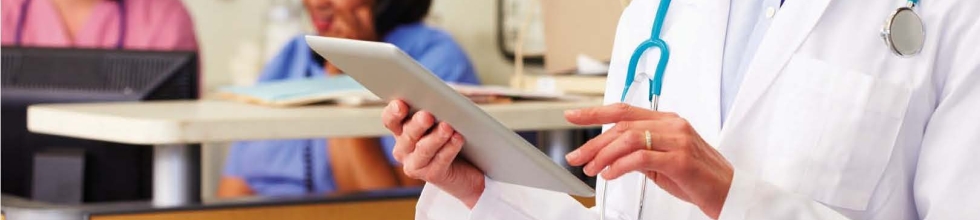
Touro’s School of Nursing Embarks on a New Doctorate Program this January
Michael Modrich, a senior clinic nurse at Solano County Family Health Services, wants to help spark change in the area’s healthcare.
The recent Master of Science graduate from the School of Nursing program at Touro University California (TUC) wishes to interact with patients on a deeper level. Listening to patients in a different way and learning the intricacies of research, for example, help greatly in the process of providing better patient care.
For this reason, Modrich will be returning to the School of Nursing on Mare Island this January to pursue his Doctorate of Nursing Practice (DNP), a new program that will help nurses leverage the same level of health care as other medical professionals.
“It’s interesting and a challenge,” Modrich said. “The doctorate program will open up a practical application of research knowledge that will help me to change my practice in a different way.”
The role of the nurse practitioner has been expanding in the United States—and even more so in California—due to the increased demand for care. Within our local Solano County community, primary care providers face increasing difficulty in meeting the needs of the general population as more patients seek health care.
“The program will be incredibly beneficial for the county. It gives us more depth on the medical side in addition to adding family practitioners to a system that needs it,” Modrich said. It’s also considerate of his schedule. That is, Modrich will be able to work full time and attend classes.
The DNP program will be with a Family Nurse Practitioner (FNP) track to address the need of primary care locally and has an emphasis on diabetes management and education. It is designed for working students who have demanding timelines. Its non-traditional classes will meet one evening a week and one Sunday a month at the campus on Mare Island. The remainder of the coursework is available online.
Julian Gallegos, Assistant Professor and the program’s coordinator, said, “We’ve chosen the Family Nurse Practitioner track to coincide with the mission of Touro, which is to fill the gap in primary health care. Our goal is to prepare practitioners who not only serve well in primary care, but also can help manage diabetes, which has many implications in other disease processes.”
The FNP/DNP is a 19-month accelerated program. Clinical placements will be established through local clinics and health care providers. The School of Nursing is accepting applicants for the FNP/DNP that begins January 2017. Applicants must be registered nurses who have an MSN.
The School of Nursing, part of the TUC College of Education and Health Sciences, was launched in August of 2014. For the past two years, the post-licensure master’s degree program has built on the knowledge and skills that have been gained in entry level nursing programs to help registered nurses achieve their Master’s Degree in Nursing and Clinical Nurse Leader Certification. Now the program will offer the final step in nursing education with the FNP/DNP.
“Being a part of the Master’s program at Touro was an incredible experience,” Modrich beamed. “The clinical nurse leader program taught us skills that gave a much wider and deeper understanding of how to treat both patients and the system that we use. And it’s the faculty’s wealth of background knowledge that is bringing me back to take the final step in my education.”
For more information regarding the FNP/DNP program, please go online to: http://cehs.tu.edu/nursing/ or call 707-638-5846.
Nicholas Crawford, Publications and Projects Coordinator at Touro University California.

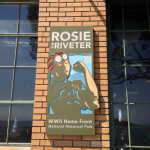
The Rosie the Riveter World War II Home Front Historic National Park
Americans tend to idealize World War II and its aftermath, but it’s not because we love violence, or because we don’t appreciate the devastating losses that were suffered during that time. It’s because during those years, our country was truly united at an unprecedented level. Americans sacrificed in countless ways to help the war effort. They drove less to save gas, or refrained from buying new clothes longer than they should have. Thousands—including celebrities and professional athletes—left their lives and careers behind to enlist in the army, and the mass of people who didn’t fight joined the labor force to churn out military equipment.
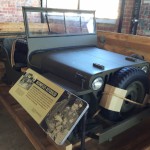
It’s a fascinating time period, and though the war was mostly fought overseas, you don’t have to travel too far to find a piece of World War II history. In Richmond, for instance, lies the Rosie the Riveter World War II Home Front Historic National Park. Located at the Richmond shipyards, where thousands of military boats and vehicles were manufactured in the 1940s, the park is dedicated to telling the stories of the Northern California residents whose lives were changed by the war, and who, in turn, forever molded the Bay Area.
The park is comprised of an interactive visitor center that tells the stories of Bay Area residents during the 1940s, a set of beautiful trails that offer a clear view of San Francisco and the water, and a World War II-era ship, the Red Oak Victory, which folks can explore inside and out.
“This is a place that congress and the president picked to honor and celebrate the civilian home front story,” said Supervisory Park Ranger Elizabeth Tucker, who runs the Rosie the Riveter center. “There are a lot of memorials that honor the war itself, but very few that focus on the important role that civilians played. There is just an umbrella of stories from folks who lived and worked here during the World War II era.”
There are many reasons to visit the museum, but its most famous attraction is, ironically, one of its employees. Betty Reid Soskin, 95, was already a local legend last year, having been awarded a ceremonial coin by President Barack Obama as an acknowledgement for her public service. But after she fought off a man who broke into her home, punched her repeatedly, and robbed her of the coin and other valuables, her prestige rose. She was hailed as a hero, her coin was replaced, and her story was featured on national media.
“It’s inspiring to be able to work alongside her,” Tucker said.
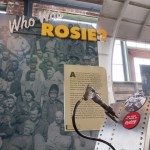
The term ‘Rosie the Riveter’ refers to women who worked in factories and shipyards throughout America, moving into so-called “men’s jobs” after hundreds of thousands of men enrolled in the military. Overall, the women’s workforce went up by 6 million – a 50-percent increase – in the three years after Pearl Harbor. One quote prominently displayed in the museum reads, “It took a war to liberate American women.”
The famous Rosie the Riveter icon — displaying a woman donning a red bandana with her sleeve rolled up — became an icon for the gender equality movement and is prominently displayed in the museum. World War II is credited with giving women and African-Americans a chance to move up in the workforce that weren’t made available to them up until that point.
“Most of the ‘Rosies’ were working class, who weren’t cheerfully leaving their homes. They were already working low-paying jobs, and this was an opportunity to work a better job that they’d been denied entry to prior to the war,” Tucker said.
But the park also acknowledges the prejudices and civil rights infringements — like the incarceration of Japanese-Americans — that existed in World War II.
“Recently, historians have started calling it ‘incarceration,’ not ‘internment,’ and that’s an important distinction to make,” Tucker said. “There was, unfortunately, a lot of discrimination, particularly against people of color and Japanese-Americans. It’s important to remember.”
The visitor center, established in 2012, will give you a great sense of what life was like in Richmond during the 40s. In addition to a theater that features award-winning films around the clock, there are interactive displays that detail everything from how the East Bay evolved during that era, to the intricacies of ship design.
There are numerous examples of how World War II permanently changed the Bay Area, including the opportunities offered by the manufacturing industry, attracting migrants flocking to Richmond from all over the United States. Enrollment in Richmond nearly quadrupled from 1940 to 1944, from around 6,000 to more than 21,000 students. Generations later, many of those same families continue to reside by the Bay. Industrialist Henry J. Kaiser had a hand in building the shipyards in Richmond. Also, the now well-known healthcare provider, Kaiser Permanente, was born out of those shipyards; it originated as a means for his workers to receive healthcare.
“It’s recognized that in a free society people came together out of their own volition to work, sometimes 6-7 days a week, for the war effort,” Tucker said. “A lot of historians feel that we out-supplied the enemy and that’s what led to victory in World War II. Hitler ran out of supplies after he sent troops to Russia, but we had a strong supply line that continued from D-Day to the end of the war.”
Ironically, Tucker acknowledged, “there were probably more Wendy the Welders than Rosie the Riveters in Richmond,” during the World War II era. Most of the Richmond manufacturing was centered on shipbuilding. One of those ships, the Red Oak Victory, remains docked in Richmond and tours are given four days a week. They’re meant for all ages, but Tucker said navigating the dock can get a little tricky, so accessibility is somewhat limited.
“There are ladders and other obstacles; basically you get to climb around on a World War II cargo ship,” Tucker said. “A lot of people enjoy that.”
While folks are free to roam around most of the ship, anyone who wants to visit the engine room has to go with a tour guide. If historical ships are your thing, the Red Oak Victory is actively looking for volunteers, so if you’re interested call the number at the bottom of this article.
“We want the visitor center to be a launching point, and for folks to then explore our beautiful trails and the Red Oak Victory,” Tucker said. “It’s all-encompassing, and there’s a lot to see at the park.”
Earlier this year, the Rosie the Riveter center made headlines when it set a world record by organizing a gathering of more than 2,200 people to dress up like Rosie. The event was “really, really great,” Tucker said. Another museum at a historical bomber plant in Michigan has plans to break the record, so the folks at the Rosie the Riveter center have already laid plans to regain the crown in Summer 2017.
“The men really helped us last time,” Tucker said. Referencing the famous historical quote that says, “without women, there would have been no spring in 1945.” Tucker said she was planning to make a sign saying, “Without men, there’d be no Summer in 2017,” for when they (hopefully) re-claim the Guinness world record.
The importance of preserving the stories of the World War II era cannot be overstated; fifty years from now, there will be no living World War II veterans. And the Rosie the Riveter center is always looking for more stories to tell. In addition to a section of the museum where folks are encouraged to write their stories and post them onto a board, the Rosie the Riveter center is asking the public to share their stories and artifacts.
“Anyone is welcome to share their story,” Tucker said. “Don’t be shy.”
If you have a World War II artifact, a photo album from that era, a story, or anything else you’d like to share, visit www.nps.gov/rori/learn/historyculture/stories.htm for more information on how you can submit it to the Rosie the Riveter park.
In December, the park rolled out a unique exhibit on contributions from the LGBTQ community during the World War II era. It opened Dec. 3 and is expected to run at least six months. On Dec. 7, the center also held an event to honor Pearl Harbor Day, and it continues to hold regular events, so it’s worth checking the park’s event calendar at least once a month.
The Rosie the Riveter park and visitor center is located at 1414 Harbor Way South, Suite 3000, in Richmond. For more information, call (510) 232-5050 and dial extension zero, or visit nps.gov/rori. You can also follow them on Facebook at Facebook.com/RosieTheRiveterNPS.
To plan a visit for the Red Oak Victory, visit richmondmuseum.org/ss-red-oak-victory or call (510) 235-2933. The Red Oak Victory is docked at 1337 Canal Boulevard, Berth 5, in Richmond. Tours of the ship are available on Tuesday, Thursday, Saturday, and Sunday, from 10 a.m. to 3 p.m. They cost $10 and there is an additional $5 cost for anyone who wants a docent tour.
 Nate Gartrell grew up in Benicia, studied journalism in college, and has written for a handful of media outlets since age 15. He aspires to visit all 30 Major League Baseball stadiums and to hit the trifecta at the horse track.

Well, a new year is upon us and 2016 is fading away. We have selected a new President, who most feel is quite a polarizing figure. All of us seem to be either sad, happy or mad about the next four years—which is always the case. We also have new laws and regulations on the books. It is an interesting time to say the least and hopefully it will not be a turbulent time as well. Regardless of how you voted, the sun will still rise, the seasons will change and the moon will stare down on us as it has for eons, and while we know that it will not be as good as was promised we also hope that it will not be as bad as some have imagined. On the bright side there is still lots to do right here in our little slice of the world and we at Local Happenings Magazine are working hard to connect you to them. Hopefully it will be a pleasant distraction from the happenings of the rest of the nation, and the world.
We are very excited to announce a new partnership, which we hope will help us bring you even more information about great events in our community. We have changed our calendar software and partnered with a technology company called CitySpark to help root out even more events and happenings all around us. In addition to the increased amount of listings, the format of our calendar has been enhanced as well to provide you with a better visual experience. We hope that you like it and we welcome your feedback on how it both looks and works for you. Remember that we do not charge to list events in our calendar—yes I said that right, our listings are FREE. If you are part of an event or know of one that isn’t listed in our calendar please let us know. We want to put up all the events there are but sometimes we need a little help to discover them ourselves.
Along with the end of 2016 and the start of 2017, this issue also marks the end of our voting for the 2017 Local’s Choice awards, and the start of our 8th year of bringing you Local Happenings Magazine! We will also start the task of counting all of your votes for our awards. Unlike the nation we operate as a pure democracy in our selections of our winners. There is no electoral college to contend with, just a simple tally of all the votes and the popular winner is selected. You will have to wait until our February/March issue to see who our winners are. Just remember that unlike our presidential election we select our winners every year so you just need to wait until September of 2017 to start voting again if your candidate did not win.
As always we wish to extend birthday greetings to our family and friends. We will open with our brother-in-law, Ken, as well as Steven M., Marla, Rod, Joanne, Tony, Jill, Rob, Michael, Jose, Bobby, Rosemarie, Vrej, Vijay, Pancho, Margaret, Stacey, Gary, Momma Hand, Monique, Connie, Lucy, Kathleen, Leslie, Jim, Elissa, Ginger, Bonnie, Linda, Bobbie, Gregory B., Sid, John, Rick, Stephanie, Roman, John, Adrianna, Peggy, Samantha, and Steve, and to any and all who we might have missed, we are thinking of you as well!
Cheers to the Holidays and to the New Year!
 Robert Briseño
 & Deanna Baillie
Cancel that trip to Africa and head to Safari West
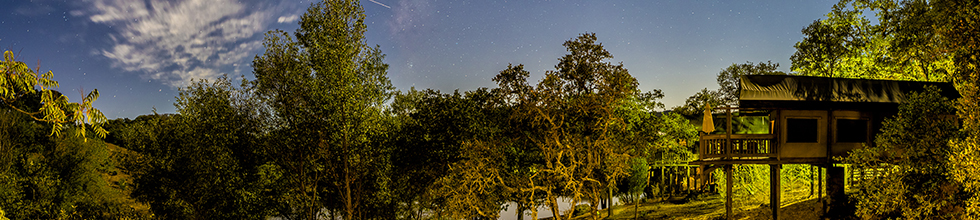
As of this writing, a round-trip plane ticket to Kenya is around $2,000 (according to Expedia). Visiting Africa is on the bucket list for lots of people, but few of us are lucky enough to make the journey. If only there was some other way! Well, there is. Thanks to the 400 acres of Safari West in Sonoma that are currently home to 89 native African species, you can embark on that dream African vacation right here in California.
“Our safari drive is probably the most remarkable, educational, exciting experience you could have short of getting on a plane and going to Africa,” said Aphrodite Caserta, Director of Marketing & Communications for Safari West. “It’s almost like it transports you to another world.”
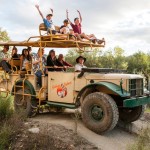
It’s hard to believe such a place exists so close to us, but it’s been there for more than 20 years. Safari West provides an authentic African experience in the midst of Sonoma wine country. You can explore the “Sonoma Serengeti” with a well-educated guide who will drive you through a wide-open, 400-acre field scattered with African wildlife.\
“When I was out there with a guide for the first time, I didn’t know for sure where I was,” said Caserta. “You’re right in wine country, but when you go all the way out through the gates, you don’t see anything else! I remember looking over the horizon and I could see Cape buffalo … I was able to pretend that I was in Africa.”
Zebra, greater kudu, bongo, wildebeest, cheetah, caracal, kookaburra, flamingo, hammerkop—just some of more than 800 exotic animals on the premises. Guests are invited to spend the night in luxury tents—the same exact tents used at safaris in Africa—complete with spacious decks, hot showers, comfy beds, wood floors, and, if you like, even a personal Swedish massage! It’s glam-camping at it’s finest, or glamping … if you will … They even have wifi, but—
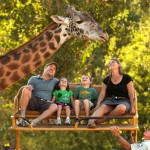
“We want you to unplug when you get here,” said Caserta. “This is the place you go to connect to wildlife, not to connect to TV or anything like that. It’s more for families who want the experience and the education of getting out and seeing a giraffe close up, and a rhinoceros, and a cheetah, and learning about them.” So don’t expect to find a television in your room, or a swimming pool on site. What’s more, they don’t even want you to read up about the animals! Their tour guides have done that for you.
“The amount of training that our guides have is almost equivalent to a semester in biology,” said Caserta. There’s no signs telling you which animals are which, or a book in your tent telling you about all the animals you’re soon to discover. They want you to just relax and take it all in, as they tell you their story as only Safari West can do. “We don’t really believe in the signs, we don’t want you to read about it, we want to tell you about it!” she said. “I think every guest walks away with some kind of connection and knowledge that makes them become stronger advocates of wildlife.”
Safari West is an official member of the Association of Zoos & Aquariums (AZA)—only one of six private facilities in North America that belongs to the organization—but they are far from your average zoo. In fact, there is no other place like this in all of North America. How lucky for us that it’s right next-door! While you embark upon the “Sonoma Serengeti” in an open-air, authentic safari vehicle with an expert tour guide and driver, you track the animals to wherever they are. Animals at Safari West roam free and are not found in any one particular spot, so it’s a true adventure seeing different things in different places every single time you go.
“We track the animals—they’re not trained,” said Caserta. “They do what they want to do, when they want to do it. We hope you see all of the animals, 99 percent of the time you do, but you may or may not see all of them.” Sometimes you could catch opportunities as rare as a birth, you never really know with Safari West, as here, the animals rule.
Mind you, guests are never allowed to get off of the vehicle during safari, nor is petting encouraged if an animal gets close enough while you’re out there. The animals are fed every morning from a food truck, so they may often approach a tour thinking there may be food for them, which can certainly afford for some amazing photo opportunities! But still, keep your hands to yourself. But while they don’t market themselves as a zoo, they do have a lower grounds, separate from the safari area, where you can see primates, open-air aviaries, and maybe even go behind the scenes with a trained guide to feed the giraffes.
There are some up-close-and-personal opportunities to be had at Safari West as well. One tour called “Keeper for the Day” allows guests to go out with the keeper on the food truck. How much a guest participates depends on both the keeper and the guest, but Caserta reminds us that the animals come first. “The well being of our animals is our priority,” she said. “We’re not going to do something for the guest to make them happy if that is not going to be for the well being of our animals.”
With all there is to see and do at Safari West, you might think that it would take days to see it all. However, you could actually get a pretty full experience from just one night’s stay. It’s an especially nice complement to your wine tasting weekend in the Sonoma wine country. “Rather than spend the night in a hotel off the 101 corridor, you can come spend the night in an authentic African tent camp!” Caserta suggested. But while most guests only stay for a night, a fair amount of people like to come for 3 or 4 nights at a time. “I always find that kind of astonishing—we don’t have TV or room service—but they enjoy the nature,” she said. “They come here because of the sounds at night. It really is incredible.”
If you’re still not sure about cancelling that trip to Africa, Safari West is so diverse that you may even see more here than you would have from your African safari. “It’s almost better than going to Kenya, because in Kenya you’d have to go to maybe two or three parks to see so many different species,” said Caserta. There are a number of endangered species on the premises, and they are officially a zoo according to the AZA so they’re able to receive animals from other zoos, but just know that they’re not importing animals from Africa. While these 89 species are native to Africa, pretty much all of the animals you’ll find were born here in the U.S.
The mission of Safari West is to actively promote conservation and environmental education. They share their knowledge to help us make better choices in regards to environmental and conservation efforts. To instill these ideals early on, Safari West opens their gates for more than 10,000 schoolchildren that come and visit every year, an effort that’s supported by the Safari West Wildlife Foundation. The Foundation also supports student researchers with ambitions of working with and studying these animals in their natural environment. These students are able to actively train on the property in the fields of physiology, anatomy and ethology. Safari West also invites veterinary students to pursue internships with them for a once-in-a-lifetime experience.
You may now think you’ve got a good grasp on what it’s like at Safari West, but you really won’t know until you get there. Come stay for a night! There are numerous packages as well, such as a Romance Package, Wild Nights in Wine Country, and their Photographic Expedition Workshop.
Head to www.safariwest.com to get all the details about what they can offer you, and to get a general idea about what to expect. Reservations can be made on their website, or you can call (800) 616-2695. Take advantage of being so close to such a unique naturalistic opportunity. Sonoma is right next-door. Pick some wineries while you’re at it and make a weekend out of it! Or not. This is just a suggestion. But if you want, take a walk on the wild side and visit Safari West!
 Matt Larson is a writer/actor/comedian native to Vallejo who travels back and forth from Los Angeles way too much. He’s desperate for attention and urges you to follow him on all social medias @MarsLegstrong. He lives for likes, please keep him healthy!
Solano College expands their autotech training program for a job market in high demand
It has become pretty rare these days to end up working in the field you studied in college. For example, Dexter Holland has a master’s degree in molecular biology, yet he ended up as the lead singer for The Offspring! See, anything can happen.
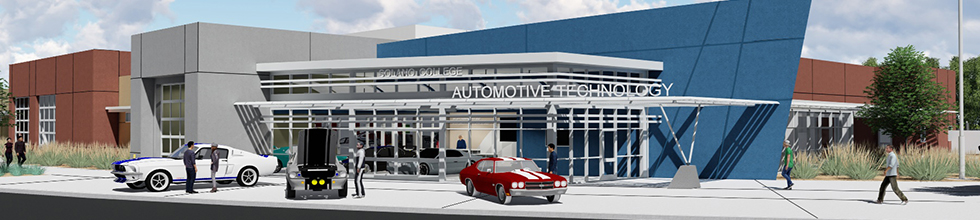
Believe it or not, there are still certain academic pathways that can lead to a good chance of finding employment in your field of study. For many reasons (which we’ll get to below), the auto industry is hiring, and Solano Community College’s Automotive Technician Training Program can provide you with everything you need to get there. At just a few years in, this program isn’t entirely brand new for Solano College, but construction for its new Autotechnology Building at Turner & Ascot parkways in Vallejo just broke ground in August. Here’s a look into why this training program has become so popular.
“Usually students can have a job before, or by the time they graduate,” said Rick Marshall, Professor of Automotive Technologies at Solano College. “In the industry there’s such demand. I got two more companies this week that want technicians if we have ‘em. The jobs are out there! It’s a great time to be an automotive technician.”
Why is that? Well … you may have noticed this trend toward greener, cleaner, electric and hybrid vehicles. They’re all relatively new, but it’s getting to the point now where a lot of these cars of the future are being taken to local mechanics, rather than dealerships. Many mechanics, especially those who have been in the game for decades, are suddenly finding themselves unqualified to work on these next-gen vehicles.
“Most new cars are worked on with a laptop and a digital multimeter—those are the two main tools you’re using all day,” said Marshall. “I’d say I use the laptop sometimes 70 percent of my day.” A lot of the old-school mechanics either haven’t taken that technological leap, or simply can’t handle the transition into the digital era. That’s where you, the millennial, come in.
Curriculum found in Solano College’s automotive path is much more technologically based. Garages/classrooms are fully stocked with factory scanners, laptops, and programming computers, allowing students to have the ability to communicate with all different lines of cars. “It’s the same as if you went to a Ford garage, Toyota, Honda, GM, Nissan … we have the same tools the factory does,” said Marshall. “So when our students get a job, they kind of know how to use this and navigate around, and actually repair the cars!”
In addition to teaching at Solano, Marshall is actually still actively working in the field. His 33 years of experience include 18 years as the Master Elite Technician for General Motors, and he is currently a Master Technician for Honda. The automotive field is constantly evolving, so by teaching college courses and working in the field simultaneously, Marshall remains constantly on the cutting edge. “It keeps you updated,” he said. “It’s going to be harder and harder to stay on top of the game if I just teach full-time.” And that’s win-win as the students are kept up to date as a result.
Now you may be wondering, what sort of jobs can you get after finishing the automotive program at Solano College? Well, just like most fields, you’re going to have to start with the basics and work your way up. Usually, you’d start working as an express tech, which entails changing oil, tires, servicing cars, handling airbag recalls, and so on. “You’ll have to go in and show that you can perform the natural duties—dealing with customers, the atmosphere of the shop, repairing a car properly—you gotta prove yourself. Then, if you’re trained, you can move up fast,” said Marshall. And as we said before, Solano College can provide you with everything you need. “Once you get your certification, we have an alternative fuel class which covers natural gas, hybrid, full-electric, and diesel. That can get you a lot farther because a lot of places don’t have anybody that will touch vehicles like that.”
Being an auto mechanic can be a very fulfilling job. It sure has been for Marshall these past 33 years. He enjoys working with his hands, and even on the computers you’re still taking things apart and putting them back together, but the most important aspect is really the nature of the ever-changing industry. “Some jobs become stagnant and you just repeat an operation. In the automotive field, you don’t even get six months without having to start thinking things have changed,” he said. “Everyday you may have a different problem, every year a new model comes out and technology has changed. You have to keep updated so your mind has to stay sharp and fresh.”
Speaking of sharp and fresh, we’ve hardly said anything about this amazing new 30,000 sq. ft. Autotechnology Building! It’s designed to make the college’s awesome training program even more so, and it is scheduled to be open for classes by Fall 2017. Currently the class meets at the old Wilson-Cornelius Ford dealership in Vallejo, where they have 38 cars available for students to work on. Eight of those are alternative fuel cars, the rest are standard cars made between 1996-2014, generally the type of cars the students would be seeing at the workplace.
The Automotive Technician Training Program currently has about 165 students (40 of which are already working in the field, by the way). The new building will offer some more room to have more classes for more students. There are times when they have 40 students wanting to get into a class but capacity is 24, so they have to wait another semester. They’re also planning to offer more classes that are designed to keep auto trainers from other colleges up to date—which is actually how the program started as a Train the Trainer sorta thing. In its earliest days the program was only 25 students and class was held at Armijo High School in Fairfield. In just a couple years, things sure have evolved for the better. Fun fact: this new building is a direct result of local residents voting in favor of 2012’s Measure Q, so this major upgrade is an accomplishment that is shared with the community.
Local dealerships have been getting very involved with this program in a number of ways, including offering internships and looking for employees. Currently Solano College is partnering, in some way, with Team Superstores, Avery Greene Honda, Kastner Honda in Napa, Ford in Napa, Nissan of Vacaville, Nissan of Fairfield, Momentum in Vallejo, BMW and MINI of San Francisco, and they’re already in talks with Faraday Future, the new electric car startup that has been given the go-ahead by Vallejo to bring its second factory to Mare Island. Did we mention now was a great time to get involved with this program?
Perhaps the best thing of all, is that if you decide the automotive field isn’t for you but fear it’s too late, the Automotive Technician Training Program at Solano College also results in an Associate’s Degree, making a transition to pursue a university Bachelor’s Degree—in most any field—much easier. Plus, tuition for this Associate’s/Auto Training degree is just under $1,400 a year for a full-time student. You can look around all you want, you won’t find a better deal. Most other private training facilities can cost up to the tens of thousands.
Starting pay for an entry level job in the industry probably won’t surprise you, but one of Marshall’s former students recently jumped from $12-$24/hr in just one year after proving himself on the job. “This is a program that’s training people for high-quality, middle-class jobs,” said Curt Johnston, Executive Director of the Solano Community College Educational Foundation. “This is not training people for minimum-wage jobs. It’s a great career path, and they’ll come out of Solano College without debt, which is pretty significant.”
If you have any doubts, take a class! No pressure. Check it out, see what you think. If you like it, sign up for more. “Do what you enjoy,” says Marshall. “You’re not going to get rich being an auto mechanic. I make a good living! I enjoy when I go to work and I enjoy what I do. To me, that’s more important than a lot of money. I want to enjoy my life.”
Worst-case scenario—you finish the program and then change your mind, and now you’ve got some awesome insight into automotive technology so you’re not completely in the dark when you take your car to the shop. It’s a great way to spend your first two years of college no matter which field you plan to pursue. If you’d like to consider getting enrolled, visit solano.edu.
 Matt Larson is a writer/actor/comedian native to Vallejo who travels back and forth from Los Angeles way too much. He’s desperate for attention and urges you to follow him on all social medias @MarsLegstrong. He lives for likes, please keep him healthy!

CHILI OR STEW?
By Chef K. Marie Paulk
Chili or stew, for me either one sounds pretty good on a cold winter night. Chili, with a nice big piece of corn bread, or stew served with a nice big slice of crusty sourdough bread. I get hungry just thinking about it, especially if I have a red wine to savor with it as well, but let’s not get off course. Either one is a perfect winter dish.
I think the key for either dish is the meat you use. Beef, lamb, pork, turkey, chicken, seafood, shell fish or even goat or rabbit lend themselves well and each offers its own distinct flavor and character to a stew. Chili tends to need a heartier cut of meat to stand up, but experiment and I think you will discover some interesting combinations.
Let’s take a look at chili first. Once you decide on the meat(s) to use for your chili, you’ll have to decide whether to use diced or ground meat. The texture of your chili should complement the flavors you decide to incorporate in your recipe. Basic flavor elements would build from onions, garlic and cumin and the choice of your chili powder will be key. Adding more flavors, liquids, spices, and vegetables, also must be considered, though the biggest decision to make is to add beans or not. I personally don’t think a chili is complete without beans, but there are many that prefer it without. The beans do help to thicken the chili, so if you make yours without, know your chili will be thinner. There are about seven simple steps in making a great chili:
- The first step will be trimming off the fat from your meat and browning it. You will need about 2 lbs. of meat for a chili to feed six to eight.
- The second would be to sauté the aromatics. You want to cook the onion until soft while adding your spices. Remember that a little chili goes a long way.
- The third would be the liquids used to deglaze your pan after cooking your meat. This is the process of dissolving the browned bits left on the bottom of the pot so they will become part of your chili – there are some great flavors in those little bits of meat. You could use beer, a hard cider, or water. Then add your stewing liquids such as chicken or beef broth and maybe a can of diced tomatoes as well.
- The fourth and fifth would be to add beans, if you are going to use them, and then adding your vegetables. Both of these steps are optional.
- The sixth step would be adding a splash (up to 1 Tbs.) of a food acid at the end of the cooking process. This will help brighten the flavors. Give your chili a taste before you add it, and then add a splash of apple cider vinegar and/or maybe some fresh lime juice, stir then taste again and you will notice a difference.
- The last step would be picking you garnish; sour cream, cheese, bacon, and/or avocado would be some suggested starting points. This would really depend on your taste buds and what type of chili you made.
I entered a chili cook-off once and was asked to a make a vegetarian chili, so I worked with a product call Beyond Meat and pretty much everyone thought the protein was really chicken. I was pleasantly surprised I won first place that year. The variations of what type of chili you want to make are very wide, so explore and try different combinations.
I feel that one of the keys to making a rich tasting stew is the use of a Dutch oven. Like chili, you could use a stockpot, but I feel that for a quality stew a Dutch oven is essential. If you don’t have one, I suggest investing in one. They shouldn’t be that costly. I have acquired 3 and regularly use all of them, not only for my stews but for a myriad of dishes, which makes them an excellent investment.
- Like chili, the first step would be to sear and brown your meat. As I said earlier you could use any type of meat, but for this I am going to focus on beef. Picking the correct cut of meat is also essential. Chuck eye roast would be my suggestion, and it is also one of the cheapest. It will turn tender when properly cooked. The nicer cuts—tenderloin, strips, or rib eye—will turn mealy with prolonged cooking; these cuts are best for grilling. The texture of the hanger steak and/or skirt steak is stringy. Pat your meat dry before you sear, and when searing, do it batches. Overcrowding the meat will just steam the meat in its own juices and not give you the necessary char to your meat.
- The next step would be browning the vegetables with fresh crushed garlic and tomato paste, then adding some flour to use as your thickener.
- Like chili you will deglaze your pan after browning your meat, but you must use red wine (good quality, medium body), also adding chicken and beef stock. Use a 3-to-1 ratio with the stock, with more chicken than beef. Reduce down your liquid for a few minutes on the stove.
- Next let it simmer for about two hours in a 300-degree oven for an even heat distribution. Potatoes, if you want to add them to your stew, should be placed in the pot during the last 45 minutes of the cooking time in the oven.
- A little trick to give your stew a nice thickness is adding a bloomed, unflavored, powdered gelatin after you take the stew out the oven. Finish the stew on the stove for about 5 minutes on high heat and you will have a perfect texture.
So there it is, but the question remains: “What to do, chili or stew?” I vote for both! They keep well, you can freeze them so they’re ready to go on that cold night when no one feels like cooking.
Enjoy.