
More Cheese, Please

Tales_Kitchen_web

Cheese (and bread), has always been my downfall. I have always thought that if it wasn’t for cheese I would be thin. I have little to no control about this complete protein. I’m sure we can all remember those yummy grilled cheese sandwiches or mac and cheese from the box growing up. I’m sure we all realize that these dishes were made with processed cheese. I’m not above eating processed cheese (nachos come to mind), but I prefer medium cheddar cheese. Let’s face it, processed cheese is great for melting, it liquefies, and maintains its stretch. Unfortunately, a lot of cheeses are not meant to be warmed and they can become drier and stiffer. The amount of moisture, salt and acidity will determine how the cheese will melt when it is heated. Cheese is always made from milk. The texture of a cheese depends on water content. The fat content in a cheese can range from as little as 1% to 75%. The terroir of the milk, the time of year the animal grazed and, believe it or not, the time of day the animal is milked (this is starting to sound a lot like wine making) will affect the flavor of a cheese. That is just the tip of the iceberg. Other factors have to be taken into account as well—is the milk pasteurized or raw, the culture, aging process used, etc. I have read that there are 7 steps in making a basic cheese, which reminded me of stock making. The steps are:

  • Coagulation
  • Cutting the Curd: The solid element of the milk
  • Cooking the Curd
  • Draining
  • Salting
  • Molding and Pressing
  • Ripening: This has to happen naturally to form a rind, cloth or leaf bound, wax rind and/or brine cured

We should all appreciate how lucky we all are for living in an area where there are all kinds of artisan cheese makers (Cowgirl Creamery comes to mind). I remember this cheese store we paid a visit to during culinary school in Beverly Hills named, of all things, The Cheese Store. An odd location for cheese, but this place was well known, had been there for years (1967) and was known by many in the industry. The owners of the store are just a wealth of information, not to mention the 200 or so types of cheese they have. Every time I’m asked to make a cheese platter I try to add a new cheese and make sure there is an assortment of semisoft cheese, hard cheese and maybe a blue cheese with drizzled honey. I try to school myself, and maybe my guest, on the assortment. This could be classified as a cheese course. When serving cheese remember to allow it to come to room temperature. Cold cheese has only a fraction of the flavor. Also, avoid cheese that is vacuum-sealed in plastic. With all the varieties available, getting to know all the types can be never ending. New varieties of cheese have been developed ever since the process was discovered—by accident. Yes, by accident! As with all fermented products it is believed the curdling action was noticed when a herdsman poured milk into a pouch made of an animal’s stomach and some form of cheese was created. So the question is, where do you begin? I recommend starting with what you like. I prefer soft ripened cheese. My personal favorites are: brie, double creams and the best triple creams. Double and triple creams have been enriched with the addition of, well, cream! This style was created in Normandy, France in the early 1900’s. They were first known as the “cheese of affluence” because the added cream was a luxury. Double creams contain a minimum of 60% butterfat; triple contain 72%. Another one of my favorites is cheddar, medium to sharp. Sharp is a little too intense for my husband so I tend to buy medium. The term “sharp” indicates the cheese has been allowed to age longer which creates a sharper flavor. Currently I have been using an Irish cheddar that has a great flavor. Cheddar refers to cheese in which curds have been cut, stacked, drained, restacked, milled, salted and pressed. There’s something to note about another favorite of mine, Parmigiano-Reggiano and plain Parmesan cheese. Parmigiano-Reggiano is made only in the Emilia-Romagna region of northern Italy. The milk used comes from cows that graze in grassy meadows. Each wheel is aged for at least 12 months before it is stamped and shipped to market. This cheese is one of the most copied cheeses on the market, which is found to be salt laden and mass-produced from cows that are penned in and grain fed. Also, rather than buying the pre-grated—which loses moisture and flavor—buy a chunk and grate it yourself, you will notice a difference. I would be remiss if I did not mention Gruyere, which is a Swiss cheese from the western hills of Switzerland that no French onion soup would be complete without. Go out now and try a new cheese, but just remember to wrap up any leftovers and refrigerate them since after 4 hours they tend to dry out and deteriorate. By Chef K. Marie Paulk

Autism Awareness

Touro April-May 2016

Nearly 25 years ago, the Autism Society launched a nationwide effort to promote autism awareness, inclusion and self-determination for all. Its purpose was to assure the people with Autism Spectrum Disorder had the opportunity to achieve the highest possible quality of life. Autism spectrum disorder (ASD) is a developmental disability that can cause significant social, communication and behavioral challenges. They affect people in different ways and can range from mild to severe, according to the U.S. Centers for Disease Control & Prevention (CDC). CDC data (2012) reports the number of diagnosed cases has risen 300 percent over the past 11 years. Additionally, one in 50 children in the Unites States has an ASD and interestingly, boys out number girls 5:1 in the diagnosis of ASD.  No doubt, autism rates throughout the country have surged since the 1980’s and this has been especially prevalent in California. According to the California Department of Developmental Services (DDS) there has been explosive growth of autism spectrum disorders (ASD) since 1995 in California. The vast majority of ASD cases, about 85%, are under the age of 25, with only about 7% over age 31. A staggering 5,000-6,000 cases of ASD are diagnosed each year in California, with about 70% of a severity warranting eligibility for Regional Center services. Many causes of autism have been proposed. Genetic factors predominate the research and some genes have been identified that are linked to autism. The reoccurrence rate in siblings is approximately 18% but in males with an affected sibling it can be as high as 25%. Early identification and treatment is key to families and individuals with ASD. First know the signs: Signs of autism

  • Delay in learning to talk or not talking at all

  • Not responding to their name by 12 months
  • May appear to be deaf at times but respond to unusual sounds
  • Not pointing to objects or showing interest in sharing by 15 months
  • Does not engage in pretend play by 18 months
  • Lines up toys or uses them in an unusual way
  • Avoids eye contact and wants to be alone
  • Repeats words or phrases from others or out of context (repeats lines from movies)
  • Uses a monotone intonation when talking
  • Gets upset over minor changes (routines, change clothing, move furniture)
  • Has an obsessive interest in an object or topic
  • Will tantrum when denied access to obsession
  • Moves body in usual way (flapping hands, rocking, spins in circles)
  • Not reassured or able to calm down through holding or cuddling
  • Is calmed by deep pressure from an object, seeks comfort under heavy weights
  • Unusual response to sensory input (touch, smell, taste)
    • Screaming when wash hair, no tags in clothes, reacts to seams in clothing prefers foods of certain texture or color, reacts to smells either avoids or seeks out certain smells.

If you’re a parent of a newly diagnosed child, here are 11 tips to help:

  • It’s a marathon so breathe deeply, take steps, and set goals
  • The internet has lots of misinformation get hooked up with a local parent ASD support group (e.g., Parents Helping Parents http://www.php.com/)
  • Find parents that have older children with ASD they know the ropes and can guide you around pitfalls.
  • Good intervention services are costly. Seek funding through insurance (cover Applied behavior analysis), Regional Center, or look to crowd funding sites. Be creative.

  • Make sure you family and community know your child. Take him/her out often and everywhere.
  • Did I mention breathe!
  • Create schedules with visuals using pictures (Google images) or Apps on your smart phone. On your phone set reminders, alarms, use notes, games and applications can be lifesavers.
  • Learn all you can about autism, teach your family and supports about autism.
  • Learn what calms and regulates your child’s sensory system.
  • Learn about and seek services in Applied Behavior Analysis (ABA)
  • Calm yourself

There are also treatment resources for ASD

  • Ask local ABA providers if they take insurance, have BACB certified supervisors, all tutors are Registered Behavior Technicians.
  • Ask for data on their outcomes for students.
  • Sample of local providers:

http://www.gatewaylg.com/ http://www.bia4autism.org/ http://steconsultants.com/ Touro University California has responded to this growing need for highly qualified BCBAs that know ASD by offering a Master of Arts degree in Applied Behavior Analysis. This program trains teachers, educators, school psychologists or those seeking knowledge of ABA and ASD. The program is specifically designed for those working in school districts or homes during the day with evening classes onsite in Vallejo Mare Island campus. If you are interested in getting more information look at http://cehs.tu.edu/gsoe/credentialprogs/ABAprogram.html Applications and resources for ASD New and useful Apps for the students with autism: For behavior

For Social Skills

Parenting, autism and geekery http://www.squidalicious.com/ http://www.thinkingautismguide.com/ Touro writer head shot                 Linda Haymes is an Assistant Professor of Special Education in the Graduate School of Education at Touro University California.

The Everlasting Dixon May Fair

Dixon May Fair

California’s record-breaking fair continues on to its 141st year

Solano County comes together once again this year for the 141st Dixon May Fair, the oldest continuously running district fair and fairgrounds in the State of California. It’s been around 140 years, which is quite the achievement. For some of us, the Dixon May Fair is a familial tradition going back over generations, for others it could be the start of just that. This year will provide that same welcoming atmosphere that we’re used to, complete with live entertainment, livestock, carnival rides, and plenty of pleasant surprises along the way.

One thing that has remained constant over the past 140 years is the agricultural aspect of the fair. “That is something that we never want to change,” said Patricia Conklin, Chief Executive Officer of the 36th District Agricultural Association, the organization that produces the Dixon May Fair. As they focus on an agricultural theme ever year, this year’s fair is titled “Buzzing With Excitement” highlighting the importance of bee populations to agriculture. Last year the focus was on nuts, this year the bees are the buzz.

Agriculture is a big deal not just in Dixon, but in Solano County and California as a whole. “It’s what makes the state great,” said Conklin. “We have so many more options of what we can grow in California than in other states, we feed so many people—it’s just part of our job. That’s how we started, to promote agriculture, and we continue that tradition today.” That’s really the purpose of the Dixon May Fair, and fairs in general, which is to represent primary aspects of the local community.

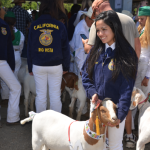
“Fairs are a piece of Americana,” says Conklin. “You can go to a fair anywhere in the state and find out what makes their community tick.” The showcases you’ll find, even the entertainment options they’ve chosen, all reflect upon the core personality of a given community. Some of the main attractions at the Dixon May Fair include live entertainment, exhibits, livestock shows, hog-calling contests, adult goat showmanship, a Bull & Bronc Ride event on Friday, a Truck & Tractor Pull on Saturday, even a Truck Demolition Derby on Sunday! “Demolition Derby has been here a long time and it’s always popular; always sells out,” said Conklin. “Bull & Bronc Ride and Truck & Tractor Pull both sell out now before opening day. People really like them.” With this in mind, might want to start planning ahead now. Note: these “Grandstand Events” are not included in the price of fair admission … more on that later.

Something to look forward to this year is the first Dixon May Fair Battle of the Bands competition since 1977. “We’re bringing something back that hasn’t been here for 40 years,” said Conklin. “What better way to showcase the talent of the community than by having a competition with bands? We hope it’s going to be big.” It could certainly be big for the winner. “Eight bands will move on to the Friday night finals. The winner will go on to compete in the Battle of the Bands Competition in June at the San Diego County Fair, which is huge, then they get to perform on the Promenade Stage of the state fair, so we’re pretty excited about that.”

Keep in mind, some of the best bands out there today got their start at a local fair similar to this one, so who knows what kinds of talent will blow you away. Conklin was proud to announce a particular local talent that is slated to perform, Vacaville’s own Lyndsey Elm. Last year on The Voice she turned all four chairs during her audition performance, this year she’ll be turning audiences heads at the Dixon May Fair from 7-8:30 pm Friday night on the Leber Garden Stage. At this writing, other musical acts include Buck Ford, Vinyl Ride, Terry Sheets Band and The Rhythm Method 4, though by the time you read this there may be some updates.

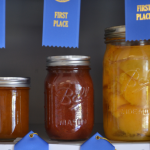
If you’ve never been to the Dixon May Fair, one of the things that might surprise you the most is really how much there is to do there. For a $12 adult admission ($8 in advance) you can come in on Friday night, see Lyndsey Elm, watch the Battle of the Bands, watch some small farm animals hilariously run after treats at the GASCAR (Great American Speedway Crazy Animal Races), take your kids to AgVentureland, explore 5 exhibit halls including Today’s Youth, Fine Arts, Interior Living, Floriculture—which all will be displaying competitive, publicly entered exhibits—and a Buzzing with Excitement bee exhibit … there’s a reason the Dixon May Fair spans over 4 days as you’d be hard-pressed to see it all in just one. Among your slew of options this year you’ll be able to speak with gardeners about drought-tolerant plants, speak with beekeepers about starting your own hive, go shopping for some rare-find gadgets, all while thoroughly indulging yourself in fair fare like corn dogs, turkey legs, funnel cakes and more. Conklin adds, “Some people just come for the food!”

What she most appreciates about the fair is the opportunity for the local residents and families to strengthen their communal bond by simply walking around and taking it all in. “When you go to a fair you see people taking a breath, slowing down and really enjoying their family … I think that’s great,” Conklin says. “In today’s age everybody’s running around so fast and so furious—when I walk out on the fairgrounds I get to see families together. Grandmas, grandpas with their grandkids, sitting on a bench eating ice cream. And what’s great is that they’re recalling memories of when they did that with their grandparents.” That’s a big part of what’s kept the Dixon May Fair going strong for the past 140 years: tradition. For a lot of people in attendance it’s been a family tradition since they were little kids.

The Dixon May Fair is especially ideal for children, as there will be an entire kids area at the fair with features including VEX robotics, a build-a-bridge competition put on by Solano County Department of Education (held Saturday May 7th, only) that’ll bring in about 200 students competing, and numerous other competitive exhibits. AgVentureland will be open throughout the event offering hands-on learning experiences where kids can learn about agriculture.

Despite the small admission fee to the fair ($12 for adults at the door, $8 in advance) other aspects like the carnival and some of the special events do cost extra as, after 140 years, demand can get pretty high and events do sell out. Conklin recommends getting your tickets ahead of time to make sure to see some of your favorite ticketed attractions, and it ends up saving you money in the long run anyway. The Bull & Bronc Ride and Truck & Tractor Pull are both $20, but these tickets include fair admission—if you buy in advance by May 5th and 6th, respectively. The Truck Demolition Derby is $25, including fair admission if you buy in advance by May 7th. If you wait until the day of, first of all they’ll probably be sold out, if miraculously they still have tickets available, then you’ll have to pay $20/$25 for the event plus the additional $12 admission. You should probably go online and get them now … while you still can!

Tickets are available online or at the fair office. There’s a handling fee if you purchase online, but the prices have been adjusted so that it’s the same price if you were to purchase online or in person. This makes ticket prices fair for those traveling from a bit farther away, so someone in Benicia or Davis or Sacramento doesn’t have to drive all the way to Dixon just to save a dollar. And by the way, the first day of the fair is Thursday, aka “Thrifty Thursday”, which is just $5 admission for everybody—available only at the gate on Thursday, May 5th. Keep in mind if you plan to come multiple days, you’ll have to purchase a separate ticket for each day as there are no multi-day passes available.

Believe it or not, despite being an incredibly involved event, the Dixon May Fair is only a small part of what the 36th District Agricultural Association has going on this year, as they’re in charge of managing the Dixon Fairgrounds. “We’re busy all year round,” said Conklin. “We rarely have a weekend that we don’t have something going on.” This includes a wide variety of public and private events such as Quinceañeras, baptisms, auctions, Relay For Life events, Lions Club events, fundraising events for local community organizations, the Scottish Games … “The things we put on our website are only the big public events,” Conklin says. “But we have anywhere from 650-1000 people every weekend here.” And that’s a minimum, she clarifies. The larger events pull in about 5,000 people on average. In 2015 the Dixon May Fair attracted over 57,000 people over the course of the four-day event.

So join the crowd! And join one of the longest-running traditions in California by attending the Dixon May Fair this year, May 5-8, at the Dixon Fairgrounds, 655 South First Street, Dixon. Tickets are currently available on their website. For more information on the fair, and other fairgrounds events, call (707) 678-5529 or visit www.dixonmayfair.com.

20150518 Matt Larson in a chair pic


Matt Larson is a writer/actor/comedian native to Vallejo who travels back and forth from Los Angeles way too much. He’s desperate for attention and urges you to follow him on all social medias @MarsLegstrong. He lives for likes, please keep him healthy.


Time to turn over a new leaf? The electric car’s future is today!

“I’m in love with my car, got a feel for my automobile,” sang drummer Roger Taylor of the band Queen in their 1975 song of that name, expressing the heartfelt sentiment of many a car owner. “The machine of a dream, such a clean machine.”

Few aspects of day-to-day life for motorists have been altered by technology since 1975 as some folks expected them to be flying us around by now, but aside from not being able to defy gravity, there are a myriad improvements to choose from in today’s car. One is certainly how much of a “clean machine” you want it to be.

“It’s a great car. Love it,” says Sherry Boschert of San Francisco, an author and advocate of electric vehicles (EVs), whose Nissan Leaf is the top-selling EV of all time. “It’s peppy, which all electric cars are. It’s fun to drive. It’s comfortable. It’s well put together.”

“We’ve had an EV for three years now and we love it,” said Craig Snider of Benicia, also a Leaf owner.  “EVs are perfect for most day-to-day driving needs.”

Electric vehicle enthusiasts will be gathering in droves May 20th and 21st at the 3rd annual Northern California Alt-Car Expo and Conference at Frank H. Ogawa Plaza in front of Oakland City Hall.

“With the Volt sales, we see very big ups and downs,” observes Arman Shahid, a sales manager with Team Superstores in Vallejo. Volt refers to the hybrid gas-electric car from Chevrolet, which also offers the lower-range, all-electric Spark. “I think that mostly has to do with the [amount of] marketing,” he adds, as 92-93% of Volt owners would get another one—the highest ratings recorded by any of more than 200 different models whose owners were surveyed by Consumer Reports in 2011 and 2012, respectively.

“When they’re happy with their car, they want the same car again,” he says, noting that three staff members own Volts at Team Superstores, which also sells the Hyundai Sonata, another hybrid.

# # #

Despite today’s excitement, EVs are far from a new craze. About a quarter century after invention of the lead-acid battery in 1859, this technology was successfully applied to cars with great success. By the turn of the century, there were 30,000 EVs on U.S. roads, and about as many as steam-powered, nearly twice the number of gasoline cars. Improvements including electric starters and greater range soon propelled gasoline cars to leave the rest of the market in their dust by 1920.

Congress recognized the value of EVs in reducing pollution by passing the Electric Vehicle Development Act of 1966 to fund research. Progress was slow and production limited until the California Air Resources Board (CARB) led a push for more fuel-efficient, low-emission vehicles in the 1990s. The Board backed off some expectations in 2003, taking the wind out of EV sails (and sales) until the recession of 2008 spurred interest again.

“We hung onto our Th!nk as long as we could,” Boschert recalls of her first EV, the Ford Th!nk, for which she participated in a demonstration on Market Street in 2003 when compelled to return it to Ford Motor Company. “We were out there trying to save those cars, we loved them,” she says of the two-seater “neighborhood EV,” which had a trip range of about 40 miles. “We did 90 percent of our driving in that little car.”

Boschert, author of Plug-in Hybrids: The Car that will Recharge America, was referring in part to a phenomenon known as “range anxiety” that many drivers experience about all-electric vehicles, which have tended to have a range of 100 miles or less before needing a recharge.

According to the award-winning documentary Who Killed the Electric Car?, consumer concerns about EV range is one of the suspects found guilty of the “killing.” Other suspects found culpable in the 2006 film include oil companies, car manufacturers, the federal government and CARB; as a result of backing off its 1990 “zero emissions mandate” in 2003 under litigation in addition to pressure from the auto industry and federal government, CARB was accused.

Boschert further alleged that car salespersons don’t try very hard to sell EVs. “Nine times out of ten they’ll try to steer you to the gas car,” says the activist. “This is why car dealers don’t like these cars: There’s no maintenance. They don’t make their money selling cars, they make their money on maintenance—There’s no oil to change, there’s no muffler, there’s no catalytic converter. There’s none of that nonsense.”

Conceding that the cars in the Team Superstores showroom are Cadillacs and Corvettes rather than Volts or Sparks, Shahid denied that low-maintenance needs cause sales personnel to steer customers away from the EV. “As far as we’re concerned, that’s its main selling point,” said the Vallejo resident. “The first thing we do is kind of investigate what kind of driving they do … It’s perfect for around town. It’s not so good for road trips.”

Snider said he and wife, Lee Wilder-Snider, often take their Leaf to visit relatives near the Russian River and to Lincoln in Placer County, thanks to awareness of charging station locations and having purchased both slow and fast portable chargers. “We’ve had pretty good luck finding available Level 3 chargers at Vacaville and Davis,” said the retired forest ranger. “That lets us reach my mother’s place in Lincoln by recharging for 20 minutes en route.”

# # #

Shahid says the dive in gas prices hasn’t hurt EV sales at Team Superstores, although the fuel glut does seem to have revived interest in gas-guzzling SUVs. He says many Volt and Sonata buyers are more motivated by a desire to use freeway express lanes limited to alternative fuel vehicles and carpools.

Then there was this reporter, a purported environmentalist nonetheless, in love with his own car, a convertible Mustang. Interviewing staff at the Superstore, Snider’s words rang in my ears.

“We were getting sick of running to the store for a carton of milk or some other dumb errand and burning fossil fuels every time,” said the Benicia man. “We were feeling guilty every time we burned gas knowing that we were unnecessarily adding to the greenhouse gas problem and sticking it to future generations.”

That did it. I had to test drive a Volt.

Taking a seat in the snug vehicle, I recalled with trepidation how much trouble I occasionally had with a Prius a few years back, starting it and putting it into gear. Something about an incorrect sequence of steps, I think. Fortunately, with Shahid in the passenger seat, the Volt started right up at the push of a button. Pulling out of the dealership onto Columbus Parkway, I knew to expect the ever-popular “instant torque” of electric-powered vehicles from having driven the Prius, and also my Benicia friend Bev Sanders’ General Motors EV-1 back in the 1990s.

Zipping up hills and hugging bends on Columbus Pkwy. and Lake Herman Road, it was a blast accelerating through these familiar backroads so quietly and cleanly. Boschert, whose Leaf is her third at least partly electric car, explains, “Until you drive an electric car, you don’t realize—the noise, the smell, the gasoline, the maintenance—in all respects it’s better than a gas car.”

Emerging from my test drive, I recalled an opinion piece Bev wrote in the San Francisco Chronicle when GM took her EV-1 away in 1998, the period covered in Who Killed the Electric Car? “The electric car was a dream. It’s not anymore,” she opined. “It’s testimony to our resolve and innovation. It’s our hope for the future. It’s the little spark.”

# # #

Michael Drinker is executive vice president of Team Superstores and has been working with owner Ken Ross for 22 years. Drinker said the four or five EVs they sell each month is far short of the 70-80 each month at some San Jose dealerships, but he remains optimistic, especially about the debut this fall of the all-electric Chevrolet Bolt. “I’d say it’s trending up,” says the Napa resident, noting that nearly all EV buyers prefer to lease rather than buy. “The customer that has that car wants the newest technology. I think when we get that car, we’ll really see it.” Drinker said the Bolt will have twice the 100-mile range of the Volt. “I don’t think it’s ever going to replace gasoline cars, but, I think the all-electric car is going to be the next big thing.”

Want to learn more about electric and alternative fuel vehicles? Make sure to put this event on your calendar:  AltCar Expo and Conference: Discover & Test Drive the Largest Selection of Electric, Hybrid, Natural Gas, Hydrogen & Propane Vehicles at this FREE Event. 5/20 & 5/21, 10 AM to 6 PM, Free, Oakland City Hall, 1 Frank H. Ogawa Plaza, Platia Productions, 310-390-2930.

Dan Smith


Dan Smith is a Benicia writer, teacher and former city coucilmember. He is author of a history of San Pablo, California, due to be published this year.

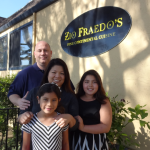
Zio Fraedo’s…a family restaurant

Zio Fraedo's

When it comes to Vallejo, much of the focus tends to go toward innovations on Mare Island, happenings at Six Flags, or all the new business developments throughout the city. One particular aspect of Vallejo’s reputation that often gets swept under the radar is its dining. The city has some of the best Mexican restaurants around for miles, a few great breakfast/lunch spots (like Gracie’s or the Good Day Café), a legendary hot dog restaurant, Sac’s, and there’s hardly a better city in Northern California to get a nice bowl of pho noodles.

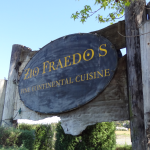
But out of all the food-related feathers in Vallejo’s cap, there’s one eatery that tends to stand out: Zio Fraedo’s, an upscale Italian place that’s located a stone’s throw from the Mare Island bridge, on the mainland. “It’s one of those places where everything looks good, but you can only pick one thing—except for me, I picked like five,” one first-time customer observed.

Zio Fraedo’s in Vallejo is billed as an Italian restaurant, but it doesn’t confine itself by any means. On certain days, you might find German cuisine there, or many elements of American steakhouses like filet mignon or crispy French fries. It also offers Filipino food, Mexican food, and a diverse range of other items, besides being fully stocked with a variety of pastas.

And by the time this magazine goes out in April, Zio Fraedo’s will have unveiled its Sunday brunches, which is just one of many ways the restaurant changes things up.

“Vallejo is a real diverse community and we try to cater to everyone,” owner Tony LoForte said. “You can’t really open a super eclectic restaurant in a town like Vallejo. You wanna make something that’s all-inclusive.”

LoForte grew up in the food business; his father, Tony LoForte Sr., owned restaurants in Contra Costa County and created the first Zio Fraedo’s in Pleasant Hill during the early 2000s. A couple years later, the younger Tony LoForte (who will be henceforth referred to as “Tony,” for clarity) decided to set out on his own and came to Vallejo. He and his wife, Sherry, eventually settled on a location along the Napa River, across the water from Mare Island where the restaurant has remained ever since.

“We love Vallejo; we’ve done very well in this town. It’s been good to us,” Tony said, later adding: “My wife is the anchor of that place; she’s the rock. For one thing, she’s smarter than me.”

Judging by Zio Fraedo’s food, level of service, and look, it might seem like one of those places where you had better dress in a nice outfit and make sure your elbows don’t touch the table. But it’s not really like that, Tony said.

“It’s a nice restaurant but it’s blue collar too. You can go the bar and see a bunch of sheet rockers drinking, and there might be a bunch of guys in suits down the bar,” he said. “It’s a good community place. Everyone eats there, from judges to construction workers,” which, incidentally, is what Tony worked as prior to following in his father’s footsteps.

Zio Fraedo’s has a menu that will tease you a bit, because there’s no way to eat everything that’s good in one night. It offers more than 20 different appetizers (not including salads and soups), from stuffed mushrooms to seafood, and even lumpia, a popular Filipino egg roll.

When it comes to main courses, some standout meals include the fettuccini carbonara, an $18 item that comes with a rich, creamy sauce and crispy Italian bacon.  There are also many different cuts of chicken, beef, seafood, and even veal. Some noteworthy specials include the rack of lamb, which comes right off the bone, and German sausages. Tony says his personal favorite is the tournedos of beef, a $30 item that comes with mashed potatoes topped with garlic crostini and two filet medallions and béarnaise sauce.

“That all goes back to being a place that provides a big enough variety to where we can get people in, more than just on special occasions,” Tony said. “We do specials through the week, including all sorts of fish specials. We have a bar special every night. We do taco Tuesday, which is super. We just try to have something for everybody.”

They’ve also got a diverse wine list and a full bar, which is where Zio Fraedo’s really gets creative. Their signature drink is a Hennessy-based cocktail, and they have a number of other unique offerings that come with some really colorful names. The quirkiest of the punch was called “Porn Star,” a pink-colored cocktail that includes passion fruit. And if you think that pushes the boundaries, well, they used to have a cocktail with a name that there’s no way we’d be allowed to print.

They’re also going to soon unveil a crazy bloody Mary, which will include olives, asparagus, jalapeños, and other treats designed to make it stand out a little more.

“Our night bartender won the Contra Costa martini contest a couple years back when he worked for my father,” Tony said. “We mix it up, we have a lot of fun with it. We do all sorts of crazy stuff here at Zio’s.”

The restaurant is also structured in a way that has something for everyone: it’s separated into several dining areas, and includes a private room with a nice view of the water, along with an assortment of dining tables set up around the bar, which is equipped with TVs.

“We try to make it sports enough, like a sports bar, that we can get people in, but not so it’s like people screaming at the TV all night. Our customers police themselves pretty well,” Tony said.

Tony and Sherry, along with general manager Steve Bump, have amassed a loyal group of staff members. Three have been there since the restaurant began, and six have been working there for at least six years. So if you go, your waiter will most likely be someone who’s invested in the place and committed to giving customers a good experience.

“It’s for two simple reasons: one, we treat them with absolute respect, and two, they can actually make a living working here,” Tony said. “We refer to all of our employees as our kids. I have an employee who’s 61 and I still call him my kid. Because it’s a family, it’s our house.”

And, Tony said, it’s not too uncommon for him and Sherry’s children to help out around the restaurant too. “My daughters love to answer the phone and seat people, they love the business too,” he said. But that doesn’t necessarily mean he wants them to follow in his footsteps. “I want them to do whatever makes them happy,” he said. “If the restaurant business makes ‘em happy I’ll teach them everything I know, but really that’s up to them to decide.”

Zio Fraedo’s is located at 23 Harbor Way in Vallejo. It is open from 11:30 a.m. through 9 p.m. from Monday-Thursday, and 11:30 a.m. through 10 p.m. on Friday and Saturday. On Sunday, it’s open from noon to 8 p.m. Its Contra Costa County-based counterpart is located at 611 Gregory Lane, in Pleasant Hill. For more information, or to make a reservation at the Vallejo Zio Fraedo’s, call 707-642-8984. You can reach the Pleasant Hill Zio Fraedo’s at 925-933-9091. For a full menu, go to www.ziofraedos.com

Nate Gartrell


Nate Gartrell grew up in Benicia, studied journalism in college, and has written for a handful of media outlets since age 15. He aspires to visit all 30 Major League Baseball stadiums and to hit the trifecta at the horse track. 


Golf: The Game of Life

web heads First Tee

A look at how one organization uses golf to teach life lessons to kids

Respect. Courtesy. Responsibility. Honesty. Sportsmanship. Confidence. Judgment. Perseverance. Integrity.

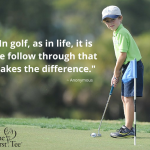
Each of these words represents a valuable aspect of life that we all must learn at some point. But when? Well, the First Tee of Contra Costa believes it’s never too early to start. These are their 9 Core Values that are taught to their students between the ages of 5 and 17, via the game of golf. Now in their 11th year of programming, The First Tee of Contra Costa is a nonprofit youth development organization whose purpose is to provide access to the game of golf for kids who wouldn’t otherwise have the opportunity to learn the game, all while educating them on some of life’s most important lessons.

“Our curriculum was developed and delivered in partnership with golf professionals and educators,” said Monica Sanders, a Class “A” member of the LPGA and Program Director at The First Tee Contra Costa. “The First Tee is an opportunity for youth not only to learn a game that will last a lifetime, but also to learn life skills and core values that will transcend beyond their junior years and carry them into adulthood.”

The First Tee is part of a national organization with approximately 200 chapters across the country including locations in all 50 states, as well as 4 international locations, so they’re able to provide their students with some incredible opportunities. Every year they send 5 youth down to Monterey for a leadership camp where they get to play Poppy Hills and Del Monte golf courses. They also have other skills and leadership opportunities for youth in South Carolina to take lessons from Tiger Woods’ old coach Hank Haney. The First Tee even has its own PGA tour event at Pebble Beach called the Nature Valley First Tee Open where up to 81 First Tee juniors from across the country are paired up with Champions Tour players, an event which is televised internationally on the Golf Channel in late September.

Exciting as this may be, the primary focus here is teaching kids about the aforementioned core values to life. Arguably, any sport could really lend itself to teaching such life lessons, but golf provides a very clear correlation for these kids to attain some priceless learning experiences for life in the real world. “In other sports you have referees, umpires, people who will call the penalties and blow the whistle,” said Sanders. “But in golf, the player is responsible for calling the penalty on him or herself.” That’s where the responsibility factor comes in. Also in the practice of fixing divots and repairing ball marks, in golf the players are responsible for maintaining the field by cleaning up after themselves, respecting the rules and providing a courtesy for the next group of golfers playing through.

Sanders offers another example explaining how they teach judgment. Students are asked during the session about using proper judgment so they can tell how hard to hit the golf ball based on where they are on the course, they’re then asked after class to explain how they can use good judgment at school, or at home. Sanders explains, “At the end of each session we have a bridge to life: How can you use that core value at home, at school, with your family?”

“We have assessments that go throughout the session and we have one at the end,” Sanders says. “What we’re actually assessing is if the children are learning these behaviors. We take a multi-pronged approach to each one of the life skills.” Once a child is enrolled with First Tee they often keep coming back as the years go on. Doing so affords them the best opportunity to really learn and embrace The First Tee’s core values as each class sort of builds on the last. Sanders offers us an example: “We teach the kids how to introduce themselves—how to shake hands, look someone in the eye, say their name when they first meet someone—the first time around, they might be learning these concepts for the first time,” she says. “The second time around we ask if they’re able to demonstrate it, and eventually they’ll get to the point where they’re exhibiting the learned behaviors without being prompted. It’s an amazing thing when you go to a golf course and you have a teenage participant walk up to you, look you in the eye, shake your hand and say, ‘Hey coach! How are you doing today?’”

The First Tee of Contra Costa offers three 10-week sessions, one in spring, summer and fall. In winter they have a 6-week session that solely focuses on “STEM on Course.” More on that later. Most classes run an hour to an hour and a half with anywhere from 6-16 participants on average. Sanders adds, “We keep a safe ratio of 6 kids to 1 coach in the younger classes, and 8 to 1 in the older classes.”

The First Tee utilizes golf courses in Concord (Diablo Creek & Buchanan Fields), Antioch (Lone Tree Golf & Event Center), Walnut Creek (Boundary Oak) and Vallejo (Hiddenbrooke Golf Club) for their programming, but their efforts go much deeper than that. They can incorporate their curriculum with local Boys & Girls Clubs and the YMCA for after-school programs, and they have a national school program as well. “We can go into schools where the PE teacher is taught our curriculum and given all the tools needed to teach our golf- and life-skills program during PE hours,” said Executive Director Wendy B. Jones. “So the PE teacher would be the coach as opposed to our coaches.”

There is a cost for enrolling in a regular program with The First Tee of Contra Costa, but keep in mind that they are a nonprofit and costs are kept as low as possible. “We rely heavily on volunteers, corporate donations, individual donations and sponsorships,” said Sanders. “There’s no way that we could operate this program if it weren’t for them.” At $100 for the 10-week session, which comes out to about $10 per class, that may still be too much for an at-risk or underprivileged youth … “We never turn anyone away for lack of funds,” Sanders says. “We have scholarships available, and for those who qualify we will always extend the full scholarship program.” And in case you think this program couldn’t get any better, Jones adds, “They do not need any equipment. We provide everything.”

Something new The First Tee of Contra Costa has added over the past couple years is incorporating STEM programs into their curriculum. For those unaware, STEM refers to the innovative governmental academic initiative of bringing American students to the top of the global pack in science and math. “We took a break from the life skills and core values, and used the game of golf to teach STEM properties: how does Science, Technology, Engineering and Math incorporate in the game of golf, and how can we use it to teach golf?” Sanders explains. They engage students in activities such as cutting open golf balls and seeing what’s inside, hitting golf balls with different styles of golf clubs that have evolved over the years and using Newton’s laws of physics to judge actions and reactions, mass x acceleration, and much more…

“We do a whole lesson on agronomy and grass growing,” says Sanders. “The kids actually get a little piece of dirt and turf to take home with them!” Kids are expected to water their little plot of land every day and really take care of it, which provides an opportunity for the coaches to talk to these young Californians about water usage. “We talk a lot about how golf courses are now focused toward conservation, how they need to conserve water, how water rationing is a big deal,” said Sanders. “It’s a very timely issue right now.”

They also do plenty of research to make sure that students get the best possible experience from their programming, which led to their adding a girls-only program this year. “Studies have shown that in educational and athletic settings, boys perform better in co-ed environments and girls perform and learn better in female-only environments,” said Sanders. A fair number of classes end up being comprised of just boys anyway, so they want to make sure that all students have the opportunity to reach their fullest potential.

It’s a pretty amazing service that The First Tee is providing for our local communities, and it may be easier than you think to help them out. If you’ve got the time they can always utilize volunteers—all volunteers and coaches do go through a live scan background check. Or just donate golf equipment, golf balls, or attend their fundraising events.

Some upcoming events include their “Taste of the First Tee” wine-tasting event on Friday, May 20th at Round Hill Country Club. And mark your calendars for Friday, August 5th when they’re hosting their 7th Annual Golf Tournament “Fore the Kids” at Boundary Oak Golf Course. To keep up to date with other events and activities, or to inquire about volunteering or getting your child involved, call (925) 446-6701 or visit www.thefirstteecontracosta.org.

Matt Larson


Matt Larson is a writer/actor/comedian native to Vallejo who travels back and forth from Los Angeles way too much. He’s desperate for attention and urges you to follow him on all social medias @MarsLegstrong. He lives for likes, please keep him healthy.

Time to go Home

For as long as California has existed, people have been flocking here to settle down. And for incoming Californians, the appeal of the Bay Area has created a constant demand for housing. The evidence of this is everywhere; pick any city in the East Bay, and chances are the housing landscape is a lot more condensed than it was 20 years ago. But as the cost of living in this area goes up, many are wondering if it’s still possible to enjoy the Bay Area’s many attractions while still keeping up with month-to-month bills.

Well, one way to do this is by settling in the North Bay, which continues to offer relatively cheap land with easy access to the rest of the Bay Area. Local real estate agent ReneeMarie Jordan of Jordan Real Estate Group-RE/MAX Gold ranked Vallejo, Fairfield, and Vacaville as three of the best Bay Area cities for homebuyers.

“Benicia also receives multiple offers but that’s because there are less than 20 properties for sale,” she added. “We are still experiencing multiple offers on most properties in Solano County.”

Jordan’s last point touches on another interesting happening in the real estate market, which is that if you’ve got a home you’re looking to get rid of, you’re in luck! This is a seller’s market, and has been for some time, Jordan says.

“It continues to be a seller’s market and prices continue to be strong,” she said. “This doesn’t mean that prices are moving up daily or weekly, it means that prices are holding and moving up at a comfortable rate.”

Recently, local media have reported on the recovery. The Martinez Tribune, for instance, recently noted that 95 percent of parcels there have bounced back to pre-recession values, a fact that was underscored by Contra Costa County Assessor Gus Kramer. Last year, Kramer reported to residents that the total property tax assessment for Contra Costa County was more than $1.7 billion, which Kramer said is the highest in recorded history. But while California has moved on from the days when a person could drive or take the train through certain towns and see entire blocks of houses with foreclosure notices posted to them, the so-called “foreclosure” era has left its mark on the state. According to Jordan, many folks still report having trouble getting loans these days, and attribute that to banks being more cautious in light of the housing crisis. But that’s not quite true, Jordan said.

“You can get a loan just as easily as you always could, nothing has changed,” she explains. “Except giving loans to people who say they make X amount of money and have no proof. Those buyers should have never been allowed to buy in the first place … I’m the HUD listing agent for Solano County, therefore I have a pulse on the foreclosure market. It has slowed, slowed, slowed down.”

When buying a house in a climate where most local properties are getting multiple offers, it’s worth it to confer with your real estate agent about a strategy. Of course, most important is how much money you’re planning to pony up for the home, but there are ways to make any offer seem more appealing. For that reason, Jordan said, choosing the right real estate agent is often just as important as choosing the right home.

“It’s all in the strategy, next to the money the buyer has of course,” Jordan said. “How seasoned the agent is, does the agent have an established career, etc.”

For folks who are a little short, or want to buy a home with little down, Jordan said there are loan programs available to help. Anyone who wants to find out more should probably contact Jordan; her information is at the bottom of this article.

For sellers, life is a little easier. Most houses that go on the market have a strong chance of getting offers, and folks who have extra desirable properties can sit back, watch the offers pile up, and pick their favorite one.

“The longer the house is on the market, the less value is perceived by the buyer,” Jordan said. “Buyers are savvy. They are educated on the buying process and most have done their homework even before talking to an agent.”

For folks who want to improve the value of their homes prior to selling (or after buying), there are some simple things they can do, according to Jordan, who says appearances—like nice landscapes, gardens, or indoor amenities—are a “must” for sellers, and “is key for interest of a buyer.”

“It always works to clean, have fresh paint, new carpet,” she said. “You can get away with not having recently remodeled baths and kitchen if you do the other items. So many times now this is the difference between multiple offers versus one offer, and longer time on the market,” which, as previously noted, can lower the perceived value of a home.

That’s where folks like Jodi McGuire come in. She’s in charge of the locally based Total Home & Garden show, which are held in Solano County and designed to cater to homeowners’ every need. Her shows have items that can help with landscaping, furnishing, painting, and they even hold pet adoption events—you can literally go there, buy a puppy, and also purchase all the stuff you need to clean up the messes it will inevitably make.

“There is something for everyone, whether you are in search of some ‘do it yourself’ projects or to spruce up your home for resale,” McGuire said. “Our show offers homeowners a convenient destination to gain expert advice for any project they may be working on. Exhibiting companies have the opportunity to meet homeowners face to face, who are investing money in various home improvement projects.”

McGuire holds two shows a year, usually in spring and fall. The spring show is coming up—it will be held April 15-17, at the Specialty Event Center, which is located at 300 Chadbourne Road in Fairfield. McGuire says she expects the next show to be held sometime in October, so if you miss the one in April, it’s going to be a long wait.

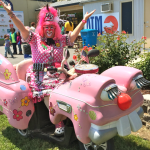
“The Total Home & Garden show is not your ‘typical’ home show,” McGuire said. “We have everything, from a tribute to Elvis with his pink caddy on opening day (which is our senior day) as well as arts and crafts, jewelry, a petting zoo, bounce house, and lots of interactive children’s activities.”

The garden aspect of the spring show will feature products and techniques for residents who are looking to save water (and, by extension, money) in drought-ridden California. Luckily, we’ve had a fairly wet winter, at least compared to recent years, but that doesn’t mean another long, hot summer isn’t right around the corner.

For those into home cooking, there’s another bonus: The spring show—on both Saturday and Sunday—will feature 12-year-old champion of the Food Network’s Chopped Junior Mason Partak, who will do cooking demos for attendees, McGuire said. And for any adults who might be jealous of the kids’ amenities, like the bouncy house, don’t worry—grown ups will be able to have their fun too.

“Adults can enjoy cold beverages at our beer garden and margarita lounge, equipped with two flat screen TV’s to enjoy any of the weekend games, plus the whole family can grab a bite to eat at our food court,” McGuire said.

So, in other words, if you enjoy shopping but your spouse or romantic partner doesn’t, drop him or her off at the margarita lounge and take your time!

The Total Home & Garden Show will cost $8 for adults, $6 for seniors or members of the military, and $3 for kids up to age 12. For more information, visit www.totalhomeandgardenshow.com or follow them on Facebook at www.facebook.com/totalhomeandgardenshow.

ReneeMarie Jordan of Jordan Real Estate can be contacted at 707-746-4864 or by visiting www.jordanrealestate.com.

Nate Gartrell 3


Nate Gartrell grew up in Benicia, studied journalism in college, and has written for a handful of media outlets since age 15. He aspires to visit all 30 Major League Baseball stadiums and to hit the trifecta at the horse track. 

Canine Guardians

Everyone needs a helping hand from time to time. There are those of us that need it a bit more often due to a disability or injury. Many of the things that most people take for granted, such as opening a drawer or picking something up off the ground, is an incredible challenge for some of us. For a few it is an insurmountable challenge that prevents them from living their lives independently. That is where Canine Guardians come in. They train ordinary canines to become extraordinary service dogs that allow people to regain their lives, freedoms and independence. These animals are highly trained to meet the individualized needs of their companion. They can be trained to perform a myriad of tasks that a person might be unable to perform due to their injury or illness. They can also be trained to help in ways that a human couldn’t, such as helping to sense when a diabetic’s blood sugar is out of balance before it becomes a medical emergency. They can also be trained to provide companionship and comfort to those dealing with emotional and physical wounds, such as a soldier returning from battle. They can even help young children who are struggling with reading by providing a non-threatening companion for the child to relate to and read to.

Canine Guardians Creator and Executive Director Rochelle Heskett wants to help meet this critical need in the North Bay Region but she needs the help of the community in reaching her goal to provide a service dog to every person that needs it. Time and resources are needed and you can help by providing one or both of those to Canine Guardians in their efforts to assist those most in need. Visit their website to learn more about their programs and how you can participate in helping them, also look to attend one of their upcoming events.

2300 Arthur St, Napa, CA 94559

707-363-0773

www.canineguardians.org