Pacific Blues Café

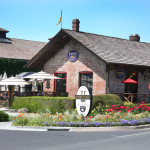
The Napa Valley offers some of the best cuisine in the country. No matter what your taste, budget or service expectation you can always find a great meal in the Napa Valley. For that reason, the winner in this category always faces stiff competition. Pacific Blues Cafe, though, is no surprise as the winner this year. Owner Jeff Steen has been recognized before through many awards for his charitable endeavors in the Napa Valley. It is only fitting that our readers would acknowledge Pacific Blues Cafe for their hospitality and great food. Jeff and his team focus on high-quality ingredients using organic meats, fresh fish and daily baked breads. This makes the difference between a good meal and an amazing one. The portions are always generous and beautifully presented. Next time you are in Yountville, say “Hi” to Jeff and try their signature Blues Burger with homemade jalapeño jam for a juicy, spicy experience you will not regret and see for yourself why our readers selected Pacific Blues Cafe.

6525 Washington St, Yountville, CA 94599

707-944-4455

www.pacificbluescafe.com

Fennel, Who Knew?

Tales_Kitchen_web

I need to begin this tale with a bit of backstory … it happened many moons ago while I was still in culinary school. It was December and I wanted to make a hot apple cider for Christmas Eve, so I sent my husband off to the store to buy star anise. When he returned he came back with an onion-like bulb in his hand. I was, of course, irritated, because I knew what star anise was and that was not it! This imposter was in fact fennel. At that very moment though I was stumped, not knowing why this fennel bulb had been mistaken for star anise. My husband innocently informed me that the produce manager had given it to him when he asked for “star anise.” Needless to say we did not have the hot apple cider but I will never forget that mix up because I knew then that there was more to this large bulb than I knew right then.

Fast forward a few years and I was reintroduced to fennel by a friend at work. She swore by this simple dish of braised fennel with Parmesan cheese, salt and pepper. It sounded tasty, but I still did not understand the general appeal because of the licorice-flavor fennel seems to have. You have to understand something about me—I never wanted to be a savory chef. I went to culinary school but my passion was, and still is, baking. I always loved to cook, but I would never consider myself a foodie. I have evolved and want to learn as much as possible, which is why I love writing these stories to educate both you and I.

In my investigation for this story, I have now solved the mystery of why the produce manager sold my husband the fennel. Fennel is often labeled star anise. Now this is wrong, mind you, as they are not even the same plant. This general confusion makes people think that fennel has the same very strong licorice flavor as anise. Fennel is actually far more delicate. It has licorice-like undertones in its flavor but they are very subtle. I know Italians enjoy fennel in a variety of ways in their cooking. I even recall a vague conversation about ruining lasagna by using too much fennel seed.

It also turns out the bulb that my husband brought home from the store many years ago is not even from the onion family as I thought. Fennel is, in fact, a part of the parsley family. There are three principal types of fennel: bitter, sweet and Florence. The Florence is the type you generally will find in your local produce department. Bitter fennel is a thin-stemmed plant that is mainly grown in Europe for its seed. Sweet fennel is favored and generally grown in Italy. The sweet plants have a tendency to revert to bitter tang as they age. The sweet seeds have a mild anise-like flavor, which the bitter variety lacks. Florence fennel, or finocchio, is considered a vegetable; the short stumpy plant has the base of a solid overlapping mass which may be as large as a fist. The name finocchio is simply the general Italian word for fennel.

When you buy fennel choose large, firm bulbs with the feathery stalks still intact. Rounded bulbs tend to be sweeter than the more flattened, elongated ones. Pale fennel is often sweeter and less fibrous than the dark variety. Make sure there are no brown or soft spots and that the stalks aren’t dried out or limp.

You’ll need to trim fennel before cooking it. Start by cutting the stalk off as close to the bulb as possible. If you are going to cook the fennel leave the outer layer, but if you are going to eat it raw you may want to remove it. When braising, grilling or roasting just cut the bulb in half and then into four to eight wedges before cooking. When consuming it raw, core the bulb (the core can be quite tough) after cutting it in quarters, then cut them into half-moon slices.

I discovered a very simple winter salad using raw fennel, orange segments, red onions and black olives, and then dressing it with lemon juice, olive oil, salt and pepper. It will give the palate quite a charge of crisp, cool, salty and sweet. It’s important to cut the fennel very thinly. I would suggest using a mandolin for this job so you can get your slices paper-thin. Note: only cut the fennel as needed because it will dry out very quickly.

Those of you who are trying to get a “clean” food start for the new year (like me) may want to try the braised fennel in place of an au gratin dish. Trading those starchy potatoes and cream for fennel in a vegetable stock would be an excellent alternative. Add the Parmigiano-Reggiano at the very end of the braising just so it gets well browned and helping to save on the calorie count. Just one other nutrient note: Fennel also has antioxidants, vitamin C and potassium.

Who knew fennel could be so versatile? You can prepare it by using any cooking method: frying, sautéing, braised, roasted or even raw. My personal favorite so far is braised, but no matter how you prepare your fennel it becomes almost creamy in texture once it is thoroughly cooked. It loses the crunch but gains a certain sweetness. Even the core, despite its original toughness, becomes tender and mild.

Enjoy!

By Chef K. Marie Paulk

A Professional Storytelling Experience

storytelling

What to expect at the 30th annual Bay Area Storytelling Festival

Storytelling has been around since the dawn of humankind. A bold statement, but it’s probably true. It’s also the most common form of entertainment today, though it’s usually disguised as film, music, dance … stand-up comedy is probably the most recognized form of direct storytelling that we’re used to experiencing. But if what you’re looking for is raw, unadulterated, next-level storytelling, and you live in the Bay Area—you’re in luck.

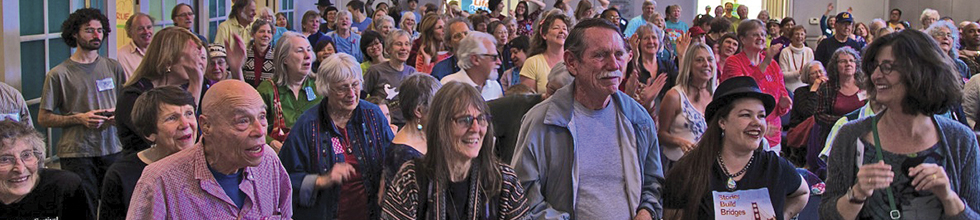
The 30th Annual Bay Area Storytelling Festival takes place from April 29th through May 1st. It is also, at this writing, slated to be the last, but we’ll get to that later. For years it was held in El Sobrante, then in Point Richmond, and is now being held at the Orinda Community Center as of last year. If you don’t quite know what to expect, a professional storyteller may provide you with an experience you’ll never forget.

“The stories often will stay with you,” said Linda Yemoto, a co-chair of the festival who attended the first one as a guest 30 years ago and has remained involved ever since. “The stories will get to your head through your heart. You sort of take it in and think about it; often there’ll be a story that really hits you.”

Experiencing a storyteller is a bit different than other forms of entertainment. “It’s a direct communication,” said Yemoto. “Not like a player performance where there’s a fourth wall, that doesn’t exist in storytelling. What makes it so special is that connection between the teller and the audience.”

Subject matter for these stories comes from as broad a range as Yemoto and her team can find. “When we put our lineup together we’re looking for diversity,” she said. “Diversity in culture, but also diversity in style of storytelling and the types of stories that the tellers tell.” To scout for new talent she’s attended the National Storytelling Festival in Tennessee about every year. Professional storytelling is actually a pretty big deal as there’s also a National Storytelling Conference and a whole circuit of storytellers that are part of the National Storytelling Network organization. Storytellers are touring the country all year round it seems. This particular festival is also a project of the Storytelling Association of California.

“There are people that can make their living as professional storytellers,” said Yemoto. “And they do it so well.” If you’ve never been to such an event before, she adds, “You’ll be blown away at the quality. It’s something that most people don’t expect.”

Upcoming tellers for the 30th anniversary festival include Bil Lepp, an internationally known storyteller and humorist who is a 5-time champion of the West Virginia Liars’ Contest; Antonio Rocha who incorporates the art of mime into his unique storytelling; Elizabeth Ellis who is a veteran family-friendly storyteller with more than 35 years in the game; Eth-Noh-Tec who specializes in “Kinetic Story Theater”, and many more amazing individuals.

Older kids are encouraged to attend, the younger ones may struggle with their attention span as some stories can end up lasting a whole hour. Also, not all of the content is family friendly. “We do have a kids concert on Sunday that we gear toward younger kids,” said Yemoto. “This year on Sunday we’re going to dedicate one of the spaces for family-oriented stories.”

Performing storytellers are booked up far in advance, but if you feel you’ve got what it takes, there will be some opportunities to both hone your technique and put it to the test at the festival. Friday morning you can sign up for a 3-hour workshop led by one of their professionals to help any potential storyteller—from those looking to get their start to those looking to hone their art. There may be some other learning opportunities, but as this is the 30th anniversary festival they’re packing it with as many performances as possible. Plus, watching the experts is a great way to learn any skill, especially if you’re in search of inspiration.

If you feel ready enough for an audience, the festival will have some open mic opportunities! Or as the festival calls them, “Story Swaps,” complete with an emcee and all. You can sign up to tell stories of either 5 or 10 minutes and maybe get yourself started on a new career path! Or, ya know, just do it for fun. Signups are done on-site only, not in advanced, and names will be drawn out of a hat. So if this interests you, start getting the wheels churning about what you’d like to share with the world.

If you’ve been attending regularly over the last 30 years, you know how much the Bay Area Storytelling Festival has added to the community. “People who have come for many years have gotten such a broad education in terms of different cultures, different stories and different styles of storytelling,” said Yemoto. “I’m going to miss it…” Which takes us back to the fact that this is slated to be the last Bay Area Storytelling Festival of its kind.

“We made a commitment a couple years ago that we would see the festival to it’s 30th, and let our community know that was going to happen in hopes that if people were interested, they would step up and take it over,” said Yemoto. At this point nobody has done that, so with a heavy heart, she and her team are planning to make this last festival the best one ever. “I know people are going to miss it,” she said, but they’ll never forget it. “Some of what they’ve gotten over the years will just stay with them forever.”

To get tickets, to get involved, to inquire about taking the reins for next year, call (510) 869-4946 or visit www.bayareastorytelling.org. Last year’s event pretty much sold out, so get your tickets soon! Happy listening.

20150518 Matt Larson in a chair pic


Matt Larson is a writer/actor/comedian native to Vallejo who travels back and forth from Los Angeles way too much. He’s desperate for attention and urges you to follow him on all social medias @MarsLegstrong. He lives for likes, please keep him healthy.

Kimono’s – A Taste of the Far East

kimono

Benicia is such a small, talkative town, that when a new restaurant pops up, the entire community reacts. And there is a process by which Benicians collectively decide if the new place is any good. First, they’ll go to the new restaurant in droves, and you’ll see a quick spike in popularity, which doesn’t necessarily last. But if the food and service is up to Benicians’ standards, you can expect that place to be part of the town’s landscape for quite some time.

Kimono’s—the town’s brand new Japanese grill and sushi restaurant—is the latest local joint to pass that test, and they’ve done so pretty emphatically. If you drive there after 5 or 6 p.m. on any day that they’re open, you’re most likely going to see a full parking lot. And that doesn’t even tell the full story—from their very first week the restaurant’s owners experienced such a demand that they were forced to install valet parking, along with an offsite valet parking lot, said John Meric, one of three founders of the restaurant.

“Really, the parking was the only problem we had, but ever since we started offering free valet at night that’s taken care of it,” Meric said. “We have a valet lot 59 seconds away for when the main lot gets too full, and we haven’t had any problems with it.”

For those who haven’t been there, Kimono occupies a lot next to McDonalds on East 2nd Street, the lot formerly occupied by the luncheon diner Pappas. Ironically, Pappas received national attention for the exact opposite reason that Kimono is getting so many local accolades; the Food Network, after it put Pappas on the show “Restaurant Impossible,” described the restaurant as having, “a drab interior, lackluster food,” and heading towards “extinction.” Once Pappas eventually shut down in 2013, the building remained vacant until Meric, along with his brother Raffi Meric and their father, decided to form a Japanese restaurant there last year.

Surprisingly, up until this point, the Meric family has made its living in the jewelry business. They have no background in the restaurant business, none of them are Japanese, and despite it’s polished look and formula, Kimono is a single restaurant, not a franchise chain. So, why did these three men decide to form a Japanese restaurant, and how the heck have they been so successful at it? The answer might be a lot simpler than it sounds…

“Believe it or not, the two businesses are almost exactly the same,” John Meric said. “Except one is diamonds and one is steak. It might be unusual, but we’re entrepreneurs!”

John says that it was a trip to Hawaii and Japan that inspired them to start Kimono and to open it in their town of Benicia.  After sampling the local cuisine in both areas, the family realized that they were having a blast. They decided right then and there to “diversify,” Meric said.

“My father, brother and I dine in Benicia all the time, but we never come across a really interesting or entertaining restaurant,” Meric said. “When we were in Hawaii and Japan we were having a good time, and we just said, ‘You know what? This would be great in Benicia.’”

So they returned home, acquired the old Pappas property, and began to rebuild the place from the ground up. At first, they tried to open a Benihana franchise but soon learned, to their surprise, that Benihana is no longer opening new American franchises; if they wanted to start a new Benihana restaurant they were going to have to go overseas. They didn’t want to do that, but they weren’t deterred at all by the rebuke, rather, they decided to set out on their own.

They hired a Japanese architect to restructure the interior with multiple rooms, a bar, a sushi bar, booths, grills on the restaurant floor and even a fish tank by the entrance. Folks who used to eat at Pappas probably won’t be able to recognize the inside now.

“We basically just worked with the right people over and over,” Meric said. “We didn’t leave anything old; everything is brand new here. We basically re-built the place from the ground up.”

They also hired a former Benihana manager of more than 30 years to run the kitchen, and a GM who worked at a similar Japanese restaurant for many years. They also chose to spend extra money on food to ensure high quality and, unlike many restaurants, they make sure to thoroughly clean their kitchen “top to bottom” each day, Meric said.

“We’re really picky about food quality. We have one of the greatest, Mr. Hiroshi (the head chef), and his experience and expertise in fish and steak is unparalleled,” Meric said. “This is what he’s done all his life. And we don’t cut corners when it comes to food. The cost might be high for us, but people really seem to appreciate the quality, so we’re not bringing it down.”

To illustrate this point (and the restaurant’s popularity) Meric pointed out that, although they focus more on grilled food than sushi, they get fresh fish every other day. There was also a recent occasion where he and his co-owners were doing a taste test on chicken and encountered a dilemma. The sample that everyone agreed on was far and away the best was also the choice that cost a lot more than the median price. They talked about it, but ultimately decided to grit their teeth and bear the extra costs of the chicken, since they couldn’t deny that it was the best, Meric said.

“And our sushi is triple-a quality,” he added. “Even though we bring in fresh food every other day, none of it goes to waste, because we’re always so busy.”

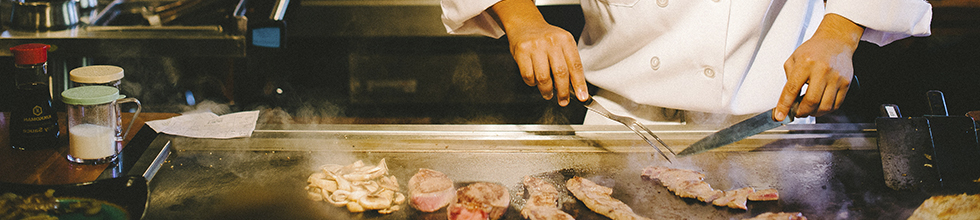
Kimono is broken up into multiple sections, each designed to cater to a particular customer’s needs. There are normal booths for more intimate dining, situated near to the sushi bar, which is adjacent to their gigantic, vibrant fish tank. Across from the booths there are a series of table/grills where folks can sit and watch their food get grilled right in front of them. In keeping with that theme, there is also a private party room with more table/grills (if you’re planning a party at Kimono, remember that its party room seats up to 40 people). On a typical weekend evening, every single space in the place is usually full, so plan accordingly!

When it comes to the table/grills, Kimono has a routine. They’ve got it planned out so that each dinner, from when you walk in to when you finish desert, should be around an hour and a half. But that only works if everyone from your party shows up at the same time, Meric said, because Kimono’s chefs have been instructed to cook everyone’s meal in front of them, all at once, so they have to wait until each person in the party has ordered. So if a member of your party is late and you have to wait around, make sure to guilt them into picking up the tab.

There’s also a full bar, of course, with the means to make all the normal cocktails you can get these days, plus a few in-house specials, plus a few unique Japanese treats like sake or Japanese wine. Among the best spirits in the house is the Japanese Yamazaki whiskey, aged 12-15 years, from the country’s oldest distillery. If you try it, it’s 80 proof, but contains less bite than wine or beer, so beware!

When it comes to food, they’ve got everything from teriyaki and teppan steak and chicken, filet mignon, and Kimono New York strip steak, to an assortment of basic and specialty sushi rolls, which are crafted for aesthetics as well as taste. They’ve got octopus, crab, shrimp, salmon, squid, halibut, tuna, sea urchin, and many other kinds of seafood, and when you get it, you be assured that they either got it delivered fresh that same day, or the day before.

“We’re really picky about, ‘fresh,’ and ‘clean,’” Meric said. “Those are the two most important things to me. That and customer service.”

And although he’s been the spokesman for the place in our article, Meric was adamant that he wouldn’t be enjoying the success of the restaurant if not for the hard work of his co-owners and co-founders—his family.

“My brother and father work very hard on this,” Meric said. “I’d rather give them credit more than me.”

Kimono is located at 1654 East 2nd Street in Benicia. They’re open from 11:30 a.m. to 9:30 p.m. on Monday thru Thursday, 11:30 a.m. to 10 p.m. on Friday and Saturday, and 9 p.m. on Sunday. For more information or to request a private party room, call (707) 750-5418.

Kimono has two main ways to leave reviews, Yelp and Facebook, where they have 4.3 stars and 4.7 stars respectively (Facebook readers seemed to have a much better sense of the place). You can also follow them on Facebook where they’re pushing 4,000 likes in their first year (pretty good for a town with a median age of 42), by visiting this link: www.facebook.com/KimonoRestaurant.

Gartrell3


Nate Gartrell grew up in Benicia, studied journalism in college, and has written for a handful of media outlets since age 15. He aspires to visit all 30 Major League Baseball stadiums and to hit the trifecta at the horse track. 

Touro University

touro

Building 89, a Piece of History becomes Touro’s Future

Walking through the doors of the newly opened Touro University California Translational Research Clinic and Student Health Clinic, one is immediately surrounded by modern furniture, freshly installed flooring, contemporary lighting fixtures, and state-of-the-art equipment. But there’s another aspect of this decades old building that comes to life when entering – it’s history.

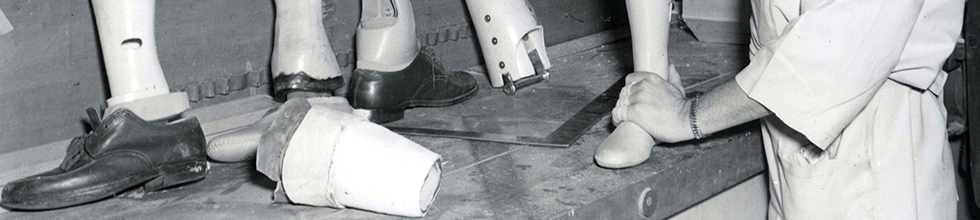
As with many of the structures located on this historic Mare Island campus, the clinic, once known as the Brace Shop, assisted hundreds of wounded young men during World War II who entered its doors requiring limbs lost during battles. They were seeking solutions to better their health and become productive community members. Touro University California is carrying this legacy today, with dedicated students, faculty, and researchers.

The steadfast building that spans 6,200 square feet dates back to the 1940’s when it was hailed for its groundbreaking work as a prosthetics fabrication facility. In those days, research was centered around finding new ways to aid the many amputees that flooded the nearby hospital on a continuously increasing basis. When wartime pressed its forceful arm against prosthetic supplies like willow wood and the likes the researchers began to expand and try to advance their designs by experimenting with plastics and other materials paving the way for future designs.

Its medical breakthroughs and innovative approaches are coming back to life at Touro, with research and clinical trials on diabetes, obesity, cardiovascular issues, and more. These studies will teach and aide students in their education to find solutions that will better the health of its community members.

“By focusing our efforts on high public health impact areas such as diabetes and obesity we are able to span the full spectrum from the basic sciences, to translational research, to clinical trials and eventually to a public health perspective, all the while allowing the pertinent information gleaned to be simultaneously incorporated into the curriculum to keep our students current and at the state of the art,” Dr. Michael Clearfield, Dean of the College of Osteopathic Medicine at Touro, said. “The resources offered through this new building reflect the core mission of our University by serving our students and society through innovative multidisciplinary approaches to education, research and community service.”

The modern-day reincarnation into a research clinic continues the tradition of solution-oriented medical research with which the building survived on all those years before. The building’s new design integrates a strong respect for the original form, incorporating plentiful natural light, interior glass partitions, high ceilings throughout and skylights.

Today, research being conducted at the facility will have profound effect on the general population similar to the way its prosthetics fabrication roots had so many years ago. Under the direction of Touro’s Dr. Jay Shubrook, Diabetologist, the clinic will launch with a study focusing on how the state of hypo- and hyperglycemia alter driving ability. In addition, studies by Touro’s Dr. Jean-Marc Schwarz will further elaborate and continue to pursue solutions on childhood and adult obesity as it relates to diabetes.

The new Clinic will also house a DEXA machine, donated by Nevada-based Steinberg Diagnostics Technology, which will allow metabolic researchers to measure bone density, conduct critically important body composition studies, and access body fat in a non-invasive way.

The future research at the Touro Translational Research Clinic will address causation and work to adapt and make advancements for future breakthroughs and lifelong resolutions. Having researchers work closely in an interprofessional environment will also allow the team to maximize resources and grow.

The Student Health Center portion of the building will allow for improved health services to students, including counseling services.  As Touro trains health professionals and educators, these services support student wellness and health balance needed to be successful in their rigorous academic programs.  This Health Center represents an increased focused on supporting the student learning environment and plays a key role in encouraging the life long process of integrating students’ learning with their personal health habits and practices.

Changed but not forgotten the prosthetic fabrication facility has forever made its mark on Mare Island. Its legacy will not only be remembered but will be honored and advanced for decades to come.


Mustard Seed Clothing Company

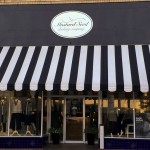
The Mustard Seed Clothing Company has been dressing Napa Valley women for over 33 years, always listening to their customers and providing them with clothing for Napa Valley’s sophisticated yet casual lifestyle.

Happily, visitors from all over the globe enjoy their clothing choices as well, discovering unique clothing they don’t see at home. Mustard Seen carries clothing lines you may recognize: Eileen Fisher, Joseph Ribkoff, Elliott Lauren, Tribal, Color Me Cotton, Habitat, Nic and Zoe and many other unique lines you haven’t heard of.

Owner Barbara Wiggins is proud of their casual and very friendly shopping atmosphere, she even has a “Guy Chair” for that reluctant male who hates to shop.

“The Mustard Seed Clothing Company is so very honored to have been selected as the Local’s Choice Award for Best Retailer in the Napa Valley.”

We encourage you to check out this amazing boutique, where great style is always in fashion.

1227 1st St, Napa, CA 94559

707-255-4222

www.mustardseedclothing.com

Blue Goose Antiques

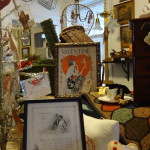
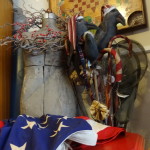
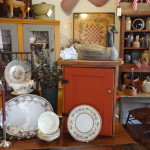
Marge Delmas and her husband Dave would like to thank their customers and the readers of Local Happenings Magazine for their continued support and once again voting for them as the Local’s Choice retailer of the year in Solano County. They greatly appreciate it! Their shop, inside of a charming old 1891 house, represents their lifelong passion of collecting and selling antiques for owner Marge. People come to shop, and many become not only customers, but friends, and often come to sit and chat as well as shop. Helping people find the perfect piece for their home is one of Marge’s greatest joys. She enjoys helping people discover the ideal items that will help make their house a home. If you are looking for that special primitive or accessory for your home, you will have come to the right store. You will find a selection of primitives dating from the late 1800’s to the early 1900’s along with other antiques in this cozy shop. Primitives are not only a way to savor the past, but also treasure the future. Stop in, browse and visit with Marge and Dave. They are open Wed thru Sun 10:30 am to 5:30 pm.

622 1st St, Benicia, CA 94510

707-745-1715

A Dress Change

Now in their 7th year of business, A Dress Change continues to be excited about their growth, endless new merchandise, fabulous new and loyal customers and most importantly—being here for you, their customers.  They are more than honored to have been selected as the Local’s Choice Award for Best Retailer in Contra Costa 2014. This makes their 6th award in the past three years, which says a lot about this homespun store.

A Dress Change offers moderate to high-end women’s clothing, shoes, handbags and accessories that are two years and newer. Some of their most popular brands are Eileen Fisher, Chico’s and an undisclosed “new” line of samples similar to Eileen Fisher and J. Jill, just to name a few. This cozy store has over 5,000 items to select from in sizes from 0P to 3X. They also offer senior discounts every Wednesday and all garments are reduced at 30 and 45 days old. Intake is done by appointment. They are currently booking for spring intake in April so give them a call.

Its all about the hunt, sometimes you score and sometimes you dont.  We look forward to seeing you soon! – Donna Read

125 Railroad Ave, Danville, CA 94526

925-855-5581

www.adresschangeconsignment.com