Most of us go to work everyday and for many of us that means a commute. As we all know, a commute in the San Francisco Bay Area often means a lengthy amount of time on the road due to traffic, distance, parking and tolls. To avoid these things, many of us turn to public transportation to get us to our jobs on a daily basis. For some, public transportation means a boat or a train, but for many it means the bus. We wanted to take a look at that major piece of the commuting puzzle to see how it is changing to meet the needs of the modern commuter. We sat down with the staff at SolTrans, the transit operators for Vallejo and Benicia, to discover just what they are doing to help their passengers enjoy their lives just a little bit more.
Now, I have to confess that I do not take the bus on a daily basis. Much of the commuting that I do is not very structured, making it difficult to for me to use public transportation on a regular basis. Much of my previous experience on the bus was from my younger days, which, like the song goes, was a long, long time ago. So, in order to refresh my memories and see how things have changed I took a few rides to experience it firsthand. One of the first things that struck me on the trips that I took was how closely the bus was to its printed operating schedule and how clean and well maintained the buses were. My first concern tends to be my schedule so the fact that they were running so precisely brought a smile to my face; the fact that the buses seemed so nice and well maintained helped to keep it there.
I was also able to take my wife and our three very young children for a little trip as well, which they all enjoyed immensely. My children, who are 4, 6 and 9, really enjoyed the ride and the opportunity to take a trip free from their normal child-restraining systems that they typically have to endure. It was nice to be able to sit and talk with them during the journey as opposed to the occasional glance (and sometimes glare) to the back seat to make sure that they are not getting into any shenanigans. It was a very welcome change for my wife and I. Plus, since we could experience the ride as they were we did not have to engage them in a round of twenty questions when they said, “What is that Daddy?” All of which made the journey that much more enjoyable for both my wife and I as well as for my children, who are now inquiring about when they can take more rides on the bus with us! I have to admit that I was a little apprehensive at first but it was such a smooth experience that we will certainly consider ways to use SolTrans again in the future for our travels with the little ones.
Sitting down with the staff at SolTrans to learn about what they are doing in terms of technological changes was also very interesting. I had seen the biodiesel vehicles that they are switching to but it was nice to experience them firsthand. We also had the chance to take a trip in a newer vehicle that SolTrans is considering—an all-electric bus. It was interesting to ride in the “Tesla” of public transportation and to see if the ride was much different than what we’re used to. It was certainly quieter and a little smoother than a typical bus, but it seemed to have the same acceleration and power. The technology that really intrigued me was their Automated Vehicle Location (AVL) system that they are in the process of installing in their buses. AVL is basically a networked GPS system for the buses, the operators and the public, that helps to improve efficiencies and eliminate the guesswork of the transit system. I had never given much thought about the management of a transit system, but when you consider it, the drivers have a lot of autonomy in their job once they leave their facility. That, of course, makes it challenging for their oversight since managers and dispatchers can only guess at the precise whereabouts of a particular bus at any given time. It is also a challenge to accurately gauge travel times at different periods of the day, due to variables such as traffic. The AVL system will allow everyone—including the public—to “see” where the bus is in real time. This level of tracking helps to eliminate the guesswork of when the bus should be arriving, but also allows for better scheduling and minimizing problems in emergencies or when mechanical failures occur. In the not too distant future, riders with a smartphone will be able to see where their bus is and also get alerts about problems and delays so that they can better plan their day as well. Integration with current technology, like Google Transit, will also help not only with the everyday commuter trips, but also with longer trips, and when using multiple modes of transportation such as the bus, train and ferry. All of this will help to make commutes smoother with less anxiety for the people that have to utilize them everyday.
SolTrans is also in the process of updating its facilities as well. After the creation of a state-of-the-art transit center and operations hub in downtown Vallejo, the staff at SolTrans has been working on renovating their operations and maintenance facility, along with upgrading an additional transit center in southern Vallejo at the intersections of Curtola Parkway and interstates 780 and 80. The staff is excited about both projects and how they will help them in their quest for improved rider satisfaction as well the improvement and conveniences it will bring for the drivers and rest of the SolTrans operation staff. The Operations and Maintenance facility renovation should be done by about the time you are reading this article. The Curtola Park and ride will be completed in the late third quarter or early fourth quarter of 2015.
All of these improvements will help build on an already pleasant experience for both the daily and occasional commuter. In an effort to help the community to discover them, SolTrans will be helping out at several community events to help the public enjoy those as well, such as the Vallejo Art Walk, the Vallejo and Benicia 4th of July parades and the Vallejo Waterfront Weekend, to name a few. The team at SolTrans hopes that they can help you with your next trip to an upcoming happening. Enjoy!
Robert Briseño – When not out writing stories for Local Happenings he always tries to relax a few minutes so he can gather his strength to have the energy to chase down his three busy children.
by Kristine Mietzner
A silent presence, raptors grace the sides of highways and byways and farmland of Northern California. Among them are Swainson’s hawks, golden eagles, burrowing owls, American kestrels, red-tailed hawks, white-tailed kite, barn owls, great-horned owls, peregrine falcons, prairie falcons, and the occasional American bald eagle.
Watchful eyes
It’s not uncommon to see a Swainson’s hawk perching in the upper reaches of a eucalyptus tree or a red-tailed hawk surveying the world from the broad branches of an old oak. These birds of prey frequently nest in the oak, cottonwood, and eucalyptus trees in this area.
Nestled beside farm fields at the edge of Davis, the California Raptor Center (CRC) receives injured hawks, eagles, American kestrels, and owls. At the CRC, a program of the UC Davis School of Veterinary Medicine, these birds of prey known for their keen eyesight and sharp talons are given a second chance. The center is an educational and research facility dedicated to the rehabilitation of injured and orphaned birds of prey.
Hospital Zone
A collection of old buildings and spacious cages serves as a trauma center and rehabilitation facility for the area’s injured raptors. Each year as many as six to ten veterinarians from the veterinary hospital treat the injured and rescued raptors that are brought to the CRC.
Operations Manager Bret Stedman has worked at the CRC for 33 years. He started as a center volunteer when he was a UC Davis undergraduate and eventually his work turned into a career. These days, an average of 55 volunteers assist at the CRC. Collectively, these dedicated individuals annually donate an estimated 11,500 hours in tender loving care to raptors and the CRC.
Home Safe
The CRC becomes a new home for raptors whose injuries mean they will never thrive in the wild. For instance, some might have wings that won’t be strong enough or eyesight too poor for hunting. Among the raptors deemed non-releasable, many become teaching birds, ambassadors for their species, as part of the center’s educational outreach program. These birds participate in presentations on and off the site. Each year the CRC reaches about 5,000 persons through tours and outreach programs in school and with other community groups.
Stedman says, “When people see a raptor up close, it gets their attention and they get to know one bird’s story. They often build a connection and concern for the bird that extends to other members of that species. When people start paying attention to one of our teaching birds, that interest can grow into a greater appreciation for all raptors.”
Flights to Freedom
The first hope for each injured bird brought to the center is that it will be restored to full health and be released back into the wild. According to Stedman, 55 to 60 percent of the raptors brought to the center are treated and released. Stedman says that’s a relatively high percentage for a rehabilitation center.
In the process of training a raptor to the glove for educational purposes, the bird is fitted with anklets and jesses, to which a leash is attached. This offers some control over the bird’s actions while an experienced handler teaches the bird to accept the company of a human partner. Through daily sessions over a long period of time, eventually these birds learn to remain calm in front of a crowd and some are further trained to accept traveling in a crate for presentations at schools and other community groups. The center’s teaching raptors are trained to work with several handlers.
Hawks
Among the hawks at the center are Grasshopper the Swainson’s hawk, Rosa the Harris’s hawk; and Angel and Diego, both red-tailed hawks.
More red-tailed hawks live in and around urban areas these days, apparently attracted by the rodents that follow human activities. They’ve been photographed catching pigeons in cities. In different parts of the country, one will see different variations of coloring among red-tailed hawks. Red feathers on a hawks legs, belly, and chest means the bird is termed a “rufous” red-tail, which are common here in Northern California.
Swainson’s hawks’ Successful Comeback
Swainson’s hawks, named after British naturalist William Swainson, have made a comeback from 400 California nesting sites in 1979 to more than 2200 today. This was largely accomplished after harmful pesticides were banned in Argentina, and also because of habitat protection, according to Bret Stedman, Operations Manager at the California Raptor Center. GPS tracking systems placed on some birds provide a signal that goes into space and directly informs scientists of their locations.
In the past, banded birds had to be sighted by observers and the tracking was much less accurate. The latest tracking systems have revealed differences in the migration patterns of the Swainson hawks that live in California, compared with their counterparts to the east.
Data now shows that Great Basin Swainson’s hawks go all the way to Argentina whereas Swainson’s hawks that live in California typically migrate to and from Mexico and Central American destinations.
Semi-Annual Open Houses
Annually, each spring and fall, the center opens to the public for its seasonal Open House. The date for this year’s fall Open House will be October 17th. On this special day, visitors are treated to viewing the teaching of birds “on the glove” and display birds perched in their cages.
The CRC benefits birds and enhances people’s awareness of their relationship with nature. Says Stedman, “Seeing raptors up close often gives people a greater interest in habitat conversation. When we have an environment that supports raptors, the world is better for many other species as well.”
 Kristine Mietzner is a Northern California writer. She also writes for the Benicia Herald, Your Life is a Trip, and Litro New York.
Photo captions:
Feathered Friends at the California Raptor Center
Swainson’s hawk, Grasshopper
Grasshopper arrived at the center in 2006 and was found to have cataracts that could not be completely removed. He’ll never see well enough to hunt. Swainson’s hawks typically feast on insects nine months of the year and enjoy eating grasshoppers and locusts, thus Grasshopper was so named. He’s known for remaining extremely calm with his trainer and so he also participates in off-site presentations.
Photo credit for the Swainson’s hawk images: Trina Wood, UC Davis School of Veterinary Medicine
Red-tailed hawks, Diego and Angel
Diego is a red-tailed hawk with a poorly healed shoulder fracture. He worked well with two trainers and then became willing to work with several trainers He can be feisty and prefers staying in his cage to meet his public.
Angel is a female red-tailed hawk who lives at the CRC. She was treated and released, but subsequently failed to thrive in the wild. She flew well enough, but tended to crash into the ground at full speed. UC Davis veterinarians found that her eyesight was fine and diagnosed her for a brain lesion that affects her landing ability. Since there was no way to correct her condition, she was non-releasable. With Angel, the taming process didn’t work. In fact, she became more agitated and aggressive rather than calmer. Thus, she now serves as an ambassador while remaining in her cage, and yet on display for visitors to enjoy.
Photo credit for the red-tailed hawk image: Trina Wood, UC Davis School of Veterinary Medicine
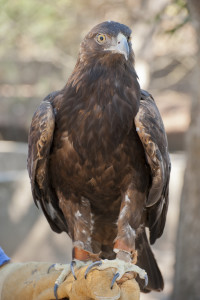
Golden eagles, Sully and Fuzzy
Sullivan, known as “Sully,” is one of the golden eagles at the California Raptor Center. He arrived after he was found in Monterey County. His badly injured left wing required amputation of the wing tip, meaning he couldn’t be returned to the wild. Sullivan is one of the center’s teaching birds that works in public presentations.
Fuzzy is a golden eagle that was found on Altamont Pass, California, near the area’s electricity-generating windmills. She suffered a fractured left wing, apparently from flying into the huge structures and crashing to the ground. She got her name because she is so relaxed and calm around people. She was ruled non-releasable in 1996 after two surgeries and months of therapy.
Photo credit for the golden eagle image and the image of Scott, a volunteer, pictured with a golden eagle on the glove: Trina Wood, UC Davis School of Veterinary Medicine
Falcons, Horus and Cowboy
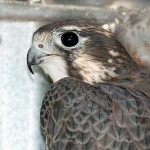
Two handsome falcons that share the same cage at the CRC offer visitors the chance to observe the differences in these two species. Horus is a Prairie Falcon who arrived with a broken wing in 2005. Even after a long period of rehabilitation he couldn’t fully extend the wing so his ability to fly was limited. He is neither strong enough nor agile enough to hunt. He can’t survive on his own in the wild and so he can’t be released.
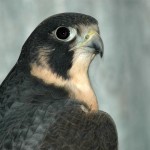
His cage mate is Cowboy, a peregrine falcon who was found near Santa Cruz in 2007 with wing and leg injuries. He also had “bumblefoot,” an infection on the pads of his feet that was treated at the UC Davis Veterinary Teaching Hospital. In the wild, peregrines swoop down on unsuspecting prey—mice, squirrels and other animals, with high-speed dives of over 250 miles per hour. Even with the best veterinary care, Cowboy will never again have the strength and speed needed for catching prey in the wild. He, too, is non-releasable.
Photo credit: Sally Reynolds
Barn owl, Citrine, and an American kestrel
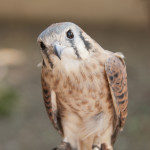
Citrine is a barn owl that lives at the California Raptor Center. Barn owls like to nest in the cavities at the tops of palm trees. Unfortunately, the choice can often end badly when windstorms send the owls to the ground, making them one of the raptors most frequently rescued and brought to the CRC. Next to the barn owl, the second most frequently treated raptor is the red-tailed hawk, and the third is among the smallest of raptors, the American kestrel.
Photo credit: Trina Wood, UC Davis School of Veterinary Medicine
As the weather turns warm many of us are thinking about the fun we can have over the summer. Some of us, however, are thinking about the fun we can no longer have with someone dear to us who was taken away because of cancer. And for the millions of folks suffering from cancer nationwide, their idea of fun would be to simply enjoy a pain-free day that could be spent with family and friends.
Each year people in communities across the country are remembering those we have lost due to cancer, and those that are still struggling with it. Many of us choose to participate in the American Cancer Society’s Annual Relay for Life event that happens during the late spring and early summer months each year. It’s a way to not only remember those lost or in the middle of a fight with cancer, but to help raise money and awareness to fight this scourge.
Most of us have a story to tell about how cancer has impacted our lives, either directly, or with a friend or family member. It is because of that that each of us should work together to help solve this medical riddle that has struck down so many of us far too soon. To help you connect with a Relay for Life event near you, here is a partial listing of events in our area:
June 13 – Deer Valley High School, 4700 Lone Tree Way, Antioch
June 13 – DeAnza High School, 5000 Valley View Rd., Richmond
June 20 – Refugio Valley Park, 1515 Refugio Valley Rd., Hercules
June 20 – Vacaville High School, 100 W Monte Vista Ave., Vacaville
June 27 – Donaldson Way Elementary School, 430 Donaldson Way, American Canyon
June 27 – Heritage High School Amphitheater, 101 American Ave., Brentwood
July 11 – Todos Santos Plaza, 2151 St., Concord
July 11 – Dixon Fairgrounds, 655 S 1st St., Dixon
July 11 – Bancroft Elementary School, 2200 Parish Dr., Walnut Creek
July 18 – Armijo High School, 825 Washington St., Fairfield
July 18 – Pittsburg City Hall, 65 Civic Ave., Pittsburg
July 18 – Pleasanton Middle School, 5001 Case Ave., Pleasanton
July 25 – Monte Vista High School, 3131 Stone Valley Rd., Danville
July 25 – Martinez Junior High School, 1600 Court St., Martinez
July 25 – Napa Valley Expo, 575 3rd St., Napa
August 1 – Emerson Jr High School, 2121 Calaveras Ave., Davis
August 1 – Cerrito Vista Park, 950 Pomona Ave., El Cerrito
August 1 – Glorietta Elementary School, 15 Martha Rd., Orinda
August 1 – St Patricks/St. Vincent’s High School, 1500 Benicia Rd., Vallejo
August 8 – Fernandez Park, 595 Tennent Ave., Pinole
August 21 – Benicia High School, 1101 Military West, Benicia
August 15 – Lefty Gomez Ballfield, 470 Parker Ave., Rodeo
August 15 – Mt Diablo Elementary School, 5880 Mount Zion Dr. #8206, Clayton
To learn more about this important event please visit www.relayforlife.org
Summer concerts galore in our tri-county region
What’s better than music? The great outdoors. What’s better than the great outdoors? Music. When’s the best time to put those things together? Why, summer of course! Here’s a look at some of the best summer concerts you’ll find this year:
After 45 years perfecting its summer concert events, Robert Mondavi Winery in Napa Valley is always striving to make them better year after year. “We continue to look for opportunities to make changes,” said Kathy Magner, Hospitality Director of the Robert Mondavi Winery. “This year one change will be in the offering of food—we are working with Off The Grid to provide a few different food vendors for our guests.” While there will be food vendors on site this year, guests are still allowed to bring food into the venue, and catered dinner options are also still available. It’s all about serving all the needs of those attending the summer concerts so they can enjoy themselves and have the best time possible.
“We look at our summer concert series as a great overall experience,” said Magner. “Our venue is small and intimate so no matter which level of seating you choose you have a great view of the stage.” They offer four levels of seating, from general admission to dinner seating.
To give an idea of what the dinner tickets truly provide, Magner gives us the rundown: “The dinner seating starts with a wine reception in our To Kalon cellar. We then invite guests to the vineyard rows on the edge of the To Kalon vineyard for a family-style meal prepared by our in-house chef. All foods are local and sustainable and are served with Robert Mondavi Winery wines. The only thing you need to bring is a coat or sweater as it can cool down in the evening.” For enjoying the show you’ll be seated in an elevated area with a nice view of the stage.
The first concert of the year is generally scheduled to be as close to the 4th of July as possible, and this year it lands directly on the holiday! “We’ll put on an amazing firework show at the end of the concert,” Magner exclaims. “We have one of the most beautiful settings to enjoy wine, food and music; you start your evening enjoying the warm Napa Valley sunshine and end the evening under the stars all while enjoying a great time with friends and family and legendary musicians.” Sounds like quite literally the best way you can spend your time and money.
Parking is free at the venue, any guest with special needs can and will be accommodated, and let it be known that the summer concert series is not for profit and all proceeds will be donated to the Napa Unified School District’s music programs.
Their retail shop will be open at the point of entry and will remain so until the end of intermission. All wines are available for purchase, and for some of the white wines they’ll provide an ice bucket for you to enjoy a chilled bottle of Fume Blanc, Chardonnay or Rose along with 2 stemless wine glasses.
For dessert you’ll have the option of either Ben & Jerry’s and/or The Vintage Sweet Shoppe! So they’ve really got you covered from start to finish.
To get tickets or more information visit www.robertmondaviwinery.com or call (888) 766-6328.
The United Service Organizations, Inc. (USO) is a private, non-profit, non-governmental agency that supports programs and services designed to meet the needs of troops and their families, such as helping deal with a new deployment, transition from service, cope with physical or psychological wounds, the list goes on. All around the world the USO lifts the spirits of America’s troops and their families.
Many may still recall Bob Hope’s USO Christmas specials on TV. “He would broadcast every year on Christmas Day, a USO show from all over the world,” said Maurice “Mo” Levich, Co-Chair of Rotary Lafayette. “He would skip every hour to a different military base all across the world and he would put on a Christmas show. That always touched me.” That’s what helped inspire Levich to contact Jeff Herndon, the head of the USO for the Bay Area, to talk about putting on a public event in Lafayette. “He was more than supportive.”
The first USO Show at the Lafayette Reservoir took place last year to a remarkable turnout of about 800 people. “We expect a lot more this year,” said Levich. 5 Rotary clubs are involved with producing this event including Lafayette Rotary, Lafayette Morning Rotary, Orinda Rotary, Moraga Rotary, and Rossmoor Rotary, with Lafayette Rotary being the primary sponsor. It’s a free show, open to the public, and probably one of the rarest events you’ll find this summer.
“First of all it’s a picnic, which is rare these days for families to go on a picnic,” said Levich. And second of all, “You do not see USO shows open to the public. They’re usually on a military base just restricted for the military; the public rarely would ever be invited to a USO show.” Third of all, the East Bay Municipal Utility District has opened up the Lafayette Reservoir for the day, which is also very special. Levich says, “It’s a very unique event.”
Plan to bring a blanket, lawn chairs, and a picnic basket of course! Food and beverages will not be served or sold at the event but you are encouraged to bring your own. Once you get settled, sit back and enjoy an evening under the stars with some wonderful music.
The festivities open with the Swingin’ Blue Stars, a group of ladies who specialize in performing songs from the 40s and 50s, comparable to the Andrews Sisters of the 1940s. Then The Big Band Of Rossmoor, a group of about 40 musicians playing music reminiscent to the World War II era, takes the stage for the remainder of the evening.
The Big Band Of Rossmoor’s roots are WWII. “Many of our musicians served in that war,” said Levich. And it’s intergenerational. “We have students from ages 14-94 in the band.” If you or someone you know grew up in the 40s and 50s, expect to have some old memories resurface. “Music takes you back to when your heard it,” said Levich, who has also been the Musical Director of The Big Band Of Rossmoor for the past 19 years. “We play from Glenn Miller to Duke Ellington to Fred Astaire to Gershwin.” There will be lots of memories coming back when these old songs are played, and it’s all for a great cause.
“It’s a show to honor the USO and the work they do for our active soldiers and families in transit,” said Levich. Troops from Travis Air Force Base and Camp Park will be there, along with retired military, veterans, veterans of foreign wars, military vehicles, families, nature, and just good times all around.
Levich is excited for people to be educated about the USO. “If you ask a guy on the street or a high school kid, they don’t even know what the USO is,” he lamented. “The Big Band sound is related to the WWII era; we musn’t forget those veterans—and all veterans—the source of our freedom. Without them we would not be whole.”
This year there will be even more troops, past and present, than there were last year. If a veteran will be present in your party at the event you can be sure to get their name in the program by emailing jthiry@postercompliance.com. For more information you can visit www.thebigbandofrossmoor.org. See you on July 18th from 4:30-8pm for the 2nd Annual USO Show at the Lafayette Reservoir!
For even more summer concerts this year…
Check out Wente Vineyards in Livermore. Join their 25-year-old tradition this year by seeing Third Eye Blind, Pat Benatar, Sheryl Crow, Steve Martin, Peter Frampton, Smokey Robinson—yes, all these acts are performing at Wente this year—and much more! Pre-concert sunset dinners are available. For more information visit www.WenteVineyards.com or call (925) 456-2424.
The City of Clayton presents Concerts in The Grove on select Saturdays from 6-8:30pm all the way through September. See The Fundamentals cover everything from Michael Jackson to Earth, Wind & Fire to Beyoncé on August 15th, or catch Clayton’s own Plan B, an 8-piece band, rockin out to Creedence Clearwater Revival, Pearl Jam, Adele, Cake and more on the 4th of July! Visit http://www.ci.clayton.ca.us or call (925) 673-7300 for more information.
Long Meadow Ranch in St. Helena also has some great shows up until October featuring a variety of creative acts. Visit www.longmeadowranch.com or call (707) 963-4555.
That should be enough to get you started. Make sure to check your local area to see what else is out there!
Rock on.
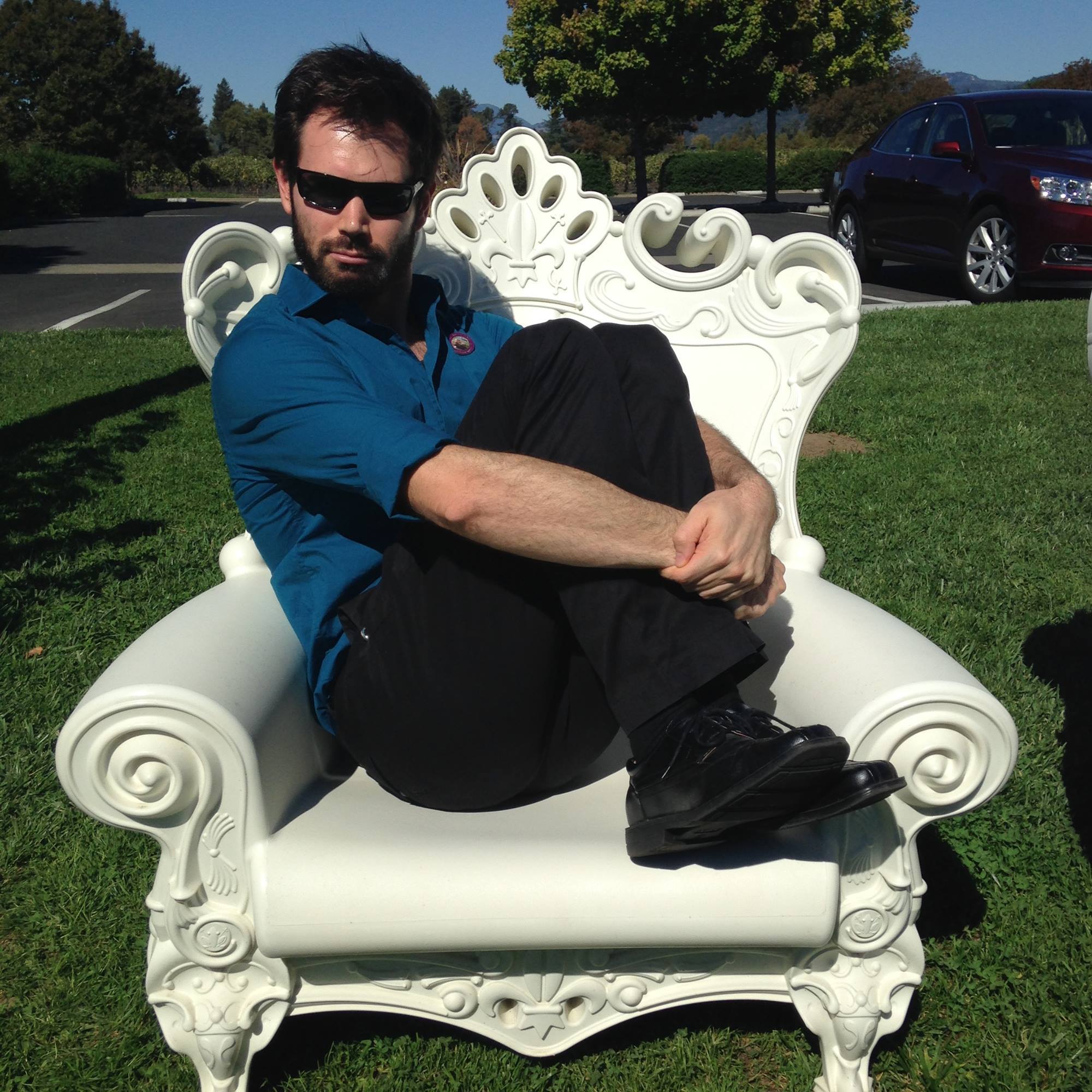
 Larson is a writer/actor/comedian native to Vallejo who travels back and forth from Los Angeles way too much.
He’s desperate for attention and urges you to follow him on all social medias @MarsLegstrong. He lives for likes, please keep him healthy.
I am pretty sure everyone has heard of turmeric, and most of us have it in our spice cabinet, but I have often read that it has more benefits than simply adding flavor to curries or adding color to the mustard we buy at the supermarket. I have also read that people like myself, who suffer from high blood sugar level, could possibly benefit from turmeric. So, I thought it was worth my time to take a closer look and see if turmeric is something I should start adding to my diet. This is out of my area of expertise—I cook, not cure—but I thought I would share what I have found.
Turmeric is a perennial with large, lily-like leaves and yellow flowers. It is a member of the ginger family and, like ginger, it comes from the underground starchy root rhizome of the plant. The starch dissolves during prolonged simmering to provide thickening for sauces. Fresh turmeric, like ginger, has a brownish skin, but the flesh is a bright orange. Turmeric has been cultivated for over 2,000 years in India, China and the Middle East, but it now grown in all the tropical regions of the world. I did not realize that the colorful spice is known for its brilliant golden, yellow color, which has been used to make dye for both clothing and food. Kraft recently announced that it would start using natural products instead of chemical dyes in their macaroni and cheese—turmeric being one of them in their new formula. India and China both use turmeric as a dye for their textiles. It is thought to be one of the ancient Persian yellow spices that were associated with sun worship. You typically will not find it fresh like you would ginger. Turmeric is most often sold dried and ground. It adds a warm, mild aroma and distinctive yellow color to foods. It is essential to curry powders and it is also used to flavor many Indian vegetarian dishes. It can also be used as a substitute for saffron, the taste will be more mild and musky, but the color will be a brilliant golden yellow. It is often referred to as the “poor man’s saffron.”
Turmeric is also used to make one of my favorite beverages: tea. I have read that on the island Okinawa, which has the world’s longest average life spans in the world, they drink huge quantities of turmeric tea. Some brew it fresh like ginger tea (which I highly recommend and is great for a sore throat), but others simply buy cans of powdered instant versions. To make it at home, bring 4 cups of water to a boil, add one teaspoon of ground turmeric and reduce to a simmer for 10 minutes. Strain the tea through a fine sieve into a cup and add honey and/or lemon to taste. You can also try adding a teaspoon of ginger along with the turmeric.
The ground is more convenient, but it would be worthwhile to experiment with freshly grated turmeric for a more vibrant flavor. Next time you find yourself in a natural store or Asian market keep your eyes peeled for it (no pun intended) and you may get lucky and find the root. Turmeric has an important place in an anti-inflammatory diet. It contains more than two-dozen anti-inflammatory compounds, including six different natural COX-2-inhibitors. The spice contains curcumin, a compound that has been found in studies to ease pain as well as ibuprofen did in people with knee osteoarthritis. Curcumin is the major pigment in turmeric, which turns out to be an excellent antioxidant. This may explain why turmeric is considered to have preservative properties. Curcumin is sensitive to pH. In acid conditions it’s yellow, while in an alkaline condition it turns orange red.
I found some valuable information from an article written in the Huffington Post: “Curcumin, is behind a whole host of the health benefits attributed to the spice. A 2012 study examined one perk of curcumin in particular: the ability of the extract to prevent heart attacks among bypass patients. The researchers pointed out, the antioxidant and anti-inflammatory properties of curcumin may contribute to as much as a 65 percent lower chance of heart attack among bypass patients.”
What I found the most interesting, due to my high blood sugar, was that for “people with prediabetes, curcumin capsules were found to delay the onset of Type 2 diabetes in a 2012 study. Over a nine month-long study, participants were given either curcumin supplements or placebo capsules. Just over 16 percent of people taking the placebo pill were diagnosed with Type 2 diabetes by the end of the study, while no one taking curcumin was. Again, researchers chalk these results up to the anti-inflammatory and antioxidant powers of the compound.”
One would think that turmeric is a miracle drug, but the bad news is, according to the article, that, “the FDA doesn’t regulate dietary supplements the same way it regulates food or conventional medication, so not every supplement is created equal. Also, certain supplements, including those made from turmeric, can interact with other medications. Turmeric may slow blood clotting, for example, so people taking drugs with the same effect, like anticoagulants, should be cautious about taking turmeric supplements, according to the National Institutes of Health. And, of course, it’s always a good idea to talk to your doctor before starting any kind of supplements.”
So, to sum it up, I personally think I will give turmeric a try starting with the tea. Either way, knowing what I know now I have a greater appreciation for the simple spice called turmeric.
By Chef K. Marie Paulk
In 2014, the Affordable Care Act propelled 1.4 million insured people into Californian’s health care system (hhs.gov/healthcare), a staggering number that continues to put a significant burden on providing high quality, safe, and effective health care.
As health care shifts from the traditional illness model to a wellness model, care will move from acute care delivery (hospitals) to ambulatory care (clinics) delivered in medical homes. As such, care coordination, informatics, and interdisciplinary teams are essential components moving forward. For this reason, there is an increasing demand for the Clinical Nurse Leader (CNL), a provider and manager of care able to meet the needs of the aging and increasingly diverse population through health promotion, disease prevention, and chronic disease management.
With over 400,000 registered nurses in California making up the largest segment of the health care providers, RNs are perfectly positioned to assist with meeting the demands of a rapidly evolving and expanding health care system. In order to meet California’s health care needs, registered nurses must be prepared by achieving advanced levels of nursing education and must be willing to assume new roles in health care delivery.
The registered nurse of the future must be prepared to utilize evidence-based practice, technology, data management systems, and population health while at the same time leveraging human, environmental, and material resources. New models of care delivery are presenting daily and challenging RNs to take on new roles and be leaders in collaboration and innovation.
Last August, Touro University California opened a School of Nursing with an inaugural class of 30 local registered nurses possessing an associate degree in Nursing (ADN) and one bachelor’s prepared RN (BSN). They are on track to graduate in December 2015 with a second cohort being admitted in August 2015.
The School of Nursing program provides students with a master’s degree in nursing and eligibility for national certification as a Clinical Nurse Leader (CNL). The CNL, a position initiated by the American Association of Colleges of Nursing in 2007, functions at the microsystem level to improve patient outcomes and increase safety and efficiency, assuring timely and equitable delivery of health care.
Located on Mare Island in Vallejo, Touro University California is the only nursing program providing graduate education that is physically housed in Solano County. By providing advanced education in the region, TUC is committed to answering the national call issued by the Institute of Medicine (2010) to elevate the preparation level of nurses.
In addition, Touro University California School of Nursing is partnering with local health care agencies to prepare students with advanced nursing education that will be essential contributors in improving health care outcomes in the region.
In this quickly-changing, increasingly complex clinical care environment, the need for Clinical Nurse Leaders is on the rise as they meet higher healthcare standards. They are the largest health-care providers in the country and are a valuable asset in the health care system.
 By Ann D. Stoltz, RN, PhD
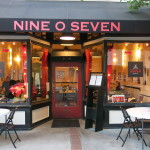
Nine O Seven Grill
Have you ever tried to go out to eat with a group of friends or family and experience the trouble of everyone having a different idea of what kind of food they wanted to eat that night? Usually when that happens you have to argue it out with the other members of your group, take a vote, or settle it over a game of rock, paper scissors.
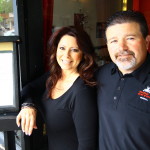
The founders of Nine 0 Seven Grill on Benicia’s First Street, Randy and Ann-Marie Ramos, have found a solution to that conundrum. They strive to serve the best of everything. They’ve chosen the three most popular genres of food—Mexican, American, and Italian—and offer a variety of items from all three, against an American cuisine backdrop.
“We tried to combine the three favorites, but still keep that infusion of different items so there’s a bit of variety, but not stretching too far out of the comfort zone,” Ann-Marie said. “It’s a place that gives you a lot of options, especially if you’re going out with friends, or you’ve got kids who want pasta and maybe the parents want a nice steak.”
Randy really knows his way around the restaurant business. Randy has been in the industry for more than 20 years and has founded or managed a number of eateries over the past couple decades. Prior to Nine O Seven Grill & Catering was Randy’s Mexican Restaurant, here in town, which has since changed ownership.
“I’ve owned five restaurants all around town and, for a while, had one in Napa,” Randy said. “I needed to come back here to Benicia—it’s where my business roots are. It’s where I have a loyal customer base.”
Nine 0 Seven’s menu offers full breakfast, lunch and dinner choices, and has a little bit of everything. One of their signature dishes—the carnitas tacos, which are made up of the fresh meat using a traditional family recipe. They include a nice medium-spicy sauce, with avocado and some limes on the side for good measure. Like many of their dishes, this one is based off of a recipe that came straight from the Ramos family household in Chihuahua, Mexico.
Another standout signature item is their angel wings, which are pork shanks smothered in a sweet chili sauce, a taste you really can’t find everywhere but Benicia. The sauce has a mild, zesty flavor, and the pork—like most of their meats—comes right off the bone.
“We initially thought to open a grand Steakhouse, but the decision was difficult to settle on due to the fact that many people are vegetarian, vegan, gluten free, dairy free and so on… With the final decision to open Nine O Seven Grill we were able to offer a variety that would better suit the majority of consumers, ” Ann-Marie said. “In Janurary we really started to lean toward gluten-free recipes and menu options since it became my personal dedication in 2014.”
On the flip side of the table, they’ve got a number of burgers, steaks and seafood choices. Their burger is awfully tender too, and they offer a good variety of choices, from the barbecue bleu cheese burger for those who like to veer off of the beaten bath, to your standard bacon cheddar burger, which offers a nice amount of applewood smoked bacon.
“In a word, ‘Simplicity” —we’ve found some restaurants may have fantastic, creative Executive Chefs who I typically try to do too much on a single plate,” Ann-Marie said. “We find simplicity is better. I’ve always been one for clean eating options so you don’t lose sight of the fact that you’re eating a quality piece of meat or fish.”
Then there’s the salmon, which they marinate with a Jack Daniels Whiskey Citrus Sauce, making it a must-try for seafood lovers. On the appetizer menu, their flavorful coconut prawns and the pork sliders are two standout items, and they’ve also got a full pasta menu, offering everything from spaghetti and meatballs to tri-color cheese tortellini. And they’ve always got a couple cakes ready to go for folks who have a sweet tooth.
“Another thing I love about our menu is, you can’t get a Mexican breakfast anywhere else around here, unless you want to go to Vallejo or Concord,” Randy said. “But we offer killer chorizo and eggs; and we’ve got the best Huevos Rancheros.”
Randy and Ann-Marie say they always go the extra length to ensure their food is top quality. Randy inspects everything himself, and personally searches and acquires the food that goes into their restaurant. What makes it easier for him, though, is the fact that the restaurant is so popular; they’re steadily turning over items from all over the menu, so nothing has extended “shelf life”.
“If were somewhere and we see a menu item we like, I’ll say, ‘Why don’t we do that?’” Randy said. “You just find ideas, and you try to put your own spin on it. Our food is no secret and something you’ve likely had somewhere else. We just add our twist and make sure the quality standards/presentation are higher than someone else’s.”
And, while they do have a bar you may not see it- due to lack of space! Nine 0 Seven Grill -has a full liquor license and a service area, where they make their House Margarita’s and Bloody Mary’s…so if you go there looking for wine, beer, or a cocktail, they won’t disappoint.
In addition to their front room, the Nine 0 Seven Grill has a cozy little back area too, with an assortment of tables nestled on an old-style brick patio, a great place to enjoy a meal during a hot summer night. They also offer takeout, so feel free to phone in and pick up. They offer a full range of Catering Services as well, something the couple has lots of experience in, and they take a great amount of pride in doing. They say they have a steady stream of folks who reach out to them from all over the bay area to cater special events.
“It’s a lot of responsibility on us to make sure someone’s wedding or milestone birthday goes well,” Ann-Marie said. “We get a lot of special events!”
The story behind the food is one most folks don’t see, but it involves a lot of hard work and care. Randy and Ann-Marie, between their multiple responsibilities-, working constantly, and it’s not uncommon for their jobs to take a chunk out of every single day of the week for a long period of time. It’s a fast-paced, high-stress life, but they’ve been succeeding at it for years.
“There’s times where we’re working seven days a week for 6-8 weeks at a time,” Randy said. “Holidays and weekends are typically the moneymaker days.
It’s a lifestyle and not for everyone.”
“We find ourselve’s not celebrating many of the holidays on the actual holiday itself anymore,” Ann-Marie added. “We usually celebrate the weekend before or after. You got to get it in when you can!”
The Nine 0 Seven Grill is located, fittingly, at 907 First Street, in Benicia. For more information, call (707) 746-0505 or visit www.907grill.com. If you’re interested in their catering for your wedding, birthday, corporate gathering, or other special event, call (707) 750-5295.
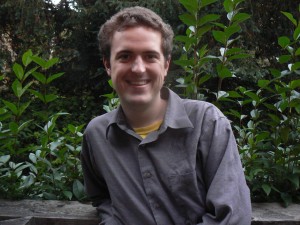
Nate Gartrell grew up in Benicia, studied journalism in college, and has written for a handful of media outlets since age 15. He aspires to visit all 30 Major League Baseball stadiums and to hit the trifecta at the horse track.
Midway down Benicia’s First Street, within two historical buildings, lies a business that folks from even the farthest reaches of the Bay Area travel to seeking advice and tips about decorating their dwellings: Romancing the Home. Like its name suggests, Romancing the Home aims to help its customers find ways to make life around the house a little more colorful and interesting, in an all-encompassing sort of way. The store caters to all of the senses; its got food and candies, all kinds of sweet scented items, as well as art and furniture, and the owners are always looking for ways to grow.
“We offer a little something for everybody,” said owner Rob Machado, who took over the business with his wife, Debbie, in 2003. “We go to several shows a year and we search out the best products.”
When Machado first took over the business it was simply a furniture store; and before that, ye olde Benicia Creamery. Since then, he and his wife have expanded the business out to include every aspect of the home, from decorations to cooking ingredients. They’ve expanded so much that the store now takes up two adjacent 200-year-old buildings, though you’d never know it from walking around the inside.
Nowadays, Romancing the Home has a baby section, as well as kitchen and bathroom sections that feature jams, soaps, scented candles, and decorations to go with them. Oddly enough, Machado says he and Debbie tend to sell the bulk of the baby products during spring, and they have alternating periods of time where they have high demand almost exclusively on boy clothes, followed by a spell where they’ll have high demand on girl clothes. Hard to tell what to make of that trend, but it appears to warrant further study.
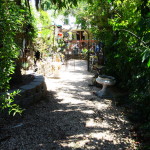
On top of that, this year will mark a full decade since they opened their garden section, which is tucked away outdoors in the back area where customers are welcome to walk through.
“We put the garden in the back because it used to just be a dirt lot,” Machado said. “We just started out with a little bit of garden stuff and now we’ve got statues, decorative items, outdoor furniture, wall art, all kinds of stuff. And we’ve still more to come!”
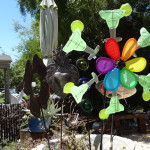
The couple designed the backyard specifically so folks could walk through to get a visual sense of what their garden decorations look like in their natural setting, as opposed to inside on a wall. Luckily, their store resembles a lot of Benicia and Vallejo dwellings. You’ll see they’ve outfitted a deck with backyard furniture, cement figurines and other decorations, with items ranging from the practical to the downright artistic to both.
“We designed it and had it put in to have multiple levels; customers can walk through and get a feel of what it’d look like in their home,” Machado said. “The glass feeders and hangers have been doing great lately. Glass seems to be big this year.”
In addition to their glass hummingbird feeders, Romancing the Home offers birdbaths, fountains, and other interactive features. Machado used to keep those fully stocked with water in previous years too, but lately, weather conditions have put a stop to that.
“Years before, I’ve had the bird baths full of water, but I’ve kind of cut back on the water because of the drought,” Machado said.
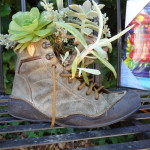
But, as it has done in the past, Romancing the Home has found ways to evolve with changing times. One thing the owners have found is that drought-resistant plants, like succulents and cacti, are making a comeback. So they’ve formed a partnership with a local gardener who specializes in those types of plants, and is helping them by supplying a few for the outdoor section of the store.
“She grows them all at her house and arranges them all—we’ve done pretty well with them,” Machado said. “We also had a local lady who does jewelry, and a few other local partnerships.”
Machado said that the bulk of the customers who aren’t homeowners tend to come looking for gifts for their friends and family, especially during the holidays. In that spirit, if you have the opportunity to check out Romancing the Home, the holiday season might be a good time to do it. They put in a little extra effort to give the store a Christmas theme. A few years ago they’d have a tree or two, but in keeping with their theme each year they find a way to make it bigger and better than the last.
“We convert into a Christmas store during the holidays—we get about 20 trees in here and we turn the store around,” Machado said. “Christmas is huge for us, and that sort of evolved on its own.”
Machado also said that he’s willing to travel to local customers’ homes to get a better sense of their needs and to help them find the best possible fit for whatever they have planned. He said homeowners looking to remodel make up a good portion of the store’s clientele, so if you’re curious about something, here’s a guy with more than a decade in the business.
“Benicia’s a good little town,” Machado said. “We’re happy to be here. It’s a nice little tourist town.”
Romancing the Home is located at 617 First Street, in Benicia. For more information, call (707) 747-1717, or visit www.benicia-rth.com.
Nate Gartrell grew up in Benicia, studied journalism in college, and has written for a handful of media outlets since age 15. He aspires to visit all 30 Major League Baseball stadiums and to hit the trifecta at the horse track.