Lafayette welcomes the United States Marine Band this October 16th
By Matt Larson
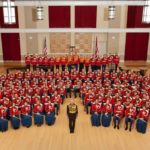
For centuries, almost every historical moment in Washington D.C. has been accompanied by “The President’s Own” United States Marine Band. Founded by an act of Congress in 1798, this band is the oldest continuously active musical organization in the country. Now they’re coming to California for the first time in 10 years, and you can see them perform live at Acalanes High School in Lafayette on Wednesday, October 16th, 2019.
We were incredibly fortunate to speak with Colonel Jason Fettig, the 28th Director of “The President’s Own” United States Marine Band. Fettig joined the band in 1997 as a clarinetist. Twenty years later he was promoted to his current rank—in the Roosevelt Room by the president himself—in August 2017.
At this point, you may be wondering: why is a band of such high regard coming to perform at a local high school here in Contra Costa County? Well, this performance is actually part of their 2019 West Coast Tour, beginning in Seattle on October 2nd and ending in Las Vegas on October 31st.
“We tour once a year,” Fettig explained. “This is an annual tradition that goes back to 1891.” It all started with the band’s 17th Director, John Philip Sousa, who decided that the band shouldn’t just be relegated to Washington D.C., but it should be shared with the rest of the country as well. Upon receiving presidential approval, that tradition has continued on nearly every year since.
“The Marine Band is an American institution,” Fettig said. “It’s been around for 221 years as a part of the fabric of the United States government, and as a part of our history and our evolution since nearly the beginning of this country. To be able to share it with the American people … it really feels like the right thing to do.”
Touring throughout the continental United States, they divide the country into five separate regions, as decided by the Department of Defense, and visit a different portion of the country once every five years on rotation. California’s region includes the entire west coast, as well as the heartland all the way over to D.C. itself; with such a large region, they only make it to California once every 10 years.
Fettig and his band of 65 touring musicians will be playing 28 concerts in 30 days. Along with them is a small support staff to assist with setting up the venues and controlling the sound. They’ll be flying in and out to begin and end the tour; however, throughout the concert series, they’ll be driving along in buses to take in as much of the scenery as they can, in appreciation of our vast and diverse countryside.
Funded as a collaboration between taxpayers and sponsors, it is truly a communal effort as the band relies on local organizations to sponsor their appearances. “They’ll provide us a venue to perform in, the advertising and the ticketing for their patrons,” Fettig explained. “So it ends up being a nice partnership between the communities we visit and the Marine Band.”
Musical selections range from classical to jazz to Broadway, and they perform three completely distinct programs on their tour, so if you’re lucky enough to see them more than once as they travel around, you may be able to experience an entirely different playlist.
“People from all walks of life come to hear the band,” Fettig said. “Veterans, music students, classical music lovers, active-duty marines, history buffs … we want to be sure that there’s a little bit of something for everybody at these concerts so that everyone walks away feeling like they had a real community experience through the music.”
You’ll encounter a wide variety of musical selections, some of which are pretty impressive, chosen to show off the capabilities of the band: patriotic selections and marches that have made the band famous over the past 200+ years, and even new music that’s been commissioned for the tour.
“One of the things that we’re most proud of when we go on tour is that we go out of our way to feature music that is either representative of the cultures that we’re visiting, or is music by living composers who may be from those areas,” Fettig said. “So we have a number of pieces on this tour by California, Nevada, and Arizona-based composers.”
Fettig looks forward to truly connecting with the communities that they visit on this tour. “I think when you have an organization such as ours, known on a national level, visiting a high school gymnasium in a community and playing music that’s specific to those communities, it really does create an atmosphere of building bridges between people,” he said. “That’s really what this is all about.”
The United States Marine Band has more than 1000 commitments each year. The full organization is comprised of 155 people including both musicians and support staff, so they can do multiple events simultaneously. “So the band continues to have the capability back in Washington D.C. to support the President of the United States, and support the Marine Corps, while we’re on tour,” Fettig stated. “Our job in Washington is a 365-day-a-year commitment.”
Watch history unfold before your eyes (and ears) and become part of a centuries-old tradition. Mark your calendars for Wednesday, October 16th to see the United States Marine Band perform at Acalanes High School, 1200 Pleasant Hill Road in Lafayette, at 7:30 p.m. Tickets are available at marineband.ticketleap.com. For additional information, you can call (202) 433-5812.
“It’s equally meaningful for me to be able to perform before the President of the United States and before communities such as the one you have in the Bay Area,” Fettig added. “I don’t think I’ll ever grow tired of the energy and electricity that is in a room when you’re giving a live performance for people who truly appreciate what it means.”
Even if the concert sells out, Fettig suggested, still try and show up anyway as since it’s in a gymnasium, they can probably make arrangements. “We only come to this part of California once every 10 years,” he reminded us. “So I like to believe that this is an opportunity that’s not to be missed.”
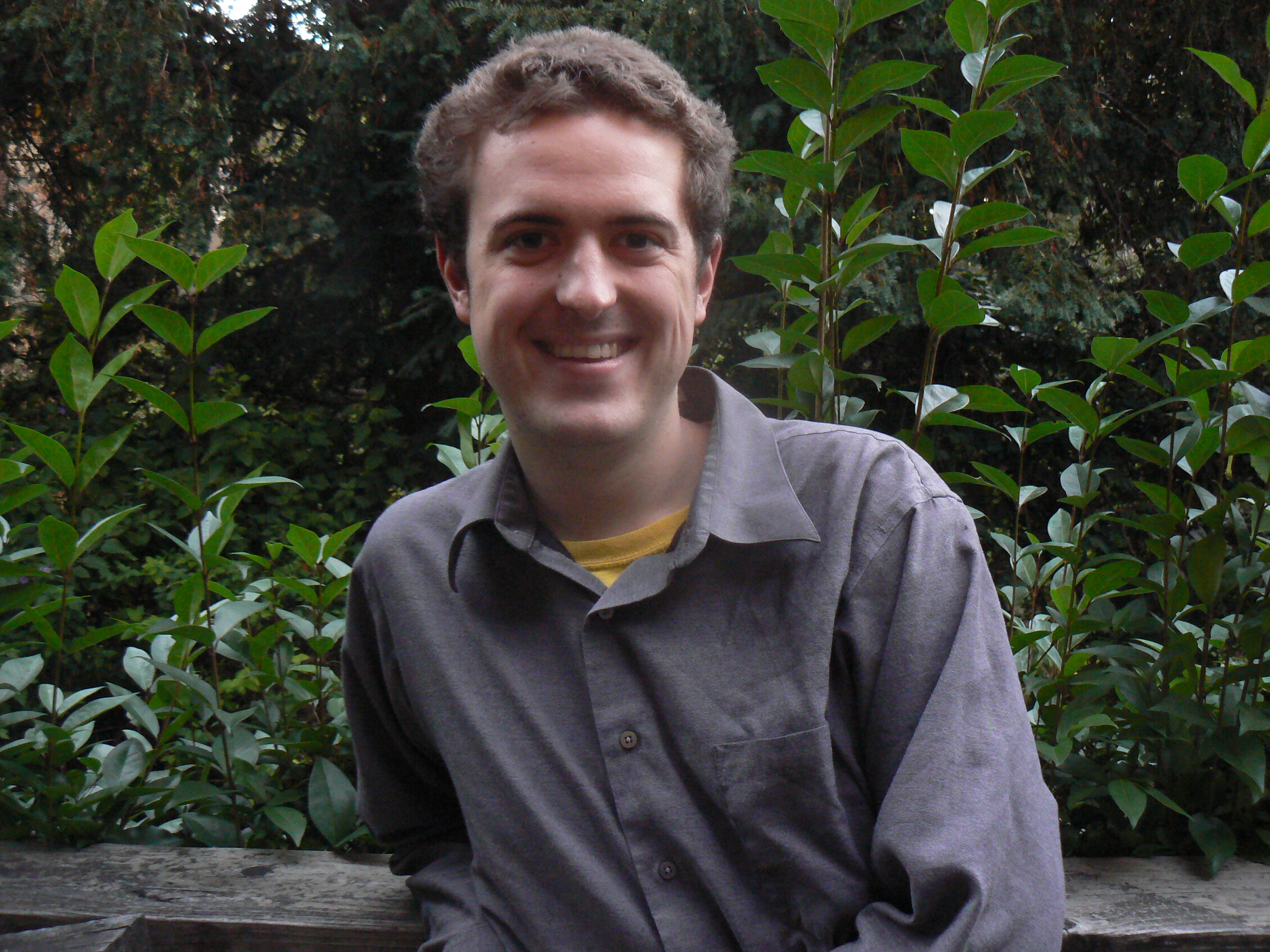
Larson is an actor/comedian/director from Vallejo who lives a double life between the Bay and LA. When he’s not writing for Local Happenings Magazine he could be editing a short film or working on his next rap album—who knows!
Keep up with all things Larson at www.MarsLegstrong.com.”

A family-owned Vallejo business provides emergency services for Solano and beyond
By Matt Larson
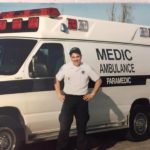
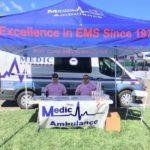
Founded in 1979 on Nebraska Street in Vallejo, Medic Ambulance is now celebrating its 40th year in business, now providing services in Solano, Sacramento, and Placer counties. What may surprise you is that whenever anyone calls 911 in need of an ambulance here in Solano County, with the exception of Vacaville, Medic Ambulance is the county’s exclusive ambulance provider.
“We’re not your average corporate health care provider,” said President and COO James Pierson. “One of the misconceptions is that we’re a public, tax-funded agency, or that we’re part of the fire or police departments, but we’re not! We’re a private entity that runs vital community needs.”
In order to provide emergency response for all of Solano County, aside from Vacaville, Medic Ambulance has two main hubs. The first is their Vallejo headquarters, now on Couch Street, and they have another deployment center in Fairfield, which is only temporary until they move into their new building in Suisun City this November. They also have 24-hour stations in Rio Vista, Dixon, and Benicia.
“We have about 320 employees and do about 56,000 calls for service every year between all three of the counties,” Pierson said. “We’re at 82 total ambulances as a company, with about 18 in Sacramento, so about 64 in Solano County.”
In addition to emergency response, Medic Ambulance also does a lot of hospital transports, providing Basic Life Support, Advanced Life Support, and Critical Care Transport services. They don’t provide 911 response in Sacramento and Placer counties, but they do service nursing facilities, assisted living centers, and hospital transports in those areas.
“Our dispatch center is internationally accredited, so we can take any type of call,” Pierson explained. “So if somebody called our 7-digit number instead of 911, we would process the call just as if you called 911; we have a direct line to Vallejo PD and can get all the resources going, so if somebody wasn’t sure if it was a non-emergency transport they needed, we could help navigate them to wherever they need to go. But of course—we want people to call 911 in an emergency.”
Whether you call 911 or Medic Ambulance’s direct line, there is no difference in cost for the service. Again, Pierson urges everyone to call 911 first if there’s any doubt you could be dealing with an emergency situation.
“We provide a high level of service and our base rate is about $1,000 cheaper than other ambulance services that surround Solano County,” Pierson calculated. “I can attribute that to us having a very fiscally responsible family; the service we provide at the cost that we charge, compared to other providers in the region … our rates are very competitive.”
It’s not entirely unusual for such an emergency response company to be a family business, but family and community have been a major part of Medic Ambulance’s values since the very beginning. “We live in the community!” Pierson exclaimed. “And our friends and family live here too.”
Medic Ambulance was started by Pierson’s grandparents, Harry and Giannina Manfredi, along with his uncle, Rudy Manfredi. His aunt, Marisa Luchini (now retired), joined Medic Ambulance in 1980; his mom, CEO Helen Pierson, joined in 1988. Then between 1998 and 2002, Pierson joined the crew along with his sisters, Sandra Whaley and Cindy McBride, who are now the VPs of Communications and Quality, respectively, and his cousin, Kristi Kendall, who is VP of Finance.
“We really do consider Medic Ambulance as an integral community member,” Pierson explained. “Not just because we show up when you call 911, but because Solano County and the City of Vallejo is our family, so we try to be involved with the community as much as we can by supporting events, different nonprofits—anything we can do that makes our community better.”
They donate to the arts, to Rebuilding Together, to a variety of community youth programs … the list goes on and on, but the one commonality that all of their beneficiaries have is that they’re all dedicated to making the local community a better place. Pierson and his team, his family, are proud that Medic Ambulance can be a community partner in all of that. He estimates that over the last 10 years they’ve probably done close to $2 million in donations and community givebacks.
“Our number one goal is to make sure our citizens are taken care of,” Pierson said. “If people have an issue with an ambulance service, they can call us! And they’re going to talk to myself, my mom, my two sisters, my cousin—we’re all family, and we’re all owners. We can all help the person, and we care. If we can’t provide the service you’re looking for, we can help direct you to where you need to go.”
Medic Ambulance is the first ambulance company in Northern California to be certified by the Commission on Accreditation of Ambulance Services (CAAS), which they earned in 2007. Now there are about 15 CAAS agencies in the region. “It’s what they call the ‘gold standard’ in ambulance service,” Pierson explained. “That’s something we wanted to achieve, not something we were mandated to achieve.”
Plus, their dispatch center is an Accredited Center of Excellence (ACE). “We are one of 31 companies in the world to hold those dual accreditations,” Pierson continued. “So even though we’re a small ‘mom and pop’, we’re performing at a very high level.”
We highly recommend you read beyond this article to get a fuller picture of what Medic Ambulance is all about at their website, medicambulance.net. You can also call them at (707) 644-1761 or check out their headquarters at 506 Couch Street in Vallejo.
Medic Ambulance does a lot for our community and beyond. With state-of-the-art equipment, they’ve gone to San Francisco a couple of times to provide emergency assistance, spent 5 days at the Camp Fire in Butte County, and 4.5 days helping strike teams with fires in Lake County. They can also support Vacaville if their local system is ever in need.
“We’re not only a vital county resource, but we’ve integrated into being a regional and state resource as well,” Pierson asserted. “But we couldn’t be successful if it wasn’t for our employees: EMTs, paramedics, nurses, dispatchers, supply technicians, our management team—it’s a family approach to how we do our job, and we cannot be successful at all without the success of our employees. We’re very proud.”
Larson is an actor/comedian/director from Vallejo who lives a double life between the Bay and LA. When he’s not writing for Local Happenings Magazine he could be editing a short film or working on his next rap album—who knows!
Keep up with all things Larson at www.MarsLegstrong.com.”

Recrafting the craft cocktail
By Nate Gartrell
Ten years ago, Napa Valley couple Arthur and Lusine Hartunian took what was likely the biggest risk of their lives: they opened a distillery in the heart of wine country. It was after the Great Recession had forced Arthur out of the insurance industry, in a time when Americans stopped going out as much to save money, and in a state that at the time did not permit the type of drinking establishment the Hartunians envisioned.
“My wife and I did about six minutes of research and jumped right in with money we didn’t have,” Arthur recalled in a recent interview. “There was definitely a bit of a learning curve.”
Despite the odds, nowadays Arthur and Lusine continue to benefit from that decision. They’ve grown their venture, the Napa Valley Distillery, into a household name around the city, and they are weeks away from opening an in-house restaurant called The Hollywood Room. They’ve also started a sister company, Napastak, a cooking and kitchenware boutique.
“We almost went out of business two dozen times in the first couple years,” Arthur said. “We were late on rent, no way to make money because laws at that time didn’t allow [distilleries] to sell direct to consumer, you had to go through a distributor … for years I was going door-to-door, trying to sell one bottle at a time.”
The Napa Valley Distillery crafts its own whiskey, gin, and vodka, but from the beginning, Arthur saw his company as more than just producers of liquor.
“We’re a cocktail company,” Arthur said. “We’re more about hospitality in a way that’s based around spirits. We pride ourselves on accommodating our customers … We’re open every day but Wednesday, but if someone were to walk in on a Wednesday we wouldn’t turn them away, we would make it work somehow.”
Arthur’s interest in spirits started off, fittingly, with an interest in cocktails.
“One of my first jobs out of school was working at a law firm on Hollywood Boulevard…Every night the two partners would go to a restaurant bar downstairs and have cocktails and meet with other lawyers,” Arthur said. “They would have negronis and old fashioned’s, and these were way out of date cocktails at that time.
“I became fascinated by cocktail history, cocktail culture,” he continued. “It wasn’t about drinking to get drunk; it was about enjoying the flavors and the social aspect of the drink.”
It was a world that felt very familiar, Arthur said, given his Armenian heritage. “Armenians rarely eat without drinking and we rarely drink without eating,” he said. “Drinking is really part of our culture, but it’s a cultural instrument, a social tool.”
Arthur became a self-described “cocktail geek.” He started studying bartending not at college, but through research at his local library. Distilling and mixing drinks became a side hobby while he focused on his day job in the insurance industry.
“I never went to bartending school, but I think I can hold my own with the best,” he said. “I was very, very in love with that industry.”
In carving his path to success, Arthur took on the state laws that he argued were holding back artisan distilleries like his. In 2012, he and several other distillery owners formed the California Distillers Guild and started lobbying for the state to pave the way for spirit tasting rooms. The following year, then-Gov. Gerald Brown signed AB 933, allowing distilleries to have tasting rooms, similar to wineries and breweries. In 2018, the guild championed SB 1164, known as the Craft Distillers Act, eliminating a legality that required visitors to distilleries to participate in a tasting event before buying a bottle of liquor, which Arthur and others argued handcuffed small-scale distilleries. The law also expanded the amount craft distilleries could produce annually by 50,000 gallons.
“We were basically fighting for our right to exist; and through sheer determination and work, we were able to get our bill passed,” Arthur said. “It was the first piece of [state] legislation since 1933 regarding distilled spirits.”
The Napa Valley Distillery was formed in 2009, three years before state regulations would loosen. Those years were “very emotional,” Arthur said, and the life he’d left was always looming in the background; Arthur had been in the insurance business in Fresno County.
“I hated what I was doing, but I was good at it,” Arthur recalled.
When one of his biggest clients, AIG, folded during the partial economic collapse in 2008 and 2009, his company folded. Around the same time, Arthur turned 40 and began to reevaluate his life.
“I decided right then that I was going to start doing something that I loved. I didn’t even know that we couldn’t do tasting rooms; I did almost no research, and we dove right in,” Arthur said. “For those first few years, I can’t tell you how many times I said to myself, ‘What did I do?’ But the alternative was, I had to go back and sell insurance.”
“My wife kept pushing and encouraging me; she had a lot to do with why we kept going,” he continued. “We just worked together as a team and made it work until the laws changed.”
Since the laws changed things have been great. They’re now open in two locations and started a bar club that has approximately 3,000 members across the state.
In late October, Arthur and Lusine are set to open The Hollywood Room, a restaurant and bar with a theme that’s a tip o’ the cap to the neighborhood where Arthur fell in love with “cocktail culture.”
“There will be a full restaurant and bar with cocktails, beer, and wine … our spirits and other spirits we love,” Arthur said. “We’ll be the first distillery in California to do this. We’re looking forward to it. It has been a dream of mine … I’m pursuing a passion; that’s really the best way to put it.”
The Hollywood Room will also have available “about 50 screenplays” for anyone who wants to thumb through them while they’re awaiting their meal or their “elevated cocktail experience,” Arthur said.
“Everything from Casablanca to Pulp Fiction,” he said. “It will be a tribute to the last 60 years of Hollywood.”
So, what does Napa’s cocktail geek recommend first-timers try?
“I’m a gin and tonic guy all the way,” Arthur said with a laugh. “Don’t get me wrong, I love each one; I’m an equal-opportunity drinker. But I love gin and tonic because each one is different.”
“I’m really enjoying spritzes right now,” he added. “Those low ABC cocktails with lots of flavor—those are easy to drink—they’re good with food, before food, or after food.”
The Napa Valley Distillery has two locations in Napa: The Tasting Salon and Bar Shop, located at the Oxbow Public Market at 601 1st Street, #8. Their Grand Tasting Salon and Event Center are located at 2485 Stockton Street, which will also be the home of the Hollywood Room.
The Stockton Street location is open from 11 a.m. to 7 p.m. on Monday, Tuesday, Thursday, Friday and Saturday, and from 11 a.m. to 6 p.m. on Sundays. It is closed on Wednesdays. The 1st Street location is open every day of the week, from 9 a.m. to 8 p.m., Monday through Saturday, and from 9 a.m. to 7 p.m. on Sundays. For additional information, visit their website at napadistillery.com, or call them at (707) 265-6272. You can also follow them on Facebook by visiting and “liking” their page: facebook.com/NapaDistillery.
Nate Gartrell grew up in Benicia, studied journalism in college, and has written for a handful of media outlets since age 15. He aspires to visit all 30 Major League Baseball stadiums and to hit the trifecta at the horse track.
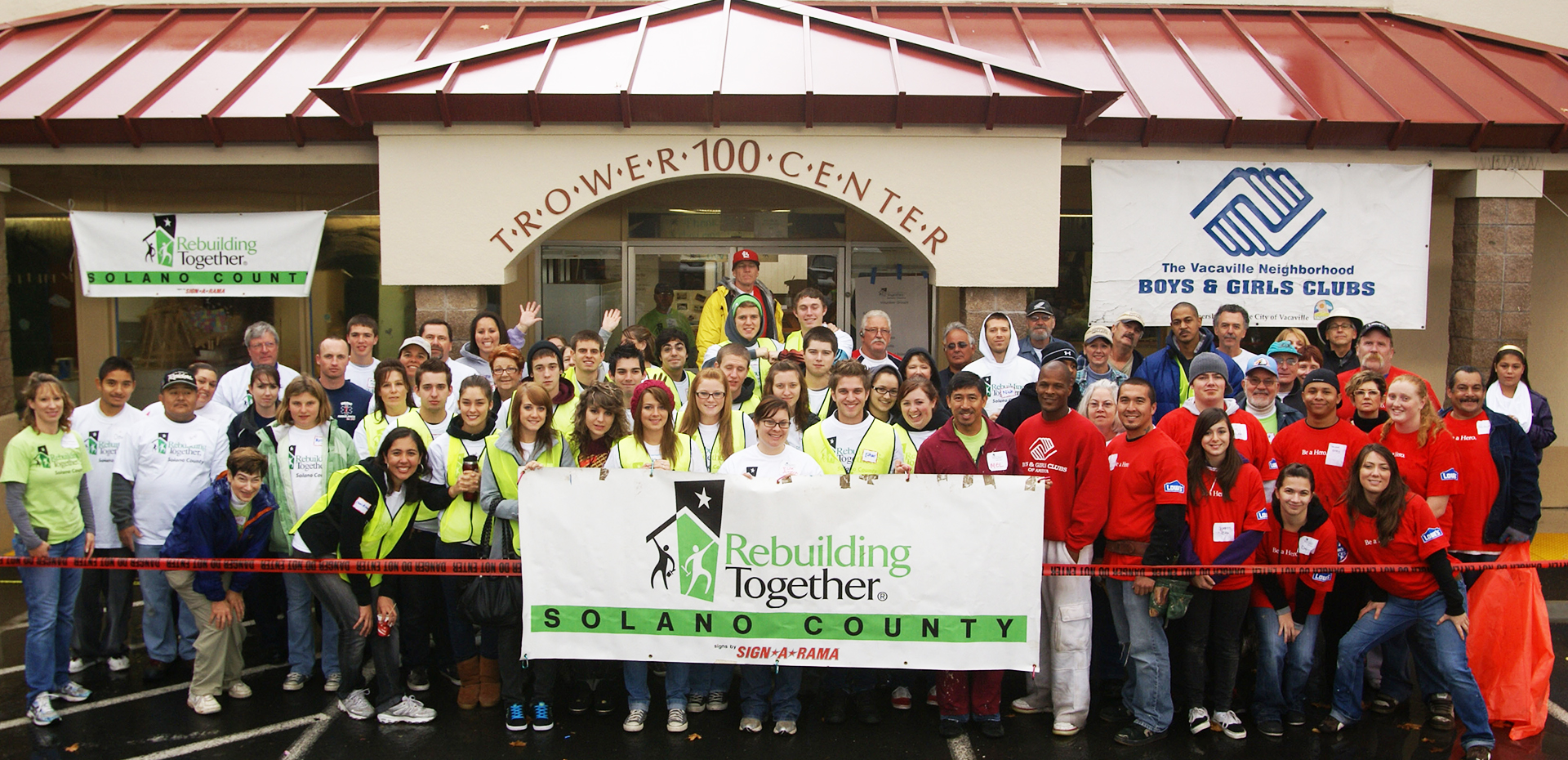
All Hands-on Deck
By James Quinn
It is no secret that a home requires constant upkeep to keep it from dilapidating from weathering and use. This requires lots of money, help, time, patience, and more. Now think bigger—think rebuilding a home—now imagine rebuilding the homes of entire communities!
With the mission of, “repairing homes, revitalizing communities, rebuilding lives,” Rebuilding Together is a standout nonprofit organization made up of thousands of teams of people nationwide (i.e., in 38 states and in DC), volunteering their time and skill to literally rebuild homes (hence the name) and community facilities such as schools. Its website reports that “more than 2.5 million Rebuilding Together volunteers rehabilitated more than 150,000 homes and several hundred community facilities—estimated value of work is more than $1 billion” (rebuildingtogether.org/about-us).
It all started back in April of 1973, according to Rebuilding’s website, “with the simple act of neighbors helping neighbors” of a small group of volunteers in Midland, Texas who wanted to help alleviate a serious problem in their community—neighbors could not afford to fix their homes.” These volunteers quickly noticed the significant impacts of using their time and skills to change not only people’s lives but also whole neighborhoods, so they traditionally met together every year on the last Saturday of April to restore homes. They called it “Christmas in April”—all the meanwhile growing bigger—and by 1988, they officially established themselves as the nonprofit Rebuilding Together, which helped all year round, and their significant national impact has inspired smaller Rebuilding Together groups all over the country—giving rise to our local one: Rebuilding Together Solano County (RTSC).
RTSC’s mission is specific to our own community in assisting low-income homeowners with home rehabilitation projects (e.g., helping out low-income schools, veteran’s buildings, Boys & Girls Clubs of America, etc.), paying special attention to making homes healthy and safe—which they do, for example, by installing free smoke detectors and carbon monoxide detectors that have and continue to save lives (every home should have them). RTSC’s site elaborates: “Our focus is low-income seniors, disabled individuals, and veterans. In addition to home rehabilitation, Rebuilding Together also assists community facilities with needed repairs. During a project, local businesses, community members and concerned residents come together from all walks of life to rehabilitate homes in Solano County. This is accomplished with volunteer skilled and unskilled labor, donated materials/services and financial support from within Solano County.”
And with RTSC’s recent 10-year anniversary in June, it is a great time to reflect back on the organization’s enormous impact: “From June 2009 through December 2018, more than 4,500 Rebuilding Together volunteers have rehabilitated 35 homes for low-income homeowners (seniors / military / disabled) and held more than 45 community facility workdays…[and] has installed more than 1,700 smoke and 425 carbon monoxide alarms benefitting 600 mobile home residents [with the] estimated value of work is more than $5,000,000,” according to its website.
However, those numbers have gone up since then, as I learned from RTSC’s Executive Director Elizabeth Hoffman, who also sits on its board of directors. Hoffman works alongside President Mel Orpilla, Vice President Freda Dill, Legal Counsel Paul Ligda, Treasurer Jennifer Rosendall, and Secretary Linda Daraskavich.
Hoffman said, “We’ve done a little over 2,500 smoke alarms throughout the county, throughout the mobile home parks and installed a little over 500 carbon monoxide alarms … our first home was in 2009—and now we have done a total of 38.” As you can see, to rebuild a home right (safely and following all city ordinances) clearly takes time, even with a lot of people’s money.
Hoffman and I met one Saturday morning at a Vallejo home, and one of the immediate things I noticed was the many volunteers, mostly from Travis Air Force Base. What stood out to me the most, however, was the age range from younger to older volunteers, where a group of well-humored seniors (one was 93) were packing up “to-go bag” lunches for volunteers—there was a job for everyone. “We have everybody, even high school groups who come out and want to volunteer,” Hoffman said. “You do need to be 14 years or older to help us on a construction project [liability], but beyond that, we have Cal Maritime students and more.”
In addition to Hoffman and volunteer groups, what runs RTSC is its many local partnerships, sponsors, donors, and more—because we want to make the same thing when it comes down to it—we want our community to be a better place. “We partner up with companies that will give us some actual cash to be able to get gas in the van, volunteer insurance, volunteer T-shirts … Wells Fargo is a huge sponsor, Phillips 66 [Diversified Energy Manufacturing and Logistics Company], Kaiser Permanente [Vallejo, Fairfield, and Vacaville], Costco, Medic Ambulance provides first-aid safety for us,” Hoffman said.
Additional partnered sponsors include but are not limited to: A-1 Guaranteed Heating and Air in Vallejo, Bank of the West, Construction Concierge, Costco in Vallejo, First Bank, Lennar Mare Island, Maria Teresa Matthews, M and M Sanitary LLC, Medic Ambulance, Minuteman Press—the list goes on! Some of them we have told you about right here in Local Happenings; and we, as a community, are lucky to have so many companies helping, including major donors like Benicia Herald, Mare Island Dry Docks LLC, Sol Trans, city fire departments (Vallejo, Benicia, Fairfield, and Vacaville), and more.
In fact, RTSC partners with our local fire departments as part of one its programs to show residents how to use and care for smoke alarms and carbon monoxide detectors (e.g., placement and properly checking them) while also teaching about what to do in the case of a fire. “We partner with the local fire departments because it is also important that we do education with residents on how to escape, what your escape strategies are, and time element,” Hoffman said. “We do that regularly throughout the years.”
Hoffman also told me how they started a partnership with Costco as a part of their food bank program. “We have an amazing partnership [with Costco in Vallejo], and on Wednesdays and Thursdays we get up to 2,000 pounds of food from them, and it could be from their deli, dairy, produce (fruits and vegetables), and bakery.” From 10 till noon, they quickly sort food at the Community Presbyterian Church in Vallejo, opening their doors at noon to low-income veterans and seniors for free food. “You can imagine when your income is much more limited—it really makes a difference that you can buy some of your medicine that you couldn’t buy,” she commented.
One of their other major partners is Home Depot, which has a pledge to give over $80 million over the next three years to low-income homeowners and veteran spouses, so they come out and volunteer for us, probably four to five times a year.” They generously donate $10-15 thousand in gift cards per home (you heard me right).
You can do your part, too—be a part of the team in the way that you can—help make Solano County a better place by supporting the cause. “Your support can be provided in a variety of avenues including: funding, donation of workday supplies/materials, donation of skilled labor, donation of volunteer groups, etc,” Hoffman said.
All contributions are tax-deductible since RTSC is an established 501(c)(3) nonprofit and can be conveniently made on their homepage: rebuildingtogethersolanocounty.org or you can contact Hoffman at ehoffman.rtsc@gmail.com (for any specific questions or inquiries) and make a donation check payable to Rebuilding Together Solano County, so that it impacts us all, locally.
To learn additional information, join their team, download a calendar, and/or see a full schedule of their events, visit their website at rebuildingtogethersolanocounty.org; and for general questions, I recommend Rebuilding Together’s national website’s frequently asked questions page: rebuildingtogethermc.org/about/our-work/frequently-asked-questions/.
James Quinn lives in Vallejo and teaches at Elmer Cave Language Academy. A UC Davis alumnus in English, he now studies education as part of Touro University’s Master’s in Education program. Along with teaching, he tutors and writes often. Email him at james.quinn@tu.edu. Visit his website at mrquinnj.weebly.com.

BROWN BUTTER
By Chef K. Marie Paulk
Believe it or not, the hardest part of writing about food is picking the topic. I usually go through old articles, recipes, and my binders. My collection of seven binders holds valuable information that I compiled while I was in culinary school. Whenever I search my sea of information, I always promise myself I am going to spend more time compiling the new information into even more binders. So, where is this leading? I have settled on telling you about a jewel of a subject and recipe. When I rediscovered this recipe, I instantly thought of fall: Sweet Potato Gnocchi with Fried Sage and Shaved Chestnuts.
Gnocchi is not difficult, but it may take some practice and patience. The results are worth it, especially since this recipe uses my favorite: brown butter. Brown butter is like making caramel, taking one ingredient (butter, instead of sugar) and transforming it into a more complex flavor. The reason that I think of fall with this recipe is that it uses sweet potatoes and the dough reminded me of little pumpkins.
Gnocchi (nyoh-kee) is considered a dumpling that can be boiled, baked, or fried. Gnocchi is made from a mixture of potatoes, potato flour, and/or wheat flour. Its form is about the size of a thimble, and it is usually given a special shape by rolling the dough against a fork or the back of a grater. A specialized tool could be used, but I prefer using a fork.
Throughout Italy, you will find many versions: fried and leavened dough, meatball shaped dumplings (made with wild greens and ricotta cheese), or porridge made from semolina enriched with butter and cheese, cut into disks and browned in a broiler. Different types of gnocchi include savory gnocchi, sweet gnocchi, gnocchi to be eaten simply as an appetizer, and more. Gnocchi takes on regional names; for instance, in Campania, they go by the name strangolapreti (aka “priest stranglers”). In Tuscany, it is made with spinach dough and called strozzapreti. Naples uses a conventional potato mixture called strangulaprievete. In Mantua, gnocchi di zucca is made from pumpkin using a little wheat flour to help bind it. I personally love the variety and their rich history.
Despite the differences, all gnocchi are composed of a principal ingredient: the potato and the simple seasoning. Baking the potatoes produces light gnocchi, plus you want to use a starchy potato, like a russet. Avoid using low-starch, waxy potatoes because they will turn “gluey” when added to flour, which will make the gnocchi thick and not light and fluffy, as they should be. I have learned that boiling the potato with their skin on, draining them in a colander and letting them dry in their own steam yields the best results. Letting the boiled potatoes dry on their own makes for fluffy, starchy mashed potatoes, which makes it easier to incorporate into the flour to help create a light gnocchi dough. Cooked potatoes should be fed through a ricer or food mill. A food processor should never be used, as it will turn the potato into a “gluey” mess.
You only want to knead the dough until it is blended with the flour (it should feel slightly firm but a little sticky). Just remember to not overwork the dough since too much kneading strengthens the gluten in the flour producing tough gnocchi. The amount of flour you use is crucial, so don’t add all the flour at once––it is easy to add more but almost impossible to take it out. The dough should feel soft, pliable, and slightly sticky. Adding too much flour makes for heavy gnocchi; while adding too little means they will fall apart when you boil them.
Once your dough is formed, you will quarter it and roll it into rope-like lengths. The dough will become firm enough to allow for scoring, which will allow them to hold their shape. Don’t worry about using a liberal amount of flour on your workspace; any flour that sticks to the gnocchi will dissolve into the boiling water rather than being incorporated into the dough. When you roll the dumpling over a fork, doing that will give the gnocchi their shape. This step is important, not just for the look of the gnocchi, but also for their flavor. The valleys and cavities trap the sauce, which adds to the flavor.
Brown sage butter is a simple sauce. To make burro nocciola, as it is known in Italian, you brown whole butter to a deep amber, with darker flecks of slightly caramelized butter. You will see a tiny bit of smoke; however, if you get a lot of black smoke, you have gone too far.
It will only take about three minutes for the gnocchi to cook in a pot of salted boiling water. They will float to the top. Take them out with a slotted spoon, transferring them to the skillet of brown butter.
So here it is, a simple recipe full of autumn flavors:
1 ¼ russet potatoes
1 (3/4 lb.) sweet potato
1 large egg
½ tsp. grated nutmeg
1/3 cup grated Parmigiano Reggiano plus more for serving
1 ½ to 2 cups for AP flour
1/3 cup extra virgin olive oil
1 cup sage leaves
1/3 cup bottles roasted chestnuts
2 Tbsp. unsalted butter
So, enjoy as I plan to! And remember that practice makes for fluffy gnocchi.

Most people understand the image of a pharmacist filling a bottle of pills and explaining the proper dosage to a patient.
Many pharmacists, however, are involved in research and academic pursuits related to pharmacology. What those pharmacists study can range greatly depending on their personal interests.
For 2014 PharmD/MPH Touro University California grad Dr. Ben Malcolm, his focus began well-before he even began pursuing a career in pharmacology.
“I’ve always had a general interest in things related to biology and chemistry,” Dr. Malcolm said. His inspiration grew from a television program called, “Intervention.” The show focuses on individuals battling addictions to drugs like meth and heroin.
“I really became curious about what it was that would cause someone to give up their family, give up their job, their house,” Dr. Malcolm said. He became fascinated by these illicit substances – not in the traditional way teenagers are normally intrigued by drugs – and studied them more closely.
Through Internet research, he came across a forum of people sharing stories about their experiences with different types of illegal drugs and the stories were generally divided into two different categories.
For some, drugs like meth and heroin, which are classically known for their addictive traits, the stories were ones of ruin and self-destruction time and time again, Dr. Malcolm found.
Others, who had experiences with psychotropic substances like peyote, mescaline and so-called “magic” mushrooms, almost always told tales of life-changing experiences for the better.
“I had always heard all along that all drugs were bad, and I just thought it was overblown, but this really confirmed it to me,” Dr. Malcolm said.
Dr. Malcolm found that his Touro education opened the door for him to further investigate the drugs from a scientific and medical perspective.
As his knowledge with the drugs built, he began giving a series of Ted-like talks about their potential uses and benefits medically. Through these talks, Dr. Malcolm eventually made connections that soon led him back to where his fascination with the topic all began – TV.
Producers from the television show, The Doctors – a bit like a mashup between Dr. Oz and The View – contacted Dr. Malcolm to be a guest expert on the subject during a recent taping.
An opposing viewpoint offered up during the segment leaned heavily on the general Just Say No advocacy prevalent in the 1980s and prior. It was the kind of pushback Dr. Malcolm says doesn’t hold water much these days.
“I can’t think of anything less medically vague than saying someone might have a bad trip,” Dr. Malcolm said. “Save the moral judgment and say specifically in medical terms what makes it a bad trip?”
Nearly half of all US states now how some version of a legalized marijuana law on the books and other drugs, like magic mushrooms, are finding a similar footing, with the cities of Denver and Oakland each legalizing mushrooms in recent years.
“The data will set us free,” Dr. Malcolm said. “This is a renaissance that is going to occur before our very eyes in the next 10 to 15 years.”
Dr. Malcolm said psychotropic substances, in particular, deserve closer study and scrutiny to measure the potential harms and benefits – just like any other drug coming into the marketplace.
Historical study of substances like peyote and mescaline show that different cultures around the world have used them not to get high or to “party” but for spirituality and other sacramental uses, Dr. Malcolm said.
He called these drugs just another tool to combat afflictions that plague people worldwide, like depression, for example.
“Can you use a hammer to drive in a nail and finish a job, yes,” Dr. Malcolm said. “But you can also use a hammer wrong and smash your thumb. We need to do more research to figure out ways to help people avoid smashing their thumb. But these drugs are just tools. That’s all.”
Well, valued reader, we are coming to the close of 2019. Yes, another year is wrapping up. You can tell that, when the stores start putting up their Christmas tree and other holiday decorations, it must be October (or maybe late August, in this case). The last 90 days are going to go by in a blink … unlike when we were young, and fall would drag on and on. Don’t lament the passing of this year quite yet since there is still so much to do and enjoy. We here at Local Happenings Magazine love the fall. Isn’t orange the new black? Isn’t pumpkin spice the most anticipated scent of the year? Isn’t it sweater season? Even if you don’t look as slim in bright orange or detest the scent of pumpkin spice, there are still many wonderful fall festivals to enjoy.
Did someone say festivals? Yes, there are quite a few happening during this pre-holiday season, so check out our photo and online calendars to get the dates. Beer is also in season at quite a few of those festivals as well, which is a favorite of ours. Wine drinkers have not been left out either—the crush is pretty much wrapped up, so that just means there are more wines to drink! So, don’t be sad that the days are growing shorter because we can help you fill them up, and the nights as well!
Fall also means that it is time to vote in our Local’s Choice Awards. Voting has been open for a few weeks now—but it is not too late to both nominate and vote for your favorites. Remember that there is ONE winner per category for each county (Napa, Solano, and Contra Costa). Make sure to nominate and vote for your favorites in EACH county, not just your own. Don’t forget that you get to vote more than once, though it’s only once per day. So, just like Chicago: vote early and often! Our polls close on Sunday, December 9th, so get out there and vote today, tomorrow, and every day until 12/9. Our winners will be announced in our 2020 February/March issue of Local Happenings Magazine.
We would like to make our regular birthday wishes, too; there are so many of our family and friends who are also celebrating their annual trip around the sun. We would like to wish Christopher, Clara, Rory, Tim, Michelle, Susan, Jeannie, Bea, Caroline, Monica, Jon, Liz, Mark, Cristina, Curt, Lori, Shawna, Kathy, Candy, Luis, Nico, Emily, Hermie, Xavier, Reagan, Ben, Norb, Jennifer, Shawna, LeeAnn, Ken, Amy, Ali, Julia, Connie, Tony, Kevin, Josette, Linda, Cera, John, Angelita, Larry, Paula, Alyssa, Kevin, Teena, Billie, and everyone celebrating their special day of the year in October and November!
And we always have room to print a special shout out to Mom and Dad Briseño (Genny and Ray, to everyone else); our father passed away this year, but this would have been their 66th wedding anniversary! Even though our father is not here physically to celebrate, our mother and the rest of us will mark the occasion with fond memories and love.
Until next time . . .
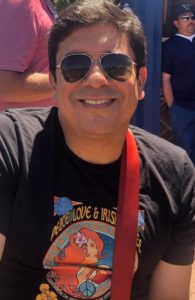
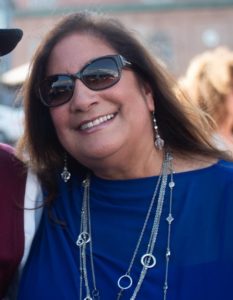
Robert Briseño & Deanna Troupe
By Nate Gartrell
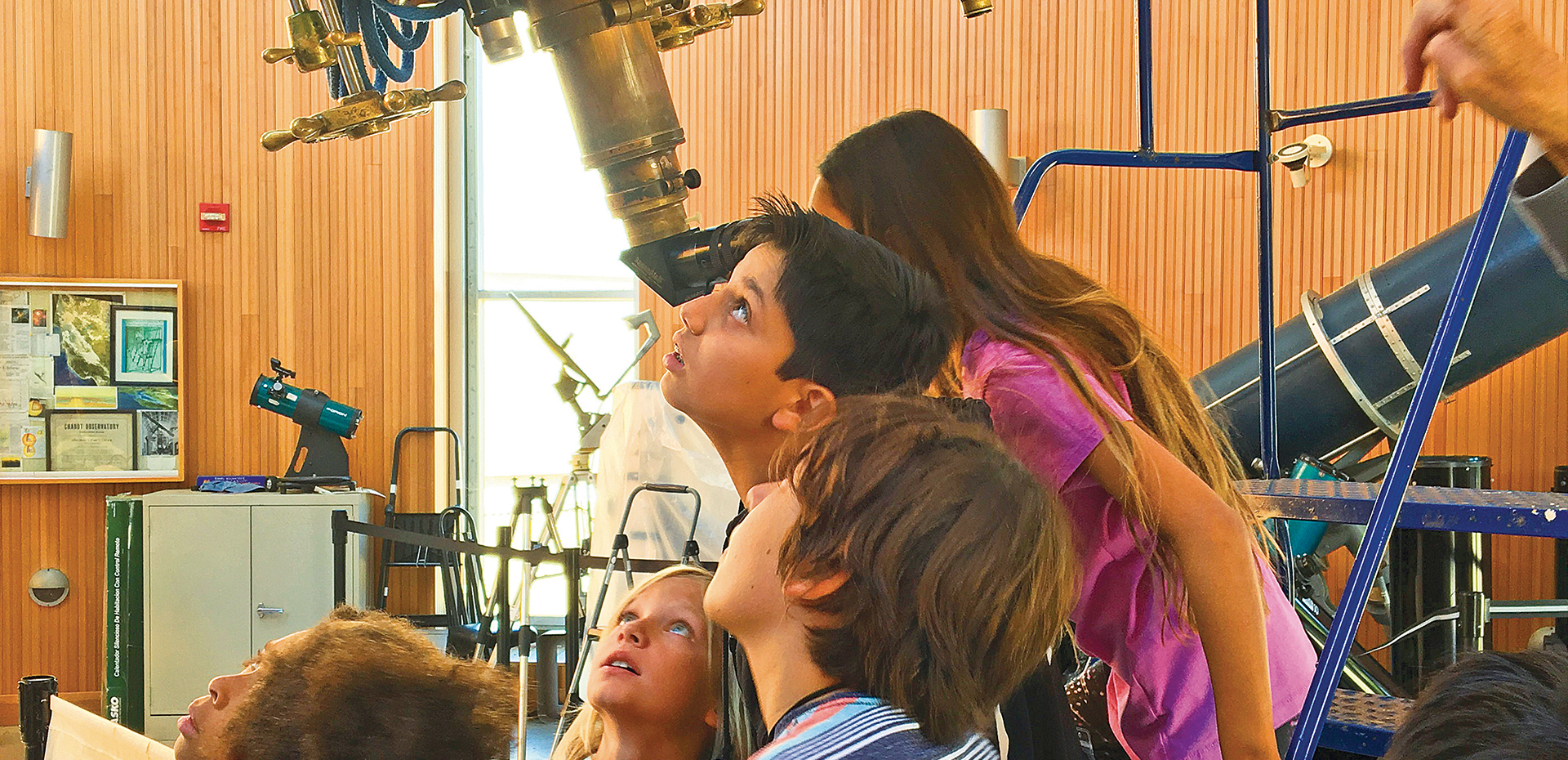
Every night when the stars come out, we’re reminded of our place in the vast universe, and of the fundamental question that humans have been asking for thousands of years: what else is out there? That’s maybe why the science of astronomy has a certain unparalleled allure to it, and why simple discoveries about the chemistry of celestial objects or discoveries of new planets instantly make headlines around the world.
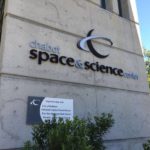
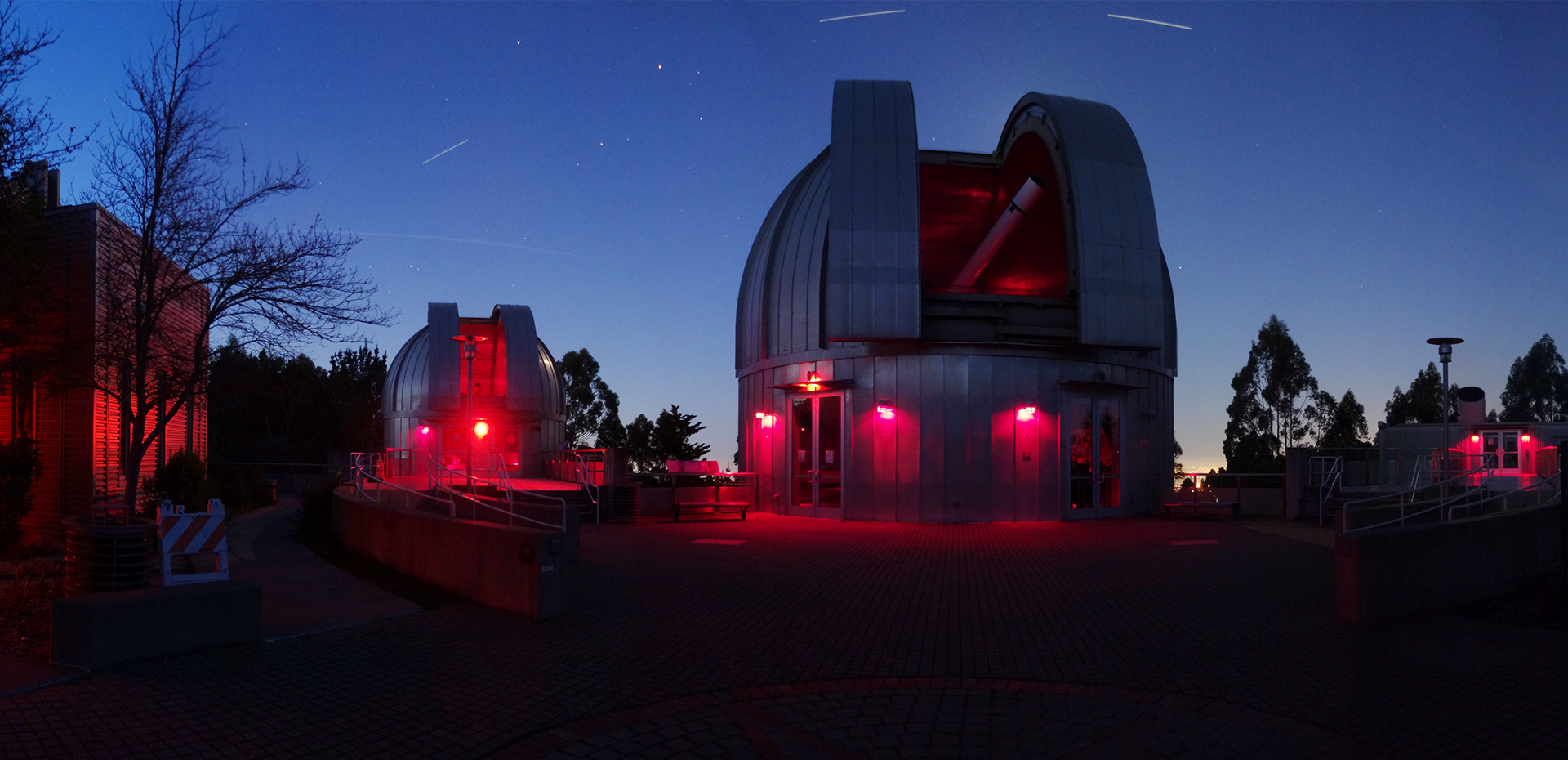
At Oakland’s Chabot Space and Science Center, researching these mysteries and giving the public an accessible, up-close view of outer space has been a year-round focus since 1883, when it opened as an observatory in the East Bay. It is home to the largest refractor telescope west of the Mississippi—one of three tremendous telescopes at the center—as well as a planetarium, a publicly accessible observatory, and dynamically changing exhibits. From the 1880s till the turn of the century, it served as the official timekeeper for the Bay Area, and in 1970, it played a little-known key role in the rescue of the nearly disastrous Apollo 13 lunar mission.
“There is an innate curiosity in space exploration, and we use that spark of curiosity to ignite learning,” said Mary Catherine Frantz, a marketing associate with the Chabot Space and Science Center. “By creating opportunities to experiment, tinkering and dive into topics, we create the next generation of discovery.”
Chabot is preparing to soon celebrate their 20th year at its Skyline campus, but there are still plenty of events on the horizon for 2019, which are expected to draw thousands of folks. They range from opportunities to witness rare astronomical happenings to the straight-up whimsical, like their upcoming First Friday that focuses on the Chemistry of Candy or their August Bubble Festival.
“BubbleFest was exactly what it sounds like,” Frantz laughed. “We had bubble blowing stations, world-renowned bubble performers, robots that can blow bubbles and other engaging and fun activities that the entire family can get into.”
It is also well known for regular “First Friday” events, with a new theme on the first Friday of each month, centered on a new and exciting theme each month.
“Our First Fridays remain publicly accessible with free parking and a low-cost night of activities for everyone to enjoy… there are always new activities, a new theme, and of course the ability to go and see the telescopes,” she continued.
The next First Friday, in November, will focus on what astronomers do at night when they aren’t stargazing: sleep.
“It’s all about the science of sleep. We take a topic that creates interest and then use engaging activities that bring relevance to STEM concepts. We’re doing some hands-on activities, listening to a bedtime story, and we’re encouraging people to come in their pajamas,” Mary Catherine said.
There is a healthy mix of annual celebrations and events, each typically inspired by the ever-changing sky. For instance, on November 11th, Chabot is holding a morning event to celebrate a rarity: the planet Mercury will briefly pass across the sun, and the public is invited to view this in real-time from 7:30 a.m. to 10:30 a.m. It won’t happen again for more than 20 years.
Chabot is an excellent gathering spot for a variety of astronomical events, with a destination more removed from light pollution and astronomers there to answer questions.
“We just had a full moon on Friday the 13th, and that was a really exciting occurrence that won’t happen again for decades,” Mary Catherine said. “To bring people together to experience celebrate those moments creates a sense of community among lovers of astronomy and science as a whole.”
On October 26th, Chabot is holding a Starlight Gala, to benefit its youth educational program. Supporters of science and community leaders will come together for dinner and a chance to celebrate their Champions of Science awardees, Dr. Yvonne Cagle and Dr. Eugene Tu. Afterwards, the 21+ Starstruck Costume Party is shaping up to be the biggest Halloween party in the Bay Area, stepping into the mysterious world of alchemy with a laser show, performers, a unique dance floor and inspired drinks.
Chabot is known for its many exhibits and immersive educational programs geared toward youth, like its exhibit, Project Create that hosted summer activities for early learners.
“We’re working on creating new experiences geared toward early learners that are creative and exciting and different. Everything from building an earthquake-proof structure to experimenting with color to taking a look through microscopes at creepies and crawlies in compost,” Mary Catherine said. “We are always opening up something new and fun for early learners that is hands-on and dynamic, but still ties into STEM and STEAM learning.”
Chabot is also home to three of the most important publicly accessible research tools in the Bay Area: its mighty telescopes, two of which are more than a century old. Every week, anyone can come to check them out. If you’re interested, go to Chabot any Friday or Saturday, weather permitting, from 7:30 p.m. to 10:30 p.m.
“We are the only science center on the West Coast that provides free weekly access to our research-class telescopes,” Mary Catherine said.
Chabot’s history dates back to the Reconstruction era when Oakland’s then-school superintendent decided that the city should have its own world-class telescope, after observing a similar device at a high school in Philadelphia. That led to the 1883 construction of the eight-inch refracting telescope (the term refers to the type of lens), known as “Leah” (pronounced like the Star Wars princess). The telescope is still in existence today and was followed by telescopes “Rachel” in 1914, and the center’s biggest and most powerful by far—the 36-inch reflecting telescope “Nellie”—in 2003.
The telescopes have had homes in San Francisco, as well as Chabot’s previous Oakland home on Mountain Boulevard. Because people discovered that Chabot was built on top of the Hayward Fault, it was relocated to its current Skyline Boulevard location in August of 2000 (lunar explorer Buzz Aldrin was at the grand opening).
In 1970, the Chabot observatory came to the rescue of Apollo 13 astronauts Jim Lovell, Jack Swigert, and Fred Haise, after an overlooked flaw in the aircraft caused a short mid-mission, leading to the destruction of an oxygen tank and nearly causing the aircraft to explode in outer space. Instead, the crew was able to return home by orbiting the moon and using its gravity to slingshot the damaged aircraft back to Earth. As Apollo 13 began to emerge from the dark side of the moon, NASA needed to know its precise location. As luck would have it, Chabot’s Oakland observatory was the only place in NASA’s network with clear enough skies to spot the spacecraft on that April day.
“Chabot got the call saying they needed the precise location,” Mary Catherine said. “We brought together the volunteers, college students, and astronomers on-site and they were able to locate it … To be a part of that moment in history was fantastic.”
Nowadays, in Chabot’s Challenger Learning Center, visitors can recreate lunar missions and other ventures into space, in a space flight simulator that is usually reserved for bigger groups. It’s typically available for school field trippers, but Chabot also holds an annual Valentine’s Day event at the Challenger Learning Center.
“Couples will come together for a glass of champagne and a chance to go into space every Valentine’s Day,” Mary Catherine said. “We’re always looking for new fun ways to be a gathering place for the community.”
Chabot Space and Science Center is located at 10000 Skyline Boulevard in Oakland. It is open Wednesday through Sunday, from 10 a.m. to 5 p.m., and it is closed on Mondays and Tuesdays. For information on upcoming events, admission, and more, call (510) 336-7300, or visit chabotspace.org. You can also “like” them on Facebook at facebook.com/ChabotSpace to follow them for regular updates, and visit chabotspace.org/events/events-listing for a regularly updated event calendar.
Nate Gartrell grew up in Benicia, studied journalism in college, and has written for a handful of media outlets since age 15. He aspires to visit all 30 Major League Baseball stadiums and to hit the trifecta at the horse track.