Sutter Solano Cancer Center Gives Patients
Access to State-of-the-Art Treatment
Statistics regarding breast cancer from the American Cancer Society paint a positive picture: incidence was stable from 2005-2009 and deaths have been steadily decreasing since 1989. Still, the ACS estimates that more than 232,000 new cases of breast cancer will be diagnosed this year, and nearly 40,000 women will die from it—making it the second deadliest cancer for women (after lung cancer).
No one is immune from breast cancer. Many of the risk factors—being female, advancing age, family history, early menarche and late menopause—can’t be changed. Risk factors that can be changed include obesity, use of hormone replacement therapy, physical inactivity and alcohol consumption.
As is true for all cancers, early detection is key to successful treatment. The American Cancer Society recommends annual mammograms beginning at age 40. In addition, MRI scans may be appropriate for some women who are at high risk.
Solano County women diagnosed with breast cancer are fortunate to have state-of-the-art treatment available at the Sutter Solano Cancer Center in Vallejo. Our multidisciplinary team includes professionals to treat and guide patients throughout their cancer odyssey: surgeons, medical oncologists and radiation oncologists, social workers, psychologists, nutritionists and patient navigators. In addition, several support groups are available for patients and their families – helping heal them as a whole.
Being under one roof helps our team’s ability to communicate and be on the same page, which leads to a higher level of personalized care. We understand how anxious patients are after receiving a cancer diagnosis and take the time to ensure they understand all their options and can make thoughtful decisions about the right treatment plan for them.
The treatment of breast cancer is individualized; a number of factors will determine the recommended course of action for each patient, including the size, grade, node status and stage of the tumor and whether it’s hormone receptor positive or negative. Treatment alternatives may include mastectomy, breast-conserving surgery (lumpectomy), radiation, chemotherapy, hormone-blocking therapy and targeted/biologic therapy. As an American College of Surgeons-accredited cancer treatment facility, the Sutter Solano Cancer Center team is well equipped to provide patients with the tools, information and resources they need to make decisions regarding their treatment.
Dr. Rasila, a member of Sutter Medical Group and the Sutter Solano Cancer Center medical team, specializes in medical oncology and hematology. She sees patients in Fairfield and Vacaville and can be reached at 707-427-4900.
When you hear the word “ballet,” your thoughts might wander off to an image of faceless dancers in tutus on some distant stage, striding around to a piece of hardly recognizable classical music.
Well, think again! You may not know it but there exists a much more relatable and accessible alternative right here in Walnut Creek and it’s alive and high stepping, even after 20 years.
With their Growers Square office surroundings spare and non-flamboyant but still extremely functional, Diablo Ballet’s small leadership team, led by head dreamer and doer Lauren Jonas, makes miracles happen each ballet season and beyond through its tireless passion to touch peoples lives both on and off the stage.
Jonas, a former leading ballerina and current artistic director, will likely beguile you with her warmth and quietly engaging presence. Still, as you will shortly discover, there burns inside that 20-year, never-ending commitment, as expressed in her company’s mission statement: “Educate and enrich children and adults through the art of dance.”
You may be surprised to learn that all of her subsequent successes were given birth back in the early ‘90s, right across the street from that workspace at the famed Lesher Center For the Arts.
“Ahsraf Habibullah (noted structural engineer and software developer) and I were there to see a show put on by the Moscow Ballet,” Diablo Ballet’s co-founder says. “When we observed just how excited the audience seemed, we realized that there was professional theatre, opera and symphony in town but not an actual ballet company. At that moment we began to visualize how to change all that.”
Deciding to focus on a less grandiose operation with a limited number of dancers from diverse cultural backgrounds, who also had major company experiences, and then center it all in Walnut Creek, Diablo Ballet was formally founded in 1993. Amazingly it survives and even thrives to this day, despite occasional challenges over its long history.
Executive Director Lee Foster sees great value in this small company’s unique ability to draw in the attendee, be it a novice or confirmed believer. She notes the definite place in the whole realm of personal artistic expression for such an enterprise where, “there aren’t 5,000 people in the theatre and you have to use binoculars just to see the dancer’s facial expressions,” allows the artist to better express his or her individuality.
Along with those obvious advantages for troupe and audience alike, there can also be found other unexpected positives for the less-than-knowledgeable Diablo attendee. Unable to perform those larger and longer presentations, where sometimes more than 50 dancers can be needed, these offerings often involve just one, two or three from the ensemble’s nine members onstage at a time. Pieces are shorter in length and varied in musical style as well, often giving the show the feel of a ballet sampler.
“I always tell my friends who don’t know dance, if there’s something you don’t enjoy, just wait,” 10-year Diablo Ballet veteran Edward Stegge explains. “There’ll probably be another you’ll like right after it.”
But for Diablo Ballet, it’s a lot more than providing more diverse and audience-friendly experiences. There also exists a totally different set of rich and vital outreaches that further help achieve Lauren’s broader quest to really touch people and make a difference in their lives.
Among the best of such programs remains their acclaimed Project PEEK (Performing Arts Education & Enrichment for Kids). Here, underserved elementary school youngsters are given valuable hands-on and feet-moving exposure to dance, by working closely with Diablo’s ballet professionals in their classes, and through complementary interactions with these same dancers on their own home turf.
First there is The Theatre Encounter, where 750 needy kids from local schools are invited into the Lesher once a year to experience a live performance featuring some of the ballet’s current repertoire. It concludes with their Make-A-Ballet exercise, where students in the audience can actually help mold a short piece choreographed by one of the dancers.
Even more beneficial, though, is their sustained Adopt-A-Class operation, as well as their less frequent but still valuable Dance In the Schools once-a-year academic experience. With the former, there are numerous curriculum-developed visits by Lauren and available dancers during which encounters with the entire second-grade population occur. The goal here is to help these often economically and culturally challenged youngsters find valuable channels for their many inner frustrations.
Jonas says, “One of our first exercises is called Emotion Into Movement. We begin by going around and asking kids to explain what makes them happy, then sad, then angry and so on. After they express each feeling in words we then have them demonstrate what this would look like physically as we play music portraying that particular mood. We then string sets of four of these movements together and have the students show us what amounts to a little bit of choreography; really the first time they are exposed to that concept.”
But that’s not where it ends. Through successive lessons, they begin to translate stories that are read to them into motion. Final expression is found when groups perform an end-of-year program for first graders and parents, where situational scenes are acted out without any words permitted. Such portrayals, according to Derek Sakakura, another outstanding company dancer, have run the gamut from recreating an airplane trip to a baseball game to a circus, to even classroom enactments featuring the students as their teachers.
Included also within this rigorous schedule is a visit to the Lesher to see a matinee performance of current repertoire material and later interaction with the dancers, as well as a trip to view one of the troupe’s rehearsals. Here these youngsters not only watch, but also are taught several of the actual moves that they just saw.
“We feel that second-graders are at the perfect age to be exposed to all of this,” explains Jonas. “Their minds are still open without preconceived opinions, yet they are old enough to understand and benefit from what we are showing them.”
Moving beyond these youth outreaches are other equally exciting and innovative ones that enable all age groups to learn the ins-and-outs of ballet. Along with two major season programs at the Lesher, complete with a live orchestra, are three truly close-up Inside the Dancer’s Studio offerings at Shadelands Art Center.
Here in a much less formal and more intimate setting, audiences are not only presented somewhat smaller-scaled works, but afterwards become part of a full Q & A session with the ballet ensemble. This is then capped off with a reception where patrons can mix with the performers in an even more direct and informal way.
One additional educationally enriching offering is the summer film series held at local libraries, where Jonas and a noted critic present classic dance movies with explanation beforehand detailing what they contain artistically.
Always seeking to break new ground and increase DB’s accessibility, a full-on social media campaign directed by Sakakura has also been prominent, attracting large numbers of Twitter, Facebook and Pinterest followers. For many, this is the first opportunity to ask real-life dancers questions about their trade.
Last season, these efforts reached new innovative heights when resident choreographer and dancer Robert Dekkers undertook a trailblazing Web Ballet project. Here, Dekkers sought ideas on these sites to help him construct an internet-generated piece. He subsequently incorporated seven of the suggestions into the new creation as well as having readers vote on the music set as background.
One idea asked for a deliberately ironic title while another centered on the dodo bird. Another idea requested that the women be explorers and the men be the animals.
With worldwide participation, what ultimately emerged was Flight of the Dodo, which was performed at an Inside the Dancer’s Studio program and taped for inclusion on their clip-filled YouTube page, drawing even some international press recognition.
All this is delivered by a company that offers so much more than just dance, as it reaches beyond the Lesher and Shadelands stages, where it already enchants with remarkably innovative ballet.
Programs this upcoming season feature Diablo’s typically rich panorama of West Coast and company premieres and repeat popular presentations by noted choreographers like George Balanchine, as well as originally-created offerings by exceptional DB dancers Dekkers and Venezuelan-born David Fonnegra.
Highlighting the major events is their November season-starter, including a new and improved “A Swingin’ Holiday” and a huge 20th anniversary March concert gala. (See www.diabloballet.org for details).
Standing behind it all, though, remains one fearlessly determined visionary, who, from that long-ago day at the Lesher, continues to bring her strong belief in Walnut Creek-based ballet to fruition.
Beloved and appreciated by her dynamic crew, whose creativity and individuality she tirelessly encourages and nurtures, Derek Sakakura sees even one more crucial element Jonas brings to Diablo Ballet’s success story:
“People are really surprised when they come in and watch us,” he says. “With a small company, they’re not expecting to experience the great quality ballets Lauren presents and the high-caliber talent she attracts. I think that exceptional product actually results from one main factor: Instead of putting the focus on advertising and the money-making kinds of things, she’s stayed completely true to her own artistic integrity. And in this day and age that’s so hard to do and believe me, is truly remarkable and appreciated.”
 Les Honig is a features freelancer and former journalism teacher from back East who relocated to the OC before landing in Benicia to savor the joys of Northern California living.
In 2011, years before the Admirals came to town, and with way less fanfare, Vallejo successfully lured another team in blue to settle down in town. The city attracted a fast-growing, multimillion-dollar housing company called Blu Homes, which set up their manufacturing operations on Mare Island to gain footing on the West Coast. One year after making that decision, Blu Homes achieved $40 million in bookings, representing a 400% single-year growth. But despite what these daunting figures might indicate, Blu Homes focuses on making nice homes more affordable to the average American.
Blu Homes was founded in 2008 by a well-balanced team—Bill Haney, an environmentalist, a venture capitalist named Maura McCarthy and an engineer from MIT named Dennis Michaud. The three of them were both looking for a cheaper, more environmentally friendly approach to home building during a time when the nation was going through a housing crisis involving millions of foreclosed-upon homes. At the same time, Haney, McCarthy and Michaud were trying to solve a marketplace mystery …
They all agreed that prefabricated homes (or prefabs: homes that are manufactured in advance, before being driven to a site and assembled) best fit the bill for what they were looking for.
“The idea came from a class that Bill Haney sponsored at the Rhode Island School of Design, and MIT [in 2007],” said Dana Smith, the Director of Public Relations at Blu Homes. “The class was looking at the future of housing, and how to make beautiful homes more accessible to more Americans. Through that research, they settled on prefabs.”
The problem? Despite having some international popularity, prefab homes weren’t endearing themselves to Americans and had never really been successful in the United States. So the Blu Homes team decided to take a different approach to building prefabs. For starters, they began designing their homes differently than other prefabs, which have a reputation of being smaller than your average home, or simply as being considered “cheap-looking.” Blu Homes houses, by contrast, have a modernized style of architecture, a more open feel to them and are generally more expensive-looking than they actually are.
“The steel framing we use allows for higher ceilings, more windows and a larger overall surface area,” Smith said. “So the space that you have feels so big and satisfying.”
The other thing they did to distance themselves from other prefabricated homes, Smith said, is to invent a new piece of folding technology which allows for quicker manufacturing and assembly, and helps them keep costs surprisingly low. For instance, their catalog shows one- to two-bedroom homes on sale for $145k, as well as a three-bedroom 1,000-plus sq. ft. house for 170-$185k, significantly lower than a non-prefab with similar dimensions would likely sell for, especially in California.
“This enables us to design and build all the homes out of one factory, and then we can load them onto a flat-bed truck and ship them anywhere in the US or Canada,” Smith said, adding they’ve recently added Hawaii to their delivery range.
Originally, Blu Homes ran all their operations from their headquarters in Waltham, Massachusetts, but realized that the best market for their houses was on the opposite coast. At first they were looking at Nevada, but California quickly started looking more attractive. And Vallejo, especially the site they’ve moved into on Mare Island, turned out to be such a great fit that Blu Homes closed their East Coast factory and now do 100% of their manufacturing out here.
“We’ve gotten tons of support from the city and the business community,” Smith said. “We have about 120 people working on our Vallejo factory, and they’re a terrific group of talented craftspeople. We’re excited to have that talent pool; that was a big selling point for us.”
Another reason for Blu Homes finding Northern California as a good fit is that this area has a lot of green initiatives, as well as folks who are passionately trying to help the environment. This fits in with Blu Homes’s overall business model, since they use a lot of recycled materials and take steps to reduce maintenance costs and electricity/water usage for their homeowners.
“We use recycled steel. We have an extremely tight envelope for insulation, so the energy efficiency for the homes is kind of off the charts,” Smith said. “The air quality of the homes is extremely high because of the circulation system we use, and the operating costs of the homes are really low.”
Because of that circulation, Blu Homes are generally warmer than average during winter and cooler than average homes during summer, which reduces the need for climate-control in the house, in turn lowering the likelihood of mold, dry rot, etc. Additionally, their homes are solar-ready, so if any homeowners want to take energy efficiency up another notch, it’s relatively easy for them to do so.
“It’s basically like living in an igloo-cooler,” Smith said. “It’s going to moderate the temperature really well. I was in one of our homes near the Mojave Desert, before the homeowners moved in. It was about 108 degrees outside, but it was actually really comfortable inside the house.”
In Northern California, we still have at least two weeklong heat waves each summer, when millions of people simultaneously turn on their AC units and electricity companies jack up the rates. Blu Homes keeps these kinds of things in mind and focuses on the long-term sustainability and maintenance of the home.
Currently, Blu Homes is using some of the $69 million in investments they acquired from 2008-2012 to make a series of display homes so that more people can attend open houses and get an idea of what Blu Homes has to offer. One of these will be in Mare Island, said Smith.
“If you are a person who wants to build a home yourself, but want it done in an extremely efficient way, Blu Homes can take care of every element of the process—from pouring the foundation to designing the structure, all the while lowering your maintenance costs,” Smith said. “Blu Homes can do all that for you.”
Blu Homes gives regular factory tours of their Mare Island manufacturing headquarters, which is located at 1245 Nimitz Dr. on Mare Island in Vallejo. If you’re interested in purchasing a Blu Home, or want to learn more about them, or even if you just want to check out some pretty cool videos of their design/building process, go to www.bluhomes.com
 Nate Gartrell grew up in Benicia, studied journalism in college, and has written for a handful of media outlets since age 15. He aspires to visit all 30 Major League Baseball stadiums and to hit the trifecta at the horse track.
Capital Glass: The Glass Capital of Benicia
Residential Maintenance seems to be an ongoing necessity as the years go on. If it’s not one thing it’s the other, right? As soon as the dishwasher is fixed, the oven goes out! Or you decide you need to renovate the bathroom. The question is, where do you go for these services when there’s so many companies offering the same thing? We can help you with that! When it comes to your glass needs, anyway. Capitol Glass in Benicia sets themselves apart from the masses with quality work and superior service.
As part of the Benicia community since 1970, Capitol Glass has been under the ownership of husband-and-wife team Jim and Kelley MacInnes for the last nine years. “We bought the company from the original owners’ daughter and son-in-law, and we’re locally owned and operated,” Jim says. “We’ve really turned the company around,” adds Kelley. “We’re one of the only full-service glass companies in Benicia.”
Jim recollects first purchasing the business. “When we bought the shop, we had one truck and one guy, and a smaller shop,” he says. “I think within the first two years we had to move to our current location—increasing our shop size—got three trucks and three guys. Business increased about four-fold of what they were doing before.” Since that expansion they’ve been able to spread their Benician work ethic to neighboring communities. “We’ve really expanded the business,” he says. “We go to Fairfield a lot, Vallejo right next door, Martinez and Concord—we go all over.”
Capitol Glass was previously owned by a construction company that didn’t do glasswork like the MacInnes’ do now. “We do a lot more commercial work now and travel as far as San Francisco to do commercial storefronts,” says Kelley. You can see their mirror work in any Patxi’s Pizza restaurant in the Bay Area. For a local look, you can check out Sticky Rice in Fairfield to see their crystallite railing system. “You’ll see a beautiful glass railing system we did out on their patio, so you can sit on the patio without the wind blowing on you.” Jim also proudly mentions the Big-O Tires on Military East in Benicia. “We did that entire glass storefront.”
But commercial work is just the tip of the iceberg for Capitol Glass. The most sought-after service of theirs is residential replacement windows. Jim and Kelley have the following tips to help decide when to replace your windows: “If they’re drafty, if they’re rattling, or you may also have what’s called a failed seal,” says Kelley. “If they’re dual-pane, the seal may fail and they’ll look fogged up; they’ll look dirty but you can’t get them clean. That would be a good time to replace them.”
Jim explains the importance of making sure your windows are up to par. “All new windows today have the low-e, high-performance glass,” he says. “It more than doubles the energy efficiency of your existing window, and they also get a lifetime warranty with any of the new windows that I sell for anything that might happen. Most of the houses that are built in the ‘90s commonly do not have low-e, high-performance glass.” Low-e, or low emissivity, “is a very thin, microscopic coating thousandths of an inch thick that they apply to this glass. Typically it reflects a lot of the UV and heat rays while allowing light to transmit through the house.”
The only thing better than utilizing the service of a local business is knowing that it’s run by local people. Jim grew up in Concord, which isn’t too far from Benicia. Over a 40-year career he’s remained in the Greater Bay Area; he apprenticed at Lafayette Glass Co. and went on to work in Walnut Creek and Vacaville after 11 years in Glaziers Local #169 in Oakland. Kelley is a Benicia native through and through. “I grew up in Benicia—born and raised—and my mother was, too,” she says. “It’s nice owning a company here, being able to serve the community I live in.” And it is that very service that has earned Capitol Glass the credibility they have today.
There are certainly other glass companies in the area, so, what makes Capitol Glass stand out from the rest? It’s simple: “Customer service,” Jim says. “And the knowledge and professionalism of the people who work for me. I’ve had many people tell me in Benicia and Vallejo that they’d much rather deal with us.” They do everything with the customer in mind. “We take care of the problems if there is a problem, we listen to the customers, my guys are super knowledgeable—I think that’s the biggest difference,” he explains. “If [the customers] are ever unhappy with anything we make it right,” Kelley adds. It can be tough to differentiate oneself in such a widespread field, but “people come to us because of the quality of service that they get,” says Jim. “I have a slogan that says: ‘Service is our Goodness.’ That’s the key to separate you from somebody else when everyone’s selling the same kind of product.”
Another popular product at Capitol Glass are their frameless, heavy shower doors. “They’re very seamless,” Kelley says. “There’s no frame on them or anything so they’re not bulky. It’s just a 3/8” piece of glass that’s literally bolted to your walls and your shower.” The best part of all is it can fit to bathrooms of any shape and size. “Anything can be done. Whatever your shower looks like, it’s custom made for that design.”
Whatever your glass needs may be, Capitol Glass pretty much has you covered. “We do a little bit of everything,” Jim says. “We do just about anything that has to do with glass, except we don’t do new automobiles—we do work on old hot rods/vintage cars—but really just residential replacement glass: glass railing systems, mirrors, shower doors, tabletops, just about anything that a company of my size can handle. There’s essentially four of us here.”
When you call Capitol Glass for work, that’s exactly who you’ll get. “We don’t sub out any of our work,” Kelley says. “All of our work is done by our employees that actually work here.” She and Jim both invite you to come by and see their work for yourself. “We have a showroom right here at 5000 E. Second St.,” she says. “You can come to our showroom and see the different types of windows, wardrobe doors, heavy and regular shower displays, glass tabletops…” Jim adds, “What more can you ask for? Service is our business; I think that’s the key.”
 Matt Larson is a writer/actor/comedian who shamelessly promotes his Vallejo Comedy shows in his byline. He encourages you to visit www.vallejocomedy.com. Woot!
Historic Fort Ross still reigns above the Pacific Ocean on the rocky Sonoma coastline 80 miles north of San Francisco. In 1812, decades before the Gold Rush, the Russian-American Company established the fort as a fur trading post.
The name comes from Rossiya, a variation of Russia at that time. For three decades it served as the southernmost base for the Russian empire’s vast trading operations.
On Saturday, October 26th, visitors can enjoy a Harvest Festival organized by the Fort Ross Conservancy, a non-profit group, officially termed a state park cooperating association.
Festival activities will start in the historic Russian orchard located near the fort. “We will gently harvest the apples, since these historic trees deserve care,” says Conservancy President Sarah Sweedler.
Visitors will hear an internationally acclaimed women’s vocal ensemble, Kitka, singing traditional Eastern European songs amid the apple trees. “Singing will help honor the sacred element of the harvest,” Sweedler notes. Kitka singers will perform inside the chapel, within the stockade and on the bluff overlooking the ocean on Saturday. They’ll give one final performance on Sunday morning.
Members of a Silicon Valley-based cultural organization, the Russian House Kedry, will be among the festival participants. Throughout the day, they will demonstrate handcrafts and cooking styles of the past. They perform traditional dances and historical re-enactments.
“Russian families are keeping Fort Ross alive,” Elena Saydakova said. She is one of the parents who travel here with her children from the Bay Area to share Russian traditions.
Elena and others will dress in period clothing of the early 19th century. She will show children the process of felting by guiding young hands as they shape and press loose wool into small objects, such as coin purses.
Inside the official barracks, one of the original Russian-era structures, volunteers will demonstrate the traditional making of piroshky, a meat-filled pastry. Outside, the scent of food cooking over an open fire will drift through the air. Dark red borscht will bubble in black cast iron pots.
Local vendors will offer an array of different ethnic food choices. Check the Fort Ross Conservancy website for a special dining option that is being planned, a four-course Sonoma County chefs’ luncheon with wine pairings. The basic entrance fee on the day of the festival will be $15.00 per car. Wine tasting and the four-course luncheon are extra.
The Harvest Festival will close at 4:30 on Saturday with a songfest called an “Ocean Calling.” On the grassy area above the Pacific Ocean, Kitka singers and Kedry families will lead a ritual of singing to the sea. “The singing will celebrate the ocean’s abundance,” Program Director Hank Birnbaum said.
While organized by the Conservancy, the Harvest Festival is fully funded by the Renova Fort Ross Foundation, a non-profit associated with Renova, a private conglomerate headquartered in Russia. Sweedler notes, “Generous donations from this Russian foundation are also used to rehabilitate buildings and maintain the historic clothing collection.
Currently, because of state budget cuts, Fort Ross State Park is open to the public only on weekends throughout the fall and winter months. It’s our hope that one day the park can be open to the public seven days a week. We greatly appreciate all the support we receive from the public in reaching this goal.”
For a listing of all events and times for the Harvest Festival activities, visit www.fortross.org.
A Brief History of Fort Ross
The original occupants of the Fort Ross area were Kashaya Native Americans. Their descendants live around Fort Ross, Sonoma County and the San Francisco area.
The Russian part of the Fort Ross story began when a member of the royal Romanov family, Tsar Paul the First, gave the Russian-American Company a monopoly over all Russian enterprises in North America.
Alexander Baranov, the Russian-American Company’s chief manager, sent an assistant to establish a trading base in California. The Russians built Fort Ross in 1812 as a fur-trading post and as a source of food for the company’s Alaskan colonies. They built a formidable enclave that kept away the nearest settlers, who were the Spanish at the Presidio in San Francisco.
Essential to the fort’s defense were its two blockhouses, from which attackers could be showered with a deadly barrage of firepower. If the 12-foot stockade wall was breached, defenders could retire to the interior of the blockhouses.
The Russians armed themselves so well that after viewing the fort, and hearing rumors that it was fortified with 40 cannons, the Spanish decided not to attack the Russians and simply left them alone. Hence, those cannons were used for ceremony, but were never fired in anger during the Russians’ stay.
By 1816, hunting had decimated the sea otter population, thus ending the lucrative trade of the marine mammal’s soft warm pelts. Having less use for Fort Ross, the Russians turned it into a cattle farm and orchard operation. Siberian contract workers named Promyshlenniki as well as Kashaya and Native Alaskans toiled at the settlement.
When the Russians pulled up stakes in 1841 they sold their equipment to an American entrepreneur named John Sutter. At the time, he was building his own fort on the Am erican River and less than a decade away from permanently entering the history books, when gold was discovered on his land.
In 1873, rancher G.W. Call bought 2,500 acres of Russian River area property, including Fort Ross. He soon built a home for himself and his Chilean wife Mercedes Leiva. Their nine children grew up in the house. Descendants of the original occupants lived in the home until 1972. The Call House museum is now open to visitors on the first weekend of each month.
For nearly 100 years after the fur-trading era, it was believed that the otters that once thrived near Fort Ross were extinct. Then, about 30 surviving otters were discovered at Bixby Creek during the construction of the Highway One in the 1930’s. The number of southern otters has now bounced back to about 2700, according to scientists.
The Fort Ross Conservancy invites the public to assist in monitoring the health of the marine mammal population on the Sonoma Coast. Interested individuals may participate in counts that are done at pre-designated days, which are posted on the Conservancy’s website. The times are selected for the presence of extreme low tides, which provide the best opportunities for viewing the seals that come ashore.
Fort Ross Conservancy, 19005 Coast Highway One, Jenner, CA 95450, 707-847-3437, info@fortross.org, www.fortross.org.
 Kristine Mietzner is a writer who lives in northern California.
The Magic of Fall
It’s back! My favorite time of the year…FALL! The air is crisp, all the children are back in school with their freshly pressed new school clothes, football has started, Indian summer (hopefully) is giving us the last glimpse of summer and days are growing shorter. All signs that the holidays are creeping upon us and that they are just around the corner. The first indication, of course, is all the Halloween candy magically appearing in stores, which of course brings to mind all those orange-colored favorites (and those that are not orange as well): pumpkins! Pumpkins did not even become associated with Halloween until the mid-19th century. The cultivation has been traced as far back as 8,000 B.C. to Mesoamerica where they were grown for their seeds not their flesh. American Indians taught the pilgrims how to cultivate them and the seeds eventually made their way across the oceans to the every corner of the globe, except Antarctica. We all know we can use them for a quick centerpiece, but how many centerpieces do you know of that you can actually eat? I am not just talking about making a pumpkin pie, but how to use them with savory cooking as well.
Pumpkins are a winter squash, as are butternut, acorn, kabocha and (a favorite of mine) spaghetti squash. They are more mature than summer squashes: zucchini, patty-pan (summer squash), and yellow neck, which is why they have a softer skin than the winter squash’s tougher, outer layer. When selecting your squash or pumpkin ensure the rind is intact without much discoloration. The more the squash/pumpkin weighs, the larger amount of edible flesh there is as well. Squash/pumpkins will keep for up to about three months if stored in a cool place and out of direct sunlight. Prepping squash/pumpkin is also very easy because the skin is so tough you can simply cut it into wedges, scoop out the seeds & membrane, and then roast. Butternut squash, which has a little thinner skin, is one of the few squashes you can peel with a vegetable peeler. Just remove the seeds and roast and it is delicious, especially if you roast some Brussels sprouts along with it and add a little sage-brown butter (yum). Winter squash comes in a variety of shapes, colors and textures. Its flesh is an antioxidant powerhouse with beta-carotene and vitamin C, which may help prevent heart disease, and it also contains plenty of fiber. The seeds of any variety of winter squash can be roasted and they provide protein, iron and heart healthy fat.
There are many varieties of pumpkins and not all are orange. There is a large palette of colors for the Cucurbita, the genus of pumpkins, squashes and some gourds. It has a range of colors from every variation of orange, coral, inky black, sage-green and white.
The most typical are the small Sugar Pie pumpkins, which are the ones used for … pumpkin pies! These pumpkins are not the ones you would buy for making jack-o-lanterns. Sugar pumpkins are smaller, sweeter and less fibrous. So, if you are buying one to make a pie make sure it’s firm, orange, and heavy for its size, with a stem at least an inch long. If the stem is any shorter the fruit may quickly decay. Also, make sure there are no cracks or soft spots on the skin. There are Lumina, identifiable by their eerie white exterior, which are normally used as ornamental, but also edible. Blue Hubbard is big and warty. A Cinderella pumpkin is an heirloom varietal from France whose true name is Rouge vif D’Etampes, which, from its shape and coloring, you can easily tell how it received its nickname. The Cinderella is also edible and it is quite tasty in pies. There is also a mini version of the Cinderella named Mini Fairytale. It is less than three pounds and smooth. It also can be eaten, or you can hollow it out and use it as a personal serving bowl. There is the La Estrella, which is a hybrid from Florida, and has a subtle orange skin, which is splashed with soft greens and tans. The flesh is good for soups, purees and/or by simply slicing and roasting it. The Green Goblin is an heirloom from Chioggia, Italy, which is also called a sea pumpkin or “Marina di Chioggia.” It is very knobby and has a pale, almost white, blue/green skin. You can eat it just by just cutting it into wedges, drizzling it with olive oil, seasoning it with some salt & herbs and roasting it until tender.
So, when you find yourself at your local farmers market or, even better, a pumpkin patch, make sure you experiment not only with carving a pumpkin for the holiday’s, but picking up some of the different varieties to roast or to make a tasty soup. I know you will not be disappointed.
Chef K. Marie Paulk
It’s a popular question, “How many wineries are there in the Napa Valley?” I confess I don’t know the answer, nor do I really care to know. All I know is there are enough wineries in the Napa Valley that, despite having been a lifelong resident of this fabulous Bay Area region, I am constantly discovering new ones. Such was the case when a friend asked me to come visit her at her new place of employment: Pestoni’s Family, Rutherford Grove.
My job brings me to some of the best wineries—not just in Napa County, but in Northern California. Because of this, I find it hard to have favorites, but Rutherford Grove quickly rose very high on my list—not because of their location and grounds (despits it being extremely beautiful), nor because of their wine (though I can heartily recommend them). Instead, it was the history and friendliness of the staff and how they appear to work in harmony together that made this place a fast favorite.
“The history of the winery is what makes this a ‘must’ stop on the wine-tasting trail for anyone,” says Alejandro Alfaro, Winemaker for Rutherford Grove. “The Pestoni family is old Napa Valley and is hugely respected,” he continues.
“I’ve known the family since I was born, this is a true family winery, very comfortable and relaxed,” Sarah Bertoli, a 7-year tasting room employee interjects. “The Pestonis care about the land and the valley and the people that are living and working here.”
Without knowing the Pestonis, I would have to agree, since everyone I have met through the winery seems friendly and outgoing. The tasting room itself is also very comfortable with a sitting area and a fireplace as well as a fishpond right at the front doors…very soothing.
Ben (my Blue Merle Australian Shepherd) and I felt immediately comfortable since Rutherford Grove is dog friendly. As soon as we walked in, a group of tourists globbed onto Ben and I almost didn’t see him for at least an hour! I was greeted with hellos all around and was waved to the counter, where there was much love going around.
Sarah and the other tasting room employees were keeping the guests busy with their wine tasting, but they had enough time to make sure I had settled in with my wine glass and knew the lay of the land. I must admit I have passed the Pestoni Family Rutherford Grove Winery sign for years and never had I ventured into the long, narrow, flag-framed driveway. I think because of the way the tasting room is situated I felt that it was just vineyards for a larger winery—silly me!
In 1892 Albino Pestoni, his wife Maria and their four sons, after having immigrated to America ten years earlier, planted their first vineyard and built a hand-hewn redwood winery. It was deemed Bonded Winery 935 and became very popular with the other Swiss Italians in the Bay Area.
Albino’s son, Henry Pestoni, followed in his dad’s footsteps and, after marrying Lena Domingos, whose family vineyard was on the western slope of Howell Mountain, started a vineyard management crew with her brothers.
In 1923, Lena and Henry bought what is known today as the Pestoni Ranch on Whitehall Lane, where they continued to farm grapes and make wine, sherry and bootleg brandy. In 1963 Henry and Lena’s sons, Bob and Marvin, created the disposal service for the upper Napa Valley. During this time Bob and his wife, Sylvia, also grew grapes for sale.
When a small winery on Highway 29 came up for sale that would gain them access for their disposal company, this brought back memories of Bob’s childhood and his grandfather’s legacy, thus Rutherford Grove Winery was created.
The entrance to Rutherford Grove Winery and Bob Pestoni share a common trait: Subtle but very prominent. Bob has continued his drive for making the best wine without compromising his family’s work ethics.
One of the things Bob and Sylvia did a few years ago is to reach out and hire winemaker Alejandro Alfaro. Alfaro came with an impressive resume: 20 years of experience at various wineries including, but not limited to, Hess Collection, Quixote, Tierra Roja, Metamorphosis, old Quail Ridge (now Alpha Omega).
“Rutherford will always be successful because they have great vineyards and appellations and that’s the start of great wine!” Alfaro said with enthusiasm. “We have great consistency in the vines which transfers to the wines.” Alejandro sat me down and had me start tasting the wines that he so proudly puts his hard work into.
Rutherford Grove Estate Sauvignon Blanc
This wine has wonderful fruit intensity and truly represents the characteristics of the varietal. Guava, grapefruit and pineapple are the flavors and aromas that make this wine one of their best sellers, according to Alfaro.
Pestoni Family Estate Reserve Merlot
This Reserve Merlot is produced from their Howell Mountain Estate Vineyard. Aromas of cedar, tobacco and freshly baked Christmas cake are what will first hit you, but there are also flavors of ripe plum, blackberries, black cherries and spice backing it up. This wine has a long and complex finish. This Merlot won a Gold medal from the 2012 San Francisco Chronicle Wine Competition.
Rutherford Grove Estate Merlot
This is 100% Merlot completely and exclusively from their Estate Vineyard, located east of the winery in the heart of the Rutherford Appellation. The colors are rich with blackberries, cherries and spice, and toasty French oak greeting the taster. This wine’s flavors mimic the aromas and structure somewhat akin to a Rutherford cabernet, but with the roundness of a Merlot. The long finish ends with bright fruit dancing on the tongue.
Rutherford Grove Petite Sirah
This wine is produced with grapes from the St. Helena Appellation that occupies a perfect situation for Petite Sirah. Deep black and purple hues are what you’ll see in your glass with rich aromas and flavors of toasty vanilla, plum, boysenberry and hints of roasted game.
Rutherford Grove Estate Sangiovese
This wine started out as an experiment and is now one of their featured wines. These grapes come from the vineyard in front of the winery, which has created a fabulous varietal. Violets, black cherry and ripe plums await you as you breathe in this wine. A hint of black licorice and toasty vanilla balances the dark, fruity nose. A great drinking wine to pair with food or to drink alone!
Quackenbush Mountain Zinfandel
The vines that create this wine are all heirloom selections of Zinfandel and Petite Sirah and are planted with some of the oldest existing plantings in California. Albino Pestino and some other great uncles made their robust wines with these types of grapes – one of the blocks even originates from Uncle Fred’s old ranch. The 2009 vintage opens with aromas of raspberry and a hint of cinnamon. It enters the palate with nicely balanced dark berry earth tones complimented with a velvety finish.
Pestoni Family Estate Reserve Cabernet Sauvignon
The 2008 Estate Reserve Cabernet Sauvignon is produced from the Howell Mountain Estate Vineyard, challenging conditions but worth the extra effort, since it produces wines with great flavor, intensity and aging properties. Dark chocolate, vanilla and sweet blackberry meld together, offering a luscious aroma. Dried cherries, currants and black fruits compliment the toasty vanilla notes in the mouth. A long and full finish awaits the drinker.
Rutherford Grove Estate Cabernet Sauvignon
This Estate Cabernet is a blend of two small estate vineyards on either side of Highway 29. Wines of the Rutherford Appellation display the “Rutherford Dust” characteristic that make them distinctive from other Cabernet Sauvignons grown in other areas and setting them apart as some of the best in the world. Aromas of blackberry, dark cherry and toasted vanilla greet you. This fruit is mature, and the balance is refined with great complexity in its dusty fruit and integrated oak flavors. Alejandro says that you can drink this straight through 2020!
Quite a list of wines! There is nothing boring here and something for everyone. I have to say I am a red wine drinker so I was in heaven, but as always I have my favorites. I was lucky enough to attend the Annual Corn Roasting event that they have been hosting for 32 years this past August and I was drinking the Quackenbush Zinfandel and Rutherford Cabernet, which I liked very much. A couple weeks later, I had a chance to taste Reserve Cabernet Sauvignon and it quickly became my favorite. (Of course this was most expensive, why is it that I can always do that!)
Before I headed out of the winery from my tasting, I was able to meet and ask a few questions of Bob Pestoni himself. Here are a couple of insights from Bob:
LH: What is the best thing about owning a winery?
BP: Being able to share a great bottle of wine that has been produced from your own vineyard and shared with friends and family, neighbors and people who are interested in wine coming from family-owned and produced wineries.
LH: What is the worst?
BP: Worst, finding out that urbanization has out priced our lands in the Valley and changed agriculture as we know it today.
LH: The best story about the last 20 years?
BP: The continued support of our agriculture industry in the Valley.
LH: What would you say or recommend to someone who says they haven’t found a wine they liked?
BP: Obviously, you have not been to my winery yet! Keep trying, you will find the one that fits you just right.
For a fun and personal tasting be sure to stop at the winery, located at 1673 St. Helena Highway, or call them to schedule a private tasting, or even an event at the winery: 707-963-0544. You can also email them at info@rutherfordgrove.com and be sure to tell them that Local Happenings Magazine sent you!
 Deanna Baillie and Ben, her Australian Shepherd, love following the road less traveled. Wineries are personal favorites for the obvious! Keep up with them on their blog at localhappeningsmagazine.com and the Local Happenings Magazine Facebook Page.
The leaves are turning from summer green to reds and yellows; the days are growing shorter and the nights a touch cooler. Bags of candy and colorful costumes are filling the shelves at the store. The Giants baseball season is essentially over, but hopefully the A’s are gearing up for the World Series and plan on keeping it here in the Bay Area! The 49ers and Raiders are well into their season and the Sharks are starting up too, along with the Warriors. Most of the grapes have been harvested. Fall is upon us, my friend. There is no denying it anymore, there are just too many signs pointing in that direction. Hopefully our Indian Summer will appear and keep things warm for us to enjoy a couple more months of great weather here in the Bay Area before the holidays sneak up on us all.
There is always a lot to do as the fall takes hold. Yes, we may have to wear a jacket and a cap, but there are lots and lots of outdoor activities on the horizon for everyone to enjoy! I know that our pages are full and so is the website, so make sure to start marking your calendars for some of the fun things that you want to do, before we get busy with the year’s end. Did I really just say that? Is 2013 really wrapping up in less than 90 days? It seems like just yesterday we were shaking off the frost and getting ready for spring. Well, spring will be here soon enough. Now is the time to enjoy the days before the sun starts to set at 5 PM and we will have precious little time to enjoy the outdoors.
As the year wraps up, so will the voting for our 2014 Locals Choice Awards. The voting ends on December 1st this year so make sure to nominate your favorites and to VOTE for them. We only have one winner for each of the three main counties we cover—Contra Costa, Napa and Solano—winners are selected by your vote alone. We all want to know the best places to shop and enjoy so make sure to tell us and let your friends know as well. Our winners will be revealed in our February/March issue as always so cast your vote today and every day until December 1st (you can vote once per day in each category)!
This is Deanna’s favorite season, so be sure to check out the calendar so not to miss any of the festivals and holiday events that will surely keep all of us on our toes for the next few weeks. At this time, we should all say our thanks and remember the less fortunate as well as our soldiers who can’t be at home at this time.
For our birthday shout outs we will give one to Christopher, Clara, Rory, Liz, Caroline, Lori N., Cristine, Kathe, Nico, Osby, Jeannie, Julia, Connie, Angelita, Valerie, Paula, Alyssa, our very own “Ben, Roving Reporter” and all the other ones that we do not have room to list!!
A HUGE Happy 60th Anniversary Mom and Dad! What an accomplishment, enjoy your day and all of you enjoy this wonderful season and the rest of your 2013.
Cheers!!!
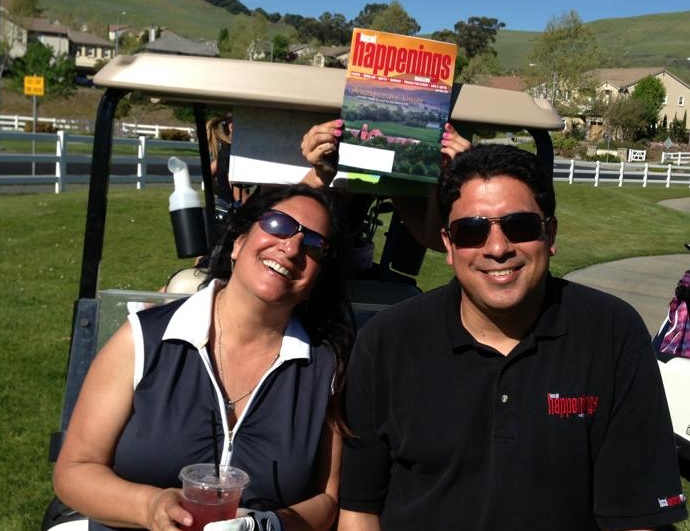
Deanna Baillie & Robert Briseño