Ben is looking forward to our vacation!
OK, when do I get a chance to slow down? Every day and night I seem to have functions and events to attend. Ben is about done and so am I. Both of us need a little relaxation and TLC, this weekend hopefully will supply the much needed down time.
Tonight we host the Vallejo Chamber of Commerce Mixer with our good friends at TEAM Superstores; it should be an exciting night.
“Do you hear what I hear?” Stretches and meditation; feed and walk Ben and off we go. . .

During the third week of January 2013, Bay Area residents will get an opportunity to attend the pinnacle of all food celebrations: the third annual Napa Truffle Festival. You’ll never be able to attend a festival dedicated to a more expensive crop than the truffle, at least not without being sent away to prison afterwards—the only kind of crop that costs more per pound than truffles is the highly illegal kind.
A single pound of high quality truffles sell for thousands of dollars, making the truffle not just king of the mushrooms, but also the world’s most expensive legal harvested product. And it’s not just because of their widely adored taste, either. Truffles are expensive also because they’re difficult to cultivate and to harvest, and because they naturally grow in only a handful of places all over the world. But the locally based American Truffle Company, which started Napa Truffle Festival, is working to make truffle cultivation feasible in more places across the world, including the Napa Valley.
The Napa Truffle Festival will go on for four days, from Jan. 18-21, 2013, and feature a number of high-end chefs, scientists, businesspeople and, obviously, lots of truffles, which American Truffle Company’s Managing Partner Robert Chang will be transporting to Napa from France and Italy.
Truffles need to be fresh, so the festival organizers are planning to bring them over from Europe at the last minute, within days of their being harvested.
“The half-life of truffles is in the order of four-to-five days. When they’re first taken out of the grown, their tastes start to decline,” Chang said. “By the fourth or fifth day, you’re only left with half the aroma and fragrance of the original truffle. In another four to five days, you’re left with about half of that.”
This knowledge not only helps American Truffle Company’s founders prepare for the festival, but it also speaks to the potential for a large increase in local truffle smell and taste should Napa Valley grape growers begin using some of their farmland for truffle cultivation.
Anyone who attends should plan to get spoiled with truffle-laced breakfasts, lunches and dinners, which the festival’s founders hope demonstrate the truffle’s versatility. Kathleen Iudice, who oversees the festival’s community relations, said truffles can complement almost any food, no matter how simple or complicated the ingredients. Among the meals featured at the festival are specialty dishes like truffle duck liver pate or mushroom truffle bread pudding, but they’ll also serve truffle pizza, and even scrambled eggs with truffle slices sprinkled all over it.
“A truffle can be quite versatile,” Iudice said. “It’s more of a condiment that you shave on top.”
For their keynote speaker, American Truffle Company chose food writer (and Grammy nominee) Colman Andrews, who has penned bestselling cookbooks and is currently the editorial director of the website, The Daily Meal. Andrews also co-founded Sauver, a well-renowned food magazine, and served as its editor-in-chief from 2002-2006.
Tickets for the festival started going on sale in October, and it should be noted that the event sold out relatively quickly last year. So if you’re planning to go, don’t dawdle.
Since the festival will span across four days, there will be many mealtime opportunities to sample truffles and also to pair them with various wines. But the event is just as dedicated to educating visitors about the truffle as it is to celebrating the subterranean mushroom’s taste, said Iudice.
“The festival is to raise awareness about black truffle cultivation, but also to involve all the components of the pleasure of black truffles, and how prized they are in the culinary world,” Iudice said.
On day two of the festival, for instance, attendees will be shown a truffle-sniffing dog demonstration at the local Robert Sinskey Vineyards, allowing visitors to get a firsthand look at the most proven method of truffle harvesting. Dogs, unlike humans, can sniff truffles out of the soil, and typically leave them unmolested after digging them up. Pigs can also detect truffles by their scent, but they appreciate the truffle’s exquisite taste a bit too much, and can often munch down thousands of dollars in newly-discovered truffles before harvesters are able to retrieve them.
“You don’t see too many truffle-sniffing pigs anymore,” Iudice said. “Part of the reason has to do with poaching—if you’re a poacher and you’re driving around with your truffle pig, it’s pretty obvious what you’re up to.”
Poaching is just one of the many challenges that truffle growers face. In addition to dealing with the truffle’s aforementioned rarity, truffle aficionados have to learn to avoid low-quality imitation truffles, which tend to resemble the renowned black truffle, but come nowhere close in terms of taste. But researchers at American Truffle Company, the founders of Napa Truffle Festival, say they’re working to make life easier for truffle growers.
“We’re the only company in the world that has the capability to do cutting edge science with truffle cultivation, with data coming in from over 20 countries in the world where we have truffle orchards,” Chang said.
Chang’s business partner, Paul Thomas, wrote his PhD dissertation on truffle science his breakthroughs led to the company’s foundation. Through their research, they’ve noted that black truffles tend to grow more successfully in the roots of hazel and oak trees, and American Truffle Company helps facilitate the planting of inoculated trees, so that truffles can be harvested from the nearby soil four or five years down the line. Chang and Iudice both said the truffle company has been attracting vineyard owners in the Napa area to grow truffles. Here, the cards seem to be lining up in American Truffle Company’s favor, since truffles and wine are good complements, and because vineyard owners can afford to wait the years it takes before truffles should be harvested, this seems like an ideal pairing.
“Napa has as much suitable soil and most places you’d find, so that’s a plus,” Chang said. “The huge plus is that a lot of people have vineyards, have the land, the equipment, and they are already familiar with high-value crops. Napa and Sonoma are very complimentary to truffles.”
Both Chang and Thomas will be at the festival, and each will talk about their expertise; Chang will give a talk on the economics of truffle cultivation, and Thomas will lead a truffle seminar and speak in depth about the science of cultivation.
“These are devised for people who are interested in truffle cultivation themselves,” Iudice said. “With grape growers looking to diversify, many are interested in cultivating truffles. It has become such a hot topic.”
Additionally, there will be luncheon field trips to local wineries, and a marketplace format on day four, where attendees will have the opportunity to buy truffle products, after spending the previous days finding out which truffle/meal combinations fit their tastes best.
The first Napa Truffle Festival was held in 2011, and the capacity has had to expand since, due to high demand. The market on Monday will have a capacity of at least 500, but the festival’s planners are capping the seminars and weekend events attendance at around 200 people, Iudice said.
“There are two other truffle festivals in the US. One is in Oregon and the other is in North Carolina,” Iudice said of why demand for Napa’s festival is so high. “Those revolve around indigenous truffles, not black truffles. Robert’s focus is on the black truffles that his company is making.”
Tickets to Napa Truffle Festival can be purchased online at www.napatrufflefestival.com. Since the festival spans four days, there are a number of ticket packages, ranging from a single $25 wine tasting ticket, to $1,250 for all four days, and all meals/events, to single-day passes for cheaper. Those who are already familiar with truffles shouldn’t need much convincing to attend, and those who are curious about any aspect of truffles or truffle science should note that all these topics will be covered at Napa Truffle Festival, in a variety of ways.
For more information, call (888) 753-9378 or send an email to: info@napatrufflefestival.com.
 Nate Gartrell grew up in Benicia, studied journalism in college, and has written for a handful of media outlets since age 15. He aspires to visit all 30 Major League Baseball stadiums and to hit the trifecta at the horse track.

I think Ben and I could live here!
Ben and I have to be out VERY early this morning, is it ever going to end. If we can just get through this week we’ll be OK, the question is are we going to get through this.
Hopefully “Silent Night”; stretches and meditation; feed and walk Ben and off we go. . .

This picture was sent to me and it seems magical
The last few days have been so beautiful here in the Bay Area. Yesterday Ben and I were in Danville and Lafayette and it was down-right warm. Today we are going to Cotati, then to Napa and Yountville. We are so lucky, we love our life.
Deck the halls; stretches and meditation; feed and walk Ben and off we go. . .
It would help if I pushed the “Publish” button! Sorry folks!

Good friends and good times!
This weekend came and went in a flash. Saturday we headed out of town and didn’t get back until last night and we are so exhausted! Lots of fun but what a lot of people don’t know about me – I love to stay home! Oh well.
The holidays will be here in a nano second and I am just not ready for them! Ben and I will be everywhere today making sure that the newest edition of Local Happenings gets out to all of their distribution points. You better not pout . . .
Let’s start the season; stretches and meditation; feed and walk Ben and off we go. . .
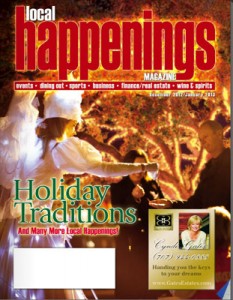
Dec 2012 – Jan 2013

As the holidays approach what comes to mind first? Food! Most of us can’t wait to indulge in the sweet and savory hors d’oeuvres at work and social gatherings, the ubiquitous sugar cookies and peppermint bark, and the delicious, traditional holiday meals such as turkey and sage stuffing or roast beef and garlic mashed potatoes. Eating is a big part of the season’s good cheer. Remarkably, a cornucopia of food at the holidays is not the experience for many East Bay residents. Across Contra Costa and Solano counties, one in four individuals are at risk of hunger; at some point during the year they will not know where their next meal will come from, struggling to put food on the table, and this holiday season will be no different.
“Everyone thinks about food around the holidays, “ says Lisa Sherrill, Community Relations Manager for the Food Bank of Contra Costa and Solano. “This time of year is our biggest food drive season.”
The Food Bank of CC/Solano does a tremendous job at fulfilling our communities’ needs. Last year the Food Bank distributed 13.8 million pounds of food, nearly 4 million pounds of which were fresh fruits and vegetables, and it provided the community with more than 11 million meals. Recently, the Food Bank has been hit hard with a rising demand for food assistance, but fortunately, that need has been met by a corresponding increase in the community’s contributions and volunteer labor. Today the Food Bank feeds 149,000 individuals each month—that’s 20,000 more per month than last year.
The economic downturn has played a big part in the increased need for food assistance, especially in California, where unemployment and home foreclosure rates have been among the highest in the nation. Between 2006 and 2010 the number of people in the United States who were in need of food increased 46%. Over the past two years, another 14% have been added to the ranks of the hungry. Many formerly self-reliant individuals and families have found themselves, often for the first time, in need of local food bank support.
“This is actually the first time I’ve been to the Food Bank. My grandmother was the one who heard about it from one of her friends. There are four people in my household. My daughter is five years old and my son is four months old. I work one day a week and my husband works three days a week. We both work super part-time jobs, making just barely minimal wage.” Ronda
“This is my first time at the Food bank too. I have been cleaning houses but barely made $500 last month. I am normally a bookkeeper. I cannot find work and have been out of work since last October. A long time ago I took a friend to the Antioch food distribution center and that is how I knew about this. I am excited about the bread. I haven’t had bread in weeks…I am an educated woman. I don’t do drugs. I am finding myself in a weird spot. These are tough times.” Patricia
A minimum wage or low-paying job just does not generate the income needed for an individual, let alone a family, to survive in the Bay Area. It is not surprising, that the working poor is one of the largest groups that rely on food assistance from the Food Bank. These are individuals living at 185% of the poverty level, for example, a family of three with a household income around $34,000. Despite having regular income, these working poor are making hard choices every day. Almost 60% of working poor families with children under 18 years of age finds themselves short on food. And a third of these working clients choose between paying for food and paying their mortgage.
“This is my second time at the Food Bank. I come once a month. I have two kids. This is helping a lot. I am a single working mother. The food from here helps my money go further especially the canned food and bread.” Ruby
So how does the Food Bank do it? You may have received a letter from the Food Bank of CC/Solano requesting a contribution that noted $1 provides food for two meals. How can $1 make two meals? There are a few reasons that the Food Bank is able to create such great economics with food, explains Sherrill. The Food Bank purchases food in very large quantities, which enables them to keep food costs way down. Plus the food donations and volunteer labor are key elements to the Food Bank’s success.
“We are heading into our busiest time for food collection,” says Sherrill. “There will be collection barrels located in Safeway stores, Whole Foods and many other businesses.” This makes it easy for community members to purchase a few extra food items to donate while they do their own food shopping. What’s the best food to donate? “Nonperishable, protein-rich, nutritious foods are often less accessible to our clients,” says Sherrill. So she suggests foods like canned vegetables and tuna, peanut butter and soups.
The Food Bank maintains a huge warehouse where it stores and distributes the donated and purchased, perishable and nonperishable food. Distributing monthly food boxes with bread and fresh produce directly to low-income families at locations within their communities is one of the primary ways the Food Bank is able to reach out to those most in need. Plus the Food Bank has specific programs targeted to seniors, to children and to providing fresh produce. And, the Food Bank partners with over 100 other nonprofit groups to provide food for them to distribute.
Nothing goes to waste either—the Food Bank is proud to be green. All food packaging, such as paper, plastic, or aluminum, is recycled. Extra cardboard is sold to raise money to buy food. And fresh produce that is no longer suitable for human consumption is donated to the animals at the Oakland Zoo, Loma Vista Farm and Garden in Vallejo, and a local pig farm.
So what can you do to be a part of this incredible food movement? The Food Bank of CC/Solano has loads of volunteer opportunities. “We have thousands of volunteers working at the warehouse and our headquarters six days a week, evenings and Saturdays,” says Sherrill. And unlike many nonprofits that restrict volunteers to older teens and adults, the kids can get involved too. Children ages 11 years and up can volunteer in the warehouse, and family work days are held three times a year where children as young as five years of age can work alongside their families.” Check out the CC/Solano Food Bank website to find out all the ways that you and your family can volunteer time or donate food.
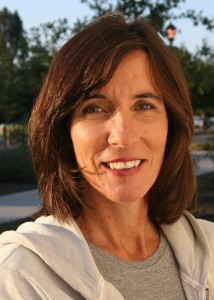 Andrea Firth is a freelance writer based in Moraga with her husband, two teens, and a dog named Pepsi.

The Benicia Historical Museum offers intriguing glimpses into the rich past of a city situated on the Carquinez Strait, a story that runs parallel, in many respects, to the history of nearby San Francisco.
By design, the museum’s connecting spaces highlight different eras of Benicia’s last 160 years. One finds something new to see around every corner.
Flags Over Benicia
Visitors enter the main museum on the second floor of Building #9, one of two structures known as Camel Barns. To the right, the first display shows the flags that have flown over California. The usual suspects are present: Spain, Russia, and the Bear Flag state flag along with the banner of one sovereign state less well-known in California history: For 37 days, the English flag flew over California.
Early people
In the next space, a life-size grass hut replicates the traditional housing of the area’s first people, whose numbers may have exceeded 70,000. Photos and interpretive information describe the lives of indigenous people including Chief Solano. Photos and facts about Solano’s close friend General Vallejo are displayed together with an image of Vallejo’s brunette wife, Dona Benicia. Listed here are the names of General Vallejo and Dona Benicia’s 16 children.
Military history
In 1849, the US Army arrived in Benicia to establish the Benicia Barracks, the first Army Post on the Pacific Coast, later named the Benicia Arsenal. Charles P. Stone and his men arrived with a load of explosive black powder.
In a curious case of a name being predictive of his work, Officer Stone ordered stone be quarried from the site and oversaw the construction of a collection of ginger-colored stone buildings. When the Civil War broke out, Stone became the first officer to volunteer for service to the Union Army. Later in his life, Stone coordinated construction of the base of the Statue of Liberty.
Among the other notables who served at the Benicia Arsenal was a future United States President, Ulysses S. Grant. He once got sent to the brig in Benicia for the unauthorized firing of cannonballs across the water toward Martinez.
Camels in Benicia
About midway through a museum tour, nestled among exhibits on shipbuilding and other early industries, a showcase features the Benicia Arsenal’s unique camel history.
“Where are the camels?” is the number one question visitors ask at the Benicia Historical Museum according to volunteer curator Beverly Phelps.
The US Army used camels imported from the Mideast as pack animals between Texas and California during the 1850’s and early 1860’s. Thirty-five camels swayed into the Arsenal in 1863, after trekking overland from southern California. The animals spent the winter of 1863 to 64 in Benicia, living in the two enormous stone warehouses, and generally annoying their keepers with spitting, hissing and moaning. Soldiers dubbed the buildings the Camel Barns. The camels were auctioned away in February 1864 to a single bidder for about $1500.00.
The Benicia Arsenal continued serving the country through two world wars and the Korean conflict, closing in 1964. The City of Benicia now owns the land and buildings.
The Victorian Period
Round a corner and one finds a room with Victorian era furnishings that replicate a parlor in one of Benicia’s homes on the upper end of First Street at the end of the 19th century.
On the lower end of First Street in those years, budding author Jack London roamed Benicia and the Carquinez Straits, working as an oyster pirate at fifteen and a deputy with the fish patrolmen by sixteen. He created a Huck Finn-type character in the first-person narrator of the Tales of the Fish Patrol, a collection of stories, mostly set in Benicia.
Rumor has that London routinely staggered in and out of Jürgenson’s Saloon, and one night, either drunk or suicidal, he swam out into the Carquinez Strait, got swept up by current, and was rescued by a Greek fisherman near Crockett after drifting several miles. In the foreword to Jack London’s book Tales of the Fish Patrol, Jerry George states that based on London’s story “Demetrio’s Cantos” we can safely assume that some part of the rumor is true.
Contemporary author and Benicia resident Donnell Rubray brings to life Jack London and 1890’s Benicia in Emma and the Oyster Pirates, a work of historical fiction with the scenes and characters based on real people.
In the author’s note following the last chapter, Rubray states, “In the early 1890’s Benicia was a town of opposites. Near the strait, at the foot of its First Street saloons, ‘houses of ill repute,’ tanneries, canneries, a train station and busy docks, thrived. At the upper end of town—about ‘F’ Street—churches, private schools and fashionable shops formed a separate neighborhood. Though men often moved between Benicia’s two halves, women rarely did.” Hence, Emma’s adventure is traversing these two worlds.
Tales of the Fish Patrol and Emma and the Oyster Pirates are among the many books on local and California history and other items available in the Benicia Historical Museum gift shop.
Freedom is a Hard Bought Thing
After touring the displays that depict Benicia’s past in chronological order, one reaches the changing exhibit space. The current show celebrates the 150th anniversary of the 1863 signing of the Emancipation Proclamation with “Freedom is a Hard Bought Thing.” It has been extended through February 2013 in connection with black history month according to Museum Executive Director Elizabeth d’Huart. The name comes from Benicia resident Stephen Benet’s book, Freedom is a Hard Bought Thing, a 1940 Pulitzer Prize winner.
African-American slaves came to Benicia with white men during the Gold Rush period. When the city served as California’s Capitol from 1853 to 1854, records reveal that debates among legislators frequently involved the slavery issue.
The exhibit features many examples of African-Americans’ role in Benicia history. One man that came to Benicia as a slave during this time was Adam Willis. At the direction of his “owner,” Willis traveled back east to bring the man’s wife and children to Benicia. Willis did all that, and, on his return, received his freedom papers in Benicia.
Education
During the school year, more than 500 young people get to experience life as it was lived in 1850 in the museum’s hands-on education program for school children. Museum President Carol Scott, a retired public school teacher says, “We do time travel.” She tells the children, “You’re living in 1850.” During their highly interactive day at the museum, children do laundry by hand, make adobe bricks, and pass buckets in a fire brigade.
Many volunteers help make the experience possible. Bill Scott, Carol’s husband, guides the brick-making fun. Kids stir mud, straw, sand, and water in large tubs, and then place the slop in wood molds. Between the kids’ visits, one can find Bill hard at work building an adobe wall behind the museum with the dried bricks made by young visitors.
The museum charges seven dollars per student for the program or just over $200.00 for a class of thirty to defray expenses. May an individual give the museum a targeted donation to help a classroom attend the program? “Yes, of course,” says Carol. “That would be wonderful.”
Camel Lore Lives On
The notion of camels in Benicia lives on, due in no small part to their reappearance in the city. After an absence of well over a hundred years, camels were hauled to Benicia from Nevada. For six consecutive years, the Benicia Historical Museum sponsored camel races right on First Street.
Jockeys, sponsored by First Street merchants, rode the camels. Crowds lined the street; vendors sold food and hawked goods. The races are no longer taking place, but live on among the town’s legends. The races began in the 1990’s, ended in early years of this century, and remain part of Benicia’s rich history.
Experience it for yourself
The Benicia Historical Museum’s main exhibit hall in Building #9, better known as the Camel Barn, is open to the public Wednesday-Sunday, 1 to 4 p.m. at 2060 Camel Road in Benicia. Visitors may reach the museum by taking Military West into the historic Benicia Arsenal and following the signs toward the museum.
The admission fees are $5.00 for adults, $3.00 for seniors and students, and $2.00 for children ages 6 to 12; children five and under are free.
Museum docents are typically on hand to provide informal tours and answer questions. Docents receive initial training by Benicia author Jim Lessenger whose most recent work is Commanding Officer’s Quarters of the Benicia Arsenal.
Guided tours are available to groups by reservation and may be arranged by contacting the museum at 707-745-5435 and www.beniciahistoricalmuseum.org.
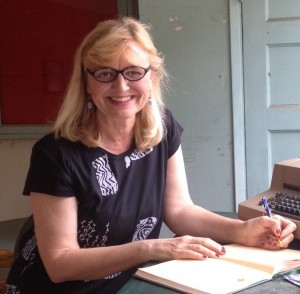 Kristine Mietzner lives in Benicia with her golden retriever Max. She serves on the board of Benicia Literary Arts and works as a field supervisor for the Touro University Graduate School of Education. Her work has appeared in the Contra Costa Times, the Benicia Herald, and the online travel magazine, Your Life is a Trip. Her previously published work is posted at www.redroom.com/member/kristine-mietzner. She can be reached at kristine2770@yahoo.com.