

Physician Assistants (PAs) like myself are frequently question asked, “Are you the doctor?” After all, we’re wearing a white coat, carrying a stethoscope, and taking care of people. We are not doctors, but we are medical professionals who diagnose illness, develop and manage treatment plans, prescribe medications, and often serve as a patient’s principal healthcare provider. With thousands of hours of medical training, PAs are versatile and collaborative. PAs practice in every state and in every medical setting and specialty, improving healthcare access and quality. We always introduce ourselves as PAs, but when you’re at your medical appointment, you don’t always pay attention to the title of the person; you just know that they are going to take care of you.
You may have seen a PA in the past or a PA could currently serve as one of your providers. However, there are still not a lot of us. In 2017, there were about 123,000 PAs in the country according to the American Academy of PAs. There are more than twice that many nurses in the state of California alone.
Last year marked the 50th anniversary of the PA profession. The first PA program built itself from the fast-track training that medical doctors received during World War II. Historically, there have been two models to PA education. The Duke model is built on inpatient care, and the MEDEX model emphasizes service in community clinics. But as the profession has grown, these regional differences have diminished.
PAs are educated on a medical model and have the flexibility to provide many of the same services that doctors do, only with the support of a supervising physician. They also have the professional flexibility to shift between medical fields.
Perhaps the next time you ask, “Are you the doctor?”, you’ll hear, “No, I’m the PA and I am going to take care of you today.
For more information about the PA Profession: https://www.aapa.org/
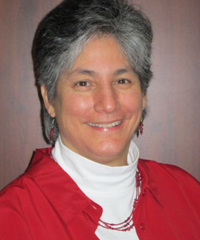 Grace Landel, PA-C, MEd
Director of the Joint MSPAS/MPH Program at Touro University California