
A visit to Tilden Park
By Nate Gartrell
In 1934, during the Great Depression, voters in the Bay Area moved to impose a tax to create the East Bay Regional Parks District (EBRPD). Three parks were formed, including a 2079-acre section in the Berkeley Hills that stretches along the border of Contra Costa County. The EBRPD named the area after Charles Lee Tilden, the president of the park district’s board.
“It’s one of our oldest parks, dating back to when we became a park district in 1934,” said Dave Mason, a public information supervisor with the East Bay Regional Parks District. “It was one of our original parks, and today it is one of our signature parks in our system of 73.
“It’s a major draw and a great draw. Folks all over the East Bay, especially Berkeley, feel a special connection to it,” he continued. “What makes the park stand out so much, besides its amazing features, is its history.”
Today, Tilden Park is probably the best-known open space area in the East Bay, with a range of unique features that have become the stuff of legends: the steam train, a staple of many locals’ childhoods; or Little Farm, a quaint petting zoo that lets you hand-feed all sorts of farm animals. All told, there are more features than we can go through in a single article: a merry-go-round with handcrafted animals to ride, Lake Anza (which is closed for swimming until spring), an interpretive center, a botanic garden, even a golf course, as well as thousands of acres of trails for exploring the wilderness on foot, horseback, or by bicycle. Most of the park is free with a few exceptions, like the steam trains, the golf course, and the merry-go-round.
“Most of the park is open space for recreation—hiking, biking, horseback riding,” Dave said. “It’s in an area that’s beautiful and serene. Our hillsides have a large, open space area that brings a variety of wildlife.”
For most longtime Bay Area residents, Tilden Park has played an important role at least twice in their lives: when they were kids, and when they have kids. A lot of people have some of their very first memories at Tilden Park. “It’s popular because of the vast amounts of family-friendly activities,” Dave said. “It is one of our most family-friendly parks. Many people’s first, fondest memories are of enjoying Tilden Park.”
As probably the most famous feature, the Redwood Valley Railway offers rides in scaled-down steam trains that traverse the forest, head over bridges, and zip through tunnels in a loop through the park—the experience is simply like nothing else. For additional information on steam train times and prices call (510) 548-6100.
“I know from experience in talking to people, when you bring up Tilden, what most people say is that they remember going to ride on the steam trains when they were kids, and some still do,” Dave said. “It’s one of the first memories many people have of going to a regional park in our area.”
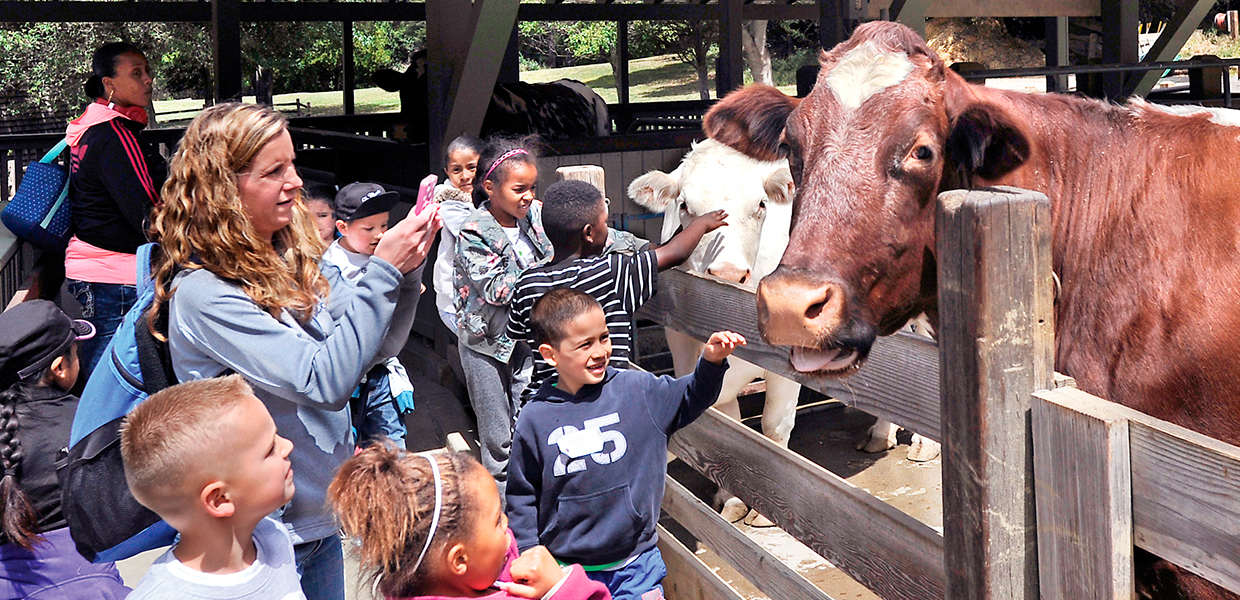
A short distance away at Little Farm, visitors can meet, pet, and feed a bunch of different farm animals. There are goats, cows, pigs, chickens, rabbits, other little critters, and a play structure that is a short distance away. Little Farm is open seven days a week from 8:30 a.m. to 4 p.m. Call (510) 544-2233 for in-depth information.
Speaking of activities for the kids, the park’s merry-go-round was crafted more than a century ago and has been at Tilden for nearly its entire history. It features four rows of real and imaginary wooden creatures that were carved by hand in New York before making the trek to the East Bay. It costs $3 per ride or $15 for seven rides, and it has odd hours during the holiday season: until December 23rd, it will be open on weekdays from 4 to 8:30 p.m. and on weekends from noon to 8:30 p.m. Then, from the day after Christmas until January 4th, it will be open from 11 a.m. to 5 p.m. For additional information, call (510) 559-1004.
Visitors can also check out the interpretive center to learn about native wildlife—not just farm animals—but also other tidbits about the East Bay’s natural and cultural center. They are open from Tuesday through Sunday, from 10 a.m. to 4:30 p.m. and can be reached at (510) 544-2233.
“Little Farm is obviously enjoyable for our youngest visitors,” Dave said. “With Little Farm being there and the environmental education center being there you can learn about farm animals and then go and learn about wildlife and species, the habitat of the area.
“They’re about showcasing everything from geology to history, wildlife, and the people who’ve lived there throughout history,” he continued. “There’s also an element of climate change, so youngsters can learn about the changing climate.”
The park also has a 10-acre botanic garden, where visitors can roam and get a chance to see rare and endangered plants native to California. “Folks can visit and see a lot of the native plants and learn about the history of vegetation in California,” Dave said. It is open from 8:30 a.m. to 5 p.m. during winter months. For visitors who want to take a more active role and help educate others, the park offers docent training for prospective volunteer docents, starting in January.
One of the most notable species that roams Tilden and the surrounding area is also among the smallest, and most slippery: the newts, which like to hang out in the hills until the weather starts to get wet when they drop down to creek beds and ponds for mating season. It is a ritual that local residents take note of because every year the park system closes down a one-mile stretch of road to accommodate them.
While it may be an inconvenience, the newts are grateful; the move saves thousands of them from being squished each year. “The newts come down from tops of mountains and hills during the first rain or heavy fog, down to pools and creeks to mate,” Dave said. “We close the road from November through March to allow for them to safely cross the road.” The park system has been doing that for 20 years, and it was thanks to a study from their neighbors at UC Berkeley. “The study showed that up to 200 newts per day would be killed by cars when the road was open,” Dave said.
When asked what stands out the most to him about the park, Dave said he likes to remember how none of its famous features, rides, educational programs, or hiking trails would probably be around if Bay Area residents had not voted to put the park in place in the early 1930s, a time of great financial hardship.
“The public voted to set aside a vast array of land and create its own park district,” Dave said. “In 1934, in the heart of the Great Depression, East Bay residents came together to tax themselves and establish a system of regional parks. It’s important now, but it must have been really important to them back then.
“We need to preserve open space for future generations to enjoy,” he continued. “And that includes our wildlife inhabitants, who are out there living in the open space. Like the newts.”
Tilden Park has many entrances along Grizzly Peak Boulevard in Berkeley and Orinda, and its official address is 2501 Grizzly Peak Boulevard. For additional information on its features, hours, and directions, call (510) 544-2747 or visit ebparks.org/parks/tilden.
-
- Tilden Nature Area in Berkeley, California on October 17, 2018. (Photo by Cali Godley)
-
- Tilden Nature Area in Berkeley, California on October 17, 2018. (Photo by Cali Godley)
-

- Tilden Nature Area in Berkeley, California on October 17, 2018. (Photo by Cali Godley)


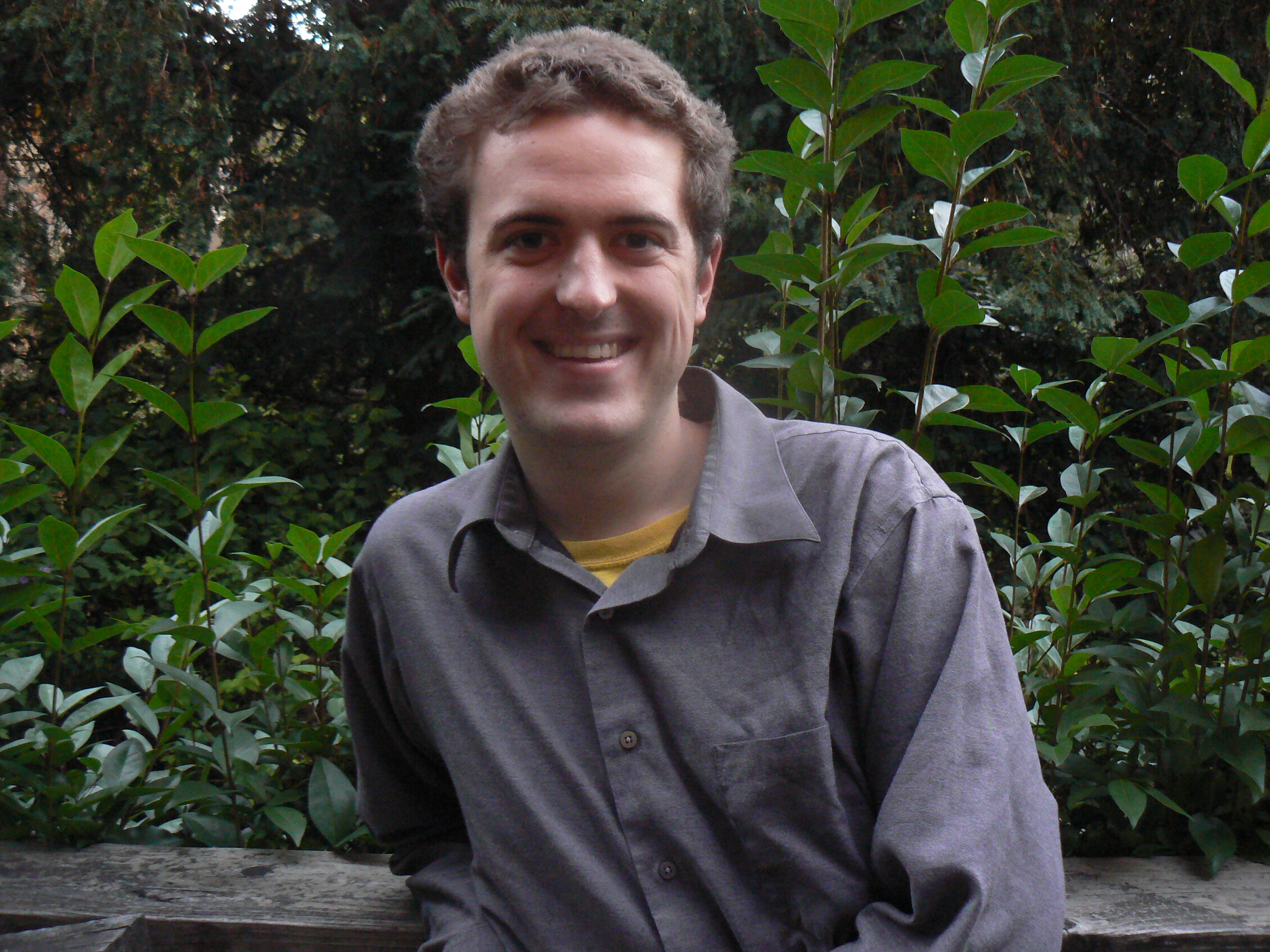
Nate Gartrell grew up in Benicia, studied journalism in college, and has written for a handful of media outlets since age 15. He aspires to visit all 30 Major League Baseball stadiums and to hit the trifecta at the horse track.