Magazines are out and they look fabulous! Everyone is excited that saw them yesterday. Was able to get a lot out on the streets and get some great feedback. Today is crazy, I have to be in Danville, Lafayette, Benicia and back in Vallejo so I am already behind!
BIIIIG stretches, feed Ben, latte, and I’m off. . .
Cardboard, the stuff they make boxes out of – or the more precise name – Corrugated Fiberboard. Originally it was created as a liner for tall hats around the 1850’s and not used for boxes or shipping materials until about the 1870’s. The proliferation of internet shopping has meant that more and more products are entering our home via a cardboard box these days. I know, because I break them down on a fairly routine basis and put them in the recycling can at my house. Pizza boxes, shoe boxes, boxes that my children’s diapers come in, refrigerators, stoves, televisions, computers, dishes all of these and more travel around the country and the world and eventually end up in our homes. After their journey of protecting the items that we really wanted, they are generally unceremoniously broken apart and sent to be recycled. Sometimes they may be used to move other items or to store those family relics for which we have no more use but would like to save for a generation or two until our original suspicion is confirmed.
My children love to play with old cardboard boxes. Their favorite is to climb inside and have their daddy (me) carry theymfrom room to room as I, my wife and my other children feign surprise when they then spring out like an oversized jack-in-the box. They may also turn them into a house, a rocket ship, a cave, a mountain, or a myriad of other things that spring from their fertile imaginations. Once they manage to break the box down it becomes a large art board for them to color on. Then once they go to sleep it is neatly folded up by me and placed into the recycling box to hopefully bring as much joy to another family one day. I have to say that, of all the toys that my children have been given over the years, nothing makes their little eyes light up as much as the ubiquitous cardboard box when it enters our home. That is why when as I looked through the thousands of upcoming events on our online calendar this one stuck out at me “Cardburg 2012”.
The brief description that we had posted for their event; “Cardboard Institute of Technology (C.I.T.) is a team of 10 artists who use recycled cardboard to create enormous site-specific installations. C.I.T. will transform the Bedford Gallery into Cardburg 2012: The Super Track, a Velodrome speedway for racing high speed remote controlled art cars” seemed to jump off the page at me. It seemed that a group of people had taken the wonderful joy and imagination that my children take from cardboard boxes and they had kicked it up a notch (actually far more than a notch). I was looking through the events with the express purpose of finding something to write about for this issue and thought this was perfect. It is unique but at the same time common. I think it would be safe to say that the vast majority of us at one time or another have looked at the common box and thought about what other possibilities this everyday shape and material could be transformed into. So, I shot them an e-mail and visited their web site and down the rabbit hole, or should I say the cardboard tube, I went.
The Cardboard Institute of Technology “C.I.T.” was formed by Joshua Short and Steve Falkowski in 2007. At the time, Joshua had asked Steve to help him on an art project at a youth center where he was making a large “monster” that was coming out of a wall. The vision for the project was to have children help with the installation and Joshua became fascinated with both the material and the interaction with the children – or as he called it “participatory art”. That spark of a vision came to being in their first exhibit in 2008 – Welcome to Cardburg. They were joined by Mike Murnane, Robin Frohardt and Caryl Kientz for that project. That was also the birth of the mythical city of “Cardburg” from which subsequent shows also draw their name. That first project was enormous and it covered an area about 40 by 60 feet – a whopping 2,400 square feet of cardboard city. The exhibit used video and a green screen to “place” the visitors into the city itself, which allowed them to become citizens of Cardburg. At the close of the show visitors were able to come back and help destroy the city like a group of mean spirited giants or Godzilla’s – my children would have had a blast!
Their 3rd show – “Cardburg 500” – had Joel Stockdill and Jesse “Roadkill” Wilson joining their ever growing cadre of “faculty”, as they are called. That exhibit had a race-inspired theme and built upon the Cardburg mythology. This year’s show will also have a racing-inspired theme to it. Visitors will be welcomed back to Cardburg and to their new Velodrome (typically and indoor cycling arena but, in this case, it will be for cars). At the time of my interview with Joshua the entire design had not been fully fleshed out (nor would it be until the opening of the event and even then it would evolve with the show) so I asked him for his vision and about what the visitors could expect to see and experience at Cardburg 2012. Joshua described his vision as this; “As people first walk in they will see the Velodrome which might appear like a giant spaceship in the center of the room. Surrounding it will be cardboard walls that will feature race car designs. A large center control tower will also be featured along with a giant snake that will seem like it is coming out of the ceiling. The visitors will be able to interact with the piece in a variety of ways such as racing controlled cars that they have made around the Velodrome race track or acting as the pit crew to help maintain the cars. Their exact experience at the show will depend on the the day and time when they arrive. The visitor though will want to come back during the the event experience different aspects of the show. Joshua and the “faculty” of CIT, like to reference topical elements in their shows so, in addition to the theme of Cardburg and racing, the element of the end of the world/creation of a new world theme will also play a central role in the design to tie in with the whole 2012 and Mayan calendar that has captivated the minds of many people in the world today.
In the course of our talk I asked Joshua; “As the founding member of CIT how did you yourself evolve to this point of creating these giant art projects from cardboard?” The evolution he admitted was a long one. He did not take a traditional route – though I am not sure there is a traditional route in the art world. His love for art started early on with drawing in high school and where he met his co-founder of CIT, Steve Falkowski. At that early time though he was also heavily involved into martial arts and worked for some time after high school with America’s Best Karate founders Anthony Chan and George Chung as both an instructor as well as on their television show Adventures of Kanga Roddy. The time on the T.V. show inspired both the art and the desire to have that art involve both the artist as well as the audience. The show also taught him about a variety of skills he uses today in his shows such as model building, set design, storytelling and videography. The cardboard and other recycled materials played a major part for two reasons – they were cheap and plentiful. Cardburg and CIT simply grew out of all of those experiences and his desire to both tell a story and to create a world that his visitors could explore and experience in a variety of ways.
So, come visit the show and discover this wonderful vision the faculty of Cardburg will have created at the Bedford Gallery in Walnut Creek. The show will run from June 10th to August 12th. You will want to plan on visiting it at different times and days as the show will both evolve and change, offering visitors quite a few different experiences along the way. You may even want to join CIT itself so that you can explore your own inner child and rediscover what it is like to take an average box of cardboard and see all the possibilities that it holds.
Robert Briseno – Is a father of three little ones who finds constant joy in their discovery of both cardboard and all the wonders and mysteries of the world.
“You’ve got cancer…”Despite the tremendous medical advancements that have resulted in lessented mortality for many types of cancer, hearing those three words is definitely a life-altering moment. While it may be a challenge to focus on the positive, there is a lot of good news to report regarding cancer, as the number survivors continues to grow.
According to a study issued jointly by the Centers for Disease Control and Prevention and the National Cancer Institute, the number of cancer survivors in the U.S. rose to 11.7 million in 2007. That’s a significant increase over the survivorship figures from 2001 and 1971, which were 9.8 million and 3 million, respectively.
The study, “Cancer Survivors in the United States, 2007,” also notes that:
• 7 million of those living with cancer were at least 65 years old
• A large proportion of cancer survivors (54%) were women
• The largest group of cancer survivors had breast cancer (22%), followed by those with prostate cancer (19%) and colorectal cancer (10%)
• 4.7 million of the survivors were diagnosed at least 10 years previously
Reasons cited for the increasing number of cancer survivors include early detection, improved diagnostic methods, more effective treatment and improved clinical follow-up after treatment. The team at the Sutter Solano Cancer Center (“SSCC”) is one of many throughout the country that focuses on providing state-of-the-art medicine and compassionate care, a combination that has proven to work wonders.
After opening its doors in 2005, SSCC didn’t waste any time in becoming Solano County’s premier cancer treatment facility, earning prestigious accreditation from the Commission on Cancer of the American College of Surgeons just two years later. To maintain that standing, it continues to adhere to the highest standards of care, providing a wide range of cancer treatment and support services, including medical oncology, radiation therapy, community education, support groups, genetic counseling, clinical trials, a resource library, psychosocial services and nutrition support.
Kim Etcheberry, RN, SSCC’s Cancer Services Manager, notes that ongoing research has changed the approach being used to treat cancer. “We’re learning through the use of new drugs, targeted therapies and new technologies that some diagnoses of cancer can be treated more like a chronic disease, while others are curative,” she says.
Etcheberry also noted that SSCC, like other cancer centers, refers to all cancer patients as survivors from day one, since they’re surviving in many different ways during their treatment journey. She said it’s important to celebrate any survival opportunity that presents itself.
Survivor Celebrations
Two celebrations of cancer survivorship are coming up this summer, National Cancer Survivors Day “NCSD” on June 3, and the Vallejo Relay for Life on August 4. SSCC isn’t planning any formal event to commemorate NCSD, which started 25 years ago in the U.S. and is now observed throughout the world, but it will be an active participant in the local Relay for Life event.
The NCSD Foundation notes that on June 3, communities worldwide will demonstrate that life after a cancer diagnosis can be meaningful and productive through events including parades, carnivals, races, art exhibits, ball games, contests, dances and inspirational programs. In addition to celebrating life, the activities are intended to raise awareness of the issues facing cancer survivors, including more resources focusing on supporting their quality of life.
To learn more about the NCSD Foundation, visit www.ncsd.org.
The Relay for Life, produced by the American Cancer Society, also has a long history of celebrating survivorship as well as raising funds to support future cancer research. Teams of survivors, family members, community groups, businesses and other motivated individuals join together to complete a 24-hour relay race and participate in other fun and educational events. One of the most moving parts of the celebration is the Luminaria Ceremony, during which loved ones are honored or remembered as the evening gets lit up by hundreds of luminarias.
The Vallejo event has been a successful fundraiser and awareness builder for many years; in 2011, it was honored as a California Top 20 Relay. SSCC will field a relay team, sponsor the Luminaria Ceremony and the Survivor Tent, and provide lunch for the cancer survivors and caregivers in attendance. It’s a day filled with optimism and joy, and one that’s highly anticipated by the SSCC staff.
”Relay for Life is a truly inspirational event,” says Lalaine Durand, CCRP, Clinical Research Associate/Cancer Registry and captain of the 2011 SSCC relay team, which raised more than $10,000. “Team members from SSCC and around the community work together for months to create the energy and spirit that you see at the event. Not only do you learn about cancer, you meet and honor survivors and celebrate their journeys. Their strength and courage exudes all day long. I encourage anyone who’s never been to this event to try it once. It’s a lot of fun and a great experience for the whole family.”
To learn more about the August 4 Vallejo Relay for Life, which will take place at St. Patrick/St. Vincent High School, visit www.relayforlife.org. You have plenty of time to get involved by forming your own relay team and joining SSCC and other community members to honor cancer survivors and work toward adding to that number.
A Survivor’s Story
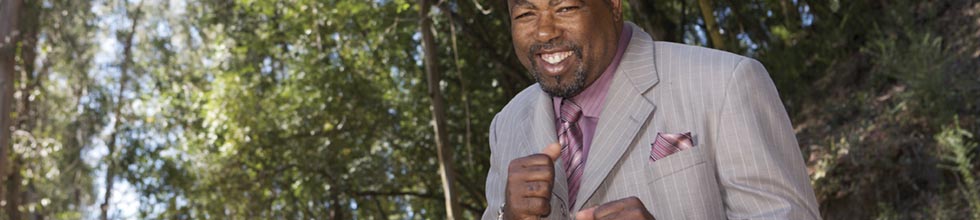
Early diagnosis proves crucial for Richmond community leader Jerrold Hatchett, 59, has been a fighter his whole life. He started in the Golden Gloves program as a child, but moved on to fight for both himself and others as a respected businessman and humanitarian. When he was diagnosed with prostate cancer, he knew he was in for the fight of his life.
Because Jerrold had annual checkups, that included prostate cancer screening, his cancer was caught in its early stage. After trying some less invasive treatments, he had his prostate removed in 2007. Unfortunately, his cancer recurred several years later. He was then introduced to the Sutter Solano Cancer Center, where he received care that exceeded his expectations from both a medical and psychological perspective.
“I had a second surgery, but this time it was followed with radiation, and I also had access to a counselor who helped me through the mental side of dealing with cancer,” Jerrold says. “The people at the cancer center were just awesome. In addition to doing their jobs, they showed me a great deal of respect and treated me like family.”
Jerrold knows quite a bit about family; he has eight children ranging from 18 to 39, and six grandchildren from two months old to 22. He’s also been part of the family at Simsmetal America since 1970, starting as a laborer and being promoted to foreman, supervisor and division manager before taking on his current responsibilities as public affairs director.
Jerrold also has a third “family”, the Richmond community. He’s well known around the city for his giving spirit and even received an award for his humanitarian acts in 2006, an honor he humbly says is unnecessary.
“Everything I do is from the heart because I really have love for my community,” he said. “I think it’s important to give back because you want to, not because you have to.”
Jerrold may look familiar to the children of Richmond because he’s Santa Claus at the city’s annual tree lighting ceremony. The 6’4” 270-pound African American also plays the Easter Bunny at Richmond’s Easter egg hunts. His less whimsical community service has included efforts to stop gun violence, improve elementary education, clean up neighborhoods, find jobs for youth and provide recreational activities for seniors.
Jerrold works with a variety of community groups, including the King Solomon Lodge, Santa Fe Neighborhood Council, Coronado Neighborhood Council, Richmond Rescue Mission, Council of Industries for Richmond, Richmond Mainstreet Program, Ed Fund, Nystrom Elementary School and Richmond Chamber of Commerce. Many people involved in those organizations participated in a prayer group during the time he was undergoing cancer treatment.
When I was given this opportunity to dine at the Clay Oven Grill & Bar in Vacaville I was very excited, as I LOVE Indian food. Where I grew up back east in the New York and New Jersey area there was a rich Indian culture and I made quite a few friends there that are still very close to me. Those friends introduced me to both the food and the culture and I was able to not only experience the food via restaurants but in their homes as well, which made it even more special. My sister-in-law and co-founder of Local Happenings Magazine, Deanna, joined me for the adventure. Romy Uppalis, the owner of the Clay Oven Grill & Bar, acted as both our host and tour guide for the excursion to experience the exotic tastes of his restaurant.
The Indian culture is based on thousands of years of tradition, according to Romy. He continued my education of India by sharing that all aspects of their lives embrace their ancient traditions which they use today, along with a modern flare. Indian food is a wonderful combination of ingredients which feature specially blended sets of spices. The country is physically large with a population of over one billion. There are four main regions in India based on the cardinal directions of the map – Northern, Southern, Eastern and Western. Each of these regions has their own particular style based on geographical elements and constraints. The food in each region is as diverse as the terrain. Each of the regions prepare their food slightly differently due to the local ingredients and, with the large number of people within the areas, chefs will prepare the same dishes with their own unique flair. Also, most of the recipes were handed down from generation to generation by word of mouth. This, of course, added to the variations of the dishes served. The Clay Oven then is not unique in the sense that they too have taken the traditional and made their own interpretation of it in the presentation of their dishes.
Keep in mind that Romy is not new to the restaurant world. He owns several restaurants in San Francisco. Those experiences have, of course, helped make the Clay Oven a success. Born in India, Romy graduated from college with an engineering degree. However, the world of fine foods and running a restaurant called to him like the mythical Sirens of the sea. He started his restaurant career San Francisco, where he lived at the time, when he helped open Star India Restaurant in 1989 which is located at 3721 Geary at 2nd Ave. That first restaurant solidified his love for the business and he never looked back. He then opened the India Palace Restaurant located at 1740 Fillmore at Post St. He and his wife loved living in San Francisco, but with a young, growing family, they were looking for more space and decided to move to Solano County.
Romy needed a place to eat in his new home so he struck out and tried all the Indian restaurants in Solano County. He was looking for that one place he and his family could go to enjoy a traditional meal without having to travel over two bridges and into San Francisco. He tried them all and what he was looking for he could not find. There was some good food there but just not great in his and his family’s opinion. This prompted him to decide to fill that gap by opening his own restaurant. As fate would have it, he found the perfect building while on a shopping trip to Vacaville with his wife. This gave them the opportunity to create Clay Oven Grill & Bar. He remodeled the building, putting in a circular bar at the center as the focal point of the restaurant. I have to say that I found the bar to be beautiful and very chic with a distinctive Indian feel to it. I felt the rest of the restaurant’s ambiance to be very inviting and cozy. You are surrounded by warm, muted tones on the walls and dramatic lighting to give the restaurant both a modern and traditional feel. They have full bar where one can enjoy quality cocktails and an excellent selection of wines – which, as many of you know by now, is my favorite. In addition, there is a small lounge along side the bar where you can sit comfortably and enjoy your drinks. This is where we sat to enjoy our journey into the wonderful world of Indian food, guided by Romy.
Now, Romy can cook and cook well, but he would much prefer to eat. Therefore, he hires the chefs that can cook the way he likes to eat. As Romy orchestrated the team, the dance of the plates began. We started with different types of Naan, which is an Indian flat bread. Naan is cooked in a clay oven called a Tandoor, which looks more like a pot than an oven. In the Tandoor, the fire is at the bottom and the walls are made of a clay material. The Naan is stuck to the walls of the oven to cook. It is a very interesting process. Naan can comes a variety of flavors that is only limited to one’s imagination. We tasted the garlic, basil and cilantro Naan which was steamy hot and well seasoned. Then they brought out a very special goat cheese Naan. This is prepared with both goat cheese and spinach. Mmmm, we were in heaven. We could have stopped here and been very happy eating goat cheese Naan for the rest of the evening with our glass of wine. Romy though would have none of it as the journey had just begun and we had miles to go before we were done!
The next stop for us was a dish called Chicken Tikka Kebab. This was chicken breast meat marinated in mustard sauce, yogurt and a variety of spices. The chicken was also made in the Tandoor oven – it is the main stay of their kitchen, much like our oven or stove top is to most American families, hence the name of the restaurant. This was cooked to perfection with the meat being very succulent and spices adding a very complex flavor to the dish. It also had just a hint of fiery spiciness to it which I enjoy. This marinade can be used on different meats as well – remember to ask the staff and they will be happy to accommodate your request.
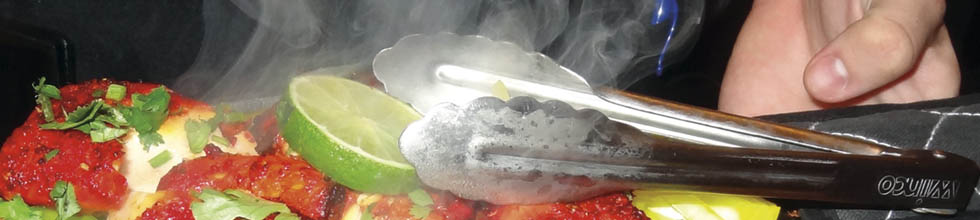
The next dish that they served up was sizzling plate of salmon. The salmon was roasted in the Tandoor with spices and served on a sizzling platter accompanied with onions and peppers – think Indian fajitas. The salmon had a deep ruby color from the spices and the tomatoes used to prepare it. Once again, the dish was a wonderful marriage of spices that simply melted in your mouth and left you wanting more.
Many Indian dishes are accompanied by different sauces and marinades. Each of these sauces have their own marvelous flavors and spices. While Deanna and I did our best to indulge in all of the wonderful dishes that Romy and his crew were presenting to us, we simply could not eat them all. So, as an alternative, he asked us to sample three of the different sauces that accompany the various dishes – Masala, Korma and the traditional Curry.
Deanna and I thought this would be a simple exercise in “I like this one and not that” – that was not the case. We would sample one with the Naan and say this is my favorite, proceeding to the next one a saying the same thing. We sampled each a variety of times to see if we could discern a favorite but in the end we just gave up and said “we love them all.” So let me describe why we were so torn…
The Masala is a mixture of spice – tomato and coriander which gave it an orange color. It just seemed to be the perfect balance of flavors. The Korma was a mild creamy curry sauce which originates from northern India. It has a distinctive silky, rich flavor which is amazing. Then there is their Curry which is the base of all their sauces, which is complex combination of spices and herbs. Curry usually includes ground fresh or dried hot capsicum peppers, cayenne peppers along with tomatoes.
The heart therefore of all Indian food is their spices, which takes simple and transforms it into the exotic. When we asked Romy how his spice rub was made he gave away no secrets, instead simply assuring us that they are made with great care. Romy had his chef take a tremendous amount of time to prepare these secret blends of spices so that they have the perfect balance to enhance their food. They blend over 40 different spices together to achieve these flavors for their guests. As the old saying goes: “Don’t try this at home”, I would have to agree simply because it would take a sizeable investment to gather all of these spices at your house and then you would have to take the time to discover just the right blend. It would be far simpler to have Romy and his chef do all of the heavy lifting. If you have never tried Indian food, don’t let the thought of these exotic spices deter you from this fantastic world of food. Most will find that the flavor of food is not lost in this mélange of spice but is enhanced. That, coupled with their unique cooking method of the Tandoor or clay oven, will serve to help transport both you and your taste buds to the land of India.
If you have never experienced Indian food before and are concerned you wouldn’t know what to order, don’t let that stop you from going. The staff at Clay Oven will help guide you, just as Romy did for us, on your first journey to enjoying this delicious cuisine. Romy fully believes in his staff and has spent a considerable amount of time training them not only on etiquette but on the intricateness of Indian food.
The Clay Oven has a happy hour between 2-5 p.m., offering specialty cocktails at 50% off and their draft beer is 25% off. There are appetizers offered at a reduced cost and also have daily specials during this time. There is also a lunch menu that features smaller plates for those not looking to fill up during the noon hour at lower prices. These also include rice or Naan.
Keep your eyes open as well because Romy is not done with opening new restaurants – with his vision of food, quality and ambiance that he seeks to provide, we are excited to see what’s next.
Check out their website www.clayovengrillandbar.com to learn more about this wonderful restaurant and to book your first trip.
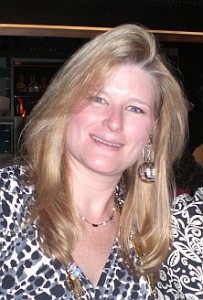
– By Regina Briseño Recognized for her work with her family and talent for seeking out good food and wine. She also invites everyone to come and enjoy the adventurous ride with her!
ESTATE PLANNING AND TRUSTS: ONE SIZE DOES NOT FIT ALL
Quite often when a client calls requesting an estate plan, rather than asking specifically for that, they’ll simply say: “I need a trust.” I’ve always found this statement rather intriguing. After all, if you felt you had a health issue, such as a sudden bout of abdominal pain or indigestion, would you go straight to the doctor and order an appendectomy? Probably not. While you may have your suspicions as to the proper resolution for your medical problem, it’s usually best to withhold the self-diagnosis in favor of allowing the professional to fully evaluate your circumstances, and make an appropriate recommendation. In the same way, while a trust may be the estate-planning tool that works in most situations, it is not always right to assume that it’s the proper approach in every situation.
At its most base level, a trust is simply a legal tool for holding or managing property. However, as noted below, the ability to control property through a trust can have many side benefits.
A trust is significantly distinguishable from a corporation, limited liability company “LLC” or similar entity. It’s important to note that a trust exists as a “property management tool” for the individual(s) or entity that formed the trust (the settlor), whereas, the corporation or LLC is a separate and distinct legal “person”, for all purposes, from its founders.
A trust can be revocable or irrevocable. A revocable trust, commonly referred to as a living trust, offers tremendous flexibility and may be cancelled or revoked, in whole or in part, or amended at any time during the settlor’s lifetime. An irrevocable trust cannot be revoked either for the duration of the trust, or for the period specified in the trust. Irrevocable trusts are utilized less frequently as most settlors wish to maintain control and ownership, regardless of how indirect, over property placed in the trust. Therefore, irrevocable trusts are often used to effectively “gift” property to a trust. While this may have implications for gift tax purposes, it can also decrease the size of the settlor’s estate, thereby reducing estate taxes, where applicable.
Here are some considerations as to why you may or may not want to include a trust as part of your comprehensive estate plan:
Tax Considerations
As noted above, an irrevocable trust, properly implemented, can potentially reduce estate taxes by lowering the total value of the gross estate. A basic revocable trust, on the other hand, does not help you to reduce or avoid any estate taxes, unless it is properly written to include certain tax avoidance techniques such as a marital deduction trust, or bypass trust, which can save substantial estate tax dollars for families over time.
Many have been misled into believing they should rush into creating a trust just to avoid taxes. However, it is important to note that for the year 2012, the federal estate tax exemption limit is $5,120,000 per person, and there is no state estate tax in California. This means that, in 2012, a married couple would have to have assets in excess of $10,200,000 before any estate tax would be owed at all. If you are in this category and estate taxes are still a concern, then there are other estate planning tools you need to be thinking about that will not be addressed in this article. For the rest of us, it should be obvious that tax considerations alone do not provide the motivation to create a trust, at least for 2012. Note that, at this writing, the exemption is scheduled to drop to $1,000,000 per person – or $2,000,000 per married couple – in 2013. Most practitioners believe Congress will take action to raise this limit to some amount between $3.5M and the current level before the new rate becomes effective, as has been the case in the past. However, gambling on what Congress might do does not seem like a safe estate planning strategy.
Avoidance of Probate
Probate is the legal process that occurs after death, whereby an individual is appointed by the court to ensure payment of the final expenses and distribution of the assets of the decedent’s estate. It is most often a very time-consuming and costly process. Under California law, assets that have been transferred to the trust, and certain others that are considered to be “non-probate” assets (Those assets that are held in joint tenancy, community property with right of survivorship, and “pay on death” accounts, which automatically transfer upon the death of the decedent to the co-owner, by operation of law), are exempt from probate. Therefore, if a trust is properly funded and maintained as such, the trust will allow the heirs to avoid the time and expense of probate upon the settlor’s death.
This last point is particularly important. Many people have a false sense of security after creating a trust through the use of fill-in-the-blank, generic methods such as online sites or, worse yet, attending seminars that are set up in hotels and put on by “trust mills” that are passing through town. These methods are problematic for many reasons. The two main concerns are: a) each individual’s situation is different, and it is tantamount to malpractice to use the same documents for everyone without fully considering that individual’s circumstances and specific needs, and b) neither of these methods guarantees that the trust will ever be funded with the assets. Simply put, you can form a trust, but if the assets are never put into the trust, it is a completely wasted effort. Without question, at least 50% of the trusts that our firm has looked at over the years, that have been created through one of these two methods, have never been funded. Because the settlor’s properties, financial accounts and other assets were never moved into the trust, the document is useless and a probate will be required upon the settlor’s passing regardless of the trust’s existence (Assumes the settlor has a minimum amount of assets subject to probate).
Privacy
A will that is entered into a probate proceeding becomes a public document. Likewise, all court filings of the assets, liabilities and information regarding distributions during the course of a probate also become accessible to public scrutiny.
A trust, on the other hand, is only accessible to outside eyes on a limited basis. It can become public in the event that the trust comes under the jurisdiction of the court for some reason. Certain others, such as bankers and financial agents, may require access to certain portions of the document for verification purposes, on an as-needed basis.
Will Substitute
Having a will that leaves all of your property to your heirs or other designees does mean that you do not need to have a trust. However, having a trust does not mean that you will not also need to have a will. In fact, every estate plan should include a will regardless of whether or not a trust is created. In the case where a trust was created, the attorney typically creates a “pour-over” will. The purpose of the “pour-over” will is to ensure that if any property is inadvertently left out of the trust, this will “pours over” the property into the trust upon the death of the settlor. So long as the non-trust, probate assets do not exceed the statutory limits (currently at $150,000) a probate should not be necessary.
Costs
The cost of creating an estate plan that includes a trust is higher than one with only a simple will. In addition to the cost of the document itself, supporting documents such as Grant Deeds and change of ownership reports for real and personal property, financial accounts and other potential assets can significantly add to the cost of the estate plan. These costs are often justified based upon the value of the estate and the estate planning objectives and goals of the settlors.
Other Considerations
With any estate plan it’s important to review and update the documents as required. This can be somewhat easier to do when there is not a trust involved. For example, the standard trust includes a list of the property that was placed into the trust. A will does not. Therefore, the trust Schedule of Assets should be updated as properties are bought and sold, or financial institutions are changed. Where an estate plan includes only a will, updates will likely be required less often such as when children or grandchildren are born, or there are other reasons to modify beneficiary provisions.
Often when real property is refinanced, certain financial institutions will not make loans to properties that are held in trust. It may be necessary to take the property out of the trust for the duration of the loan refinance. Always be sure to check that you are not violating the conditions of any property mortgage by transferring your property into a trust.
Conclusion
A trust can be a critical component of your estate plan. However, it’s important to make an informed choice before deciding to include a trust as part of your estate plan. Please don’t get the impression that our firm is opposed to the inclusion of trusts in our client’s estate plans. In fact, just the opposite is true. For most of our clients, a trust is the right way to go. It’s just that the “one-size-fits-all” approach to estate planning is reckless and raises serious concerns that individuals are not receiving proper advice based upon their specific needs. Don’t be afraid to ask tough questions. After all, you’re paying for the time. The issues are too important, and you deserve the right answers that apply to you – not somebody else.
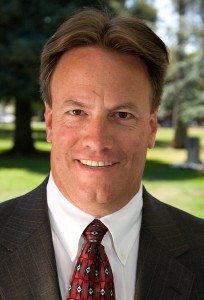
Stephen Gizzi is the Managing Partner of Gizzi & Reep, LLP, a general practice law firm in Benicia, where he practices as an attorney, mediator and arbitrator. In addition, Steve serves as a Judge pro tem with the Solano County Superior Court and is also on the Faculty of the National Judicial College where he teaches Civil Mediation.
Stephen Gizzi is the Managing Partner of Gizzi & Reep, LLP in Benicia. He is an attorney, mediator and serves on the faculty of the National Judicial College in Reno, NV. The information in this article is intended to be general in nature and does not constitute legal advice. Consult your own legal counsel for your particular circumstances.
Bill Simpkins won an Academy Award for his performance in the hit 1992 movie My Cousin Vinny.
Well, he could have.
He knows just as much and more than the famous automobile mechanic Mona Lisa Vito (Marisa Tomei). Bill has no problem comparing a 1964 Skylark to a 1963 Pontiac Tempest when it comes to positraction, differential, independent rear suspension, rear axle, body length, wheel base and wheel track. And, just like Mona Lisa, Bill was raised by a father (Harvey) that loved to fix, tinker and repair cars… when cars were cars.
Bill fondly remembers learning by his father’s side as he helped his dad repair the family cars in their flat top tar and gravel roofed home in Lynwood Park, Novato. Harvey was employed as a Caltrans engineer and also loved his cars. Harvey, who acquired his love for cars from his father, did not own anything fancy or expensive. Bill remembers working on the family’s 1958 Plymouth station wagon as a teenager. But Harvey took pride in his cars and did all the maintenance and repairs himself, with the help of his eager son.
Bill’s career path was formed in these early years and he never wavered. He graduated from the College of Marin Autobody Program in 1973, completed an apprenticeship at Barsotti’s in San Rafael, worked as Journeyman Bodyman, and in 1983 bought his own shop, Simpkins Auto Refinishing and Body Repair.
Bill is now at 980 Adams Street in Benicia, and it is apparent that Bill’s love for real cars has stayed with him throughout his life. The first car you see is a 1973 Buick Riviera owned by Bob Featherer of Featherer Pet Shop at 1202 East Fifth St., Benicia. The Riviera was purchased in Los Gatos off the show room floor by Charlotte Bacon, Bob’s mother-in–law. Bob knows because he was right there with her. The car accumulated few miles since Charlotte worked as a Captain’s Waitress for the Matson Line and the Merchant Marines. With Charlotte traveling to Hawaii, Australia, and Europe, she was not able to drive too often, although Charlotte did manage to drive the Riviera around Benicia with her constant companions; miniature Schnauzers named Eddie, Smokey, Buzz and Little Richard. The car only had 80,000 miles on it when she gave it to Bob in 2003. Regrettably Charlotte passed away in 2009. Bob is restoring the Riviera in part because of his fond memories of the best mother-in–law in the world. This classic car is dark blue color with sky blue trim, vinyl top, double pin stripe poly glass tires (size J78-15), with the original motor and rack and pinion steering.
In the same work area at the shop, Bill is restoring two Fiat Spiders. These 1979 and 1980 convertibles are Bill’s babies. The attraction of these Spiders, other than their Pininfarina design, is that they get 30 mpg and only cost $6,000 – $10,000. Need a summer car that has withstood the test of time?
Bill also owns two Corvairs, a 1965 and 1967. The Corvairs were only made from 1960 to 1969. They were unusual cars – they had the engine in the rear and they were air cooled. Since the heavy engine was in the rear, the front tires only required 14 lbs. air pressure versus 24 lbs air pressure in the rear. According to Bill, untrained auto mechanics at the time did not read the manual and mistakenly put 24 lb. of pressure in the front resulting in an unpleasant, and unnecessary, bumpy ride.
The other cars that will catch your eye are Bill’s Thunderbirds. His classic is a 1956 T Bird that was purchased from its original owner. It is a Special Edition with wood grain, ember glow paint, parchment upholstery, vinyl top, and special coloring on the hub caps to match the body paint. You can have it for $18,000.
Bill seems to be surrounded by cars from the 1960’s. Not surprisingly, Bill’s first car was a 1962 Dodge Dart that he bought in 1973 from his neighbor lady. The “ugly” car with awkward proportions and a warthog-like grille was originally purchased in Germany by a GI Joe who brought it to Novato. In 1975, at the age of 21, Bill drove the Dart, with his girlfriend, 8,000 miles across the USA. The Midnight blue (with white top) Dart survived Texas thunderstorms powerful enough to raise the water on the highway 3 feet in 10 minutes. On the return trip home, the Dart was unable to take the 12,000 foot elevation of the Rocky Mountains. Bill solved the problem in true MacGyver fashion by changing the timing and allowing more oxygen to get to the 318 engine.
While classic cars are evident on the shop floor, Bill’s business has expanded to include many other services. His business is 30% mechanical and 70% “other”. Bill describes his multitude of services as your “one stop shop”. His webpage (http://simpkinsautocare.com/) lists transmission, tires, suspension, recreational vehicle repair, restoration and detailing, engine diagnostics, oil and brake, insurance claims and car sales. Bill will be celebrating 30 years in business next year.
Bill loves his location in the Benicia Arsenal. His building is # 150 which was used as a storage building. Exactly what was stored inside the building is unknown. Whatever it was it had to fit through a 10 by 12-foot door opening and could be no taller than 14 feet.
As with any business, customer service is critical. Bill has many long term and satisfied customers. One is Cheryl Tanberry who has been taking her cars to Bill since 2006, when her daughters started to drive. She says she has had so many cars in Bill’s shop that Bill should dedicate a memorial bay to her family. Cheryl says Bill is a Benicia institution who works for the client, not the insurance companies.
In writing this article I was concerned that Bill might be offended by the reference to Mona Lisa Vito / Marisa Tomei. So I asked Bill. He said he loves the cars from the 1950’s, 60’, and 70’s. They are real cars that require real mechanics. If Mona Lisa Vito shares his love for these cars, he relishes the comparison to her.
Editors Note: At the time we went to press Simpkins Auto Care had become a Hertz Rental Car Location.
Gary Truelsen is a long-time Vallejoan who graduated from Vallejo High School and the University of California at Berkeley. He worked in government management for 30 years and has spent the last 5 years doing consulting work, primarily helping areas destroyed by disasters to recover.
I believe that sometimes the residents of the San Francisco Bay Area forget how wonderful they have it living here.
The Bay Area is famous worldwide; I believe that San Francisco has been voted one of the most beautiful cities in the world more than once. We are also home to the Napa Valley as well as the oceans and mountains of the many cities and towns that make up this region.
One area I believe the residents never forget how lucky they are is the Monterey Peninsula, home to Carmel, Monterey, Pacific Grove and Big Sur. The cities and towns that dot this coastal county are some of the most sought after zip codes for living, visiting and touring. Whether you are into hiking, golfing, eating, sightseeing, wine tasting or walking your dog, this is the place for you!
I personally love the Carmel/Monterey area and it holds a lot of personal feelings and memories from my life. The drive is so easy since everything is right off the highway that it makes it an easy decision to go down for the weekend or even a day trip. I recently went down to Carmel for the day just to go to a dog park and the beach and was home on my couch by 8 p.m. – perfect! But, staying for a few days is even better as I found out in February when Local Happenings Magazine went down to visit the Monterey Peninsula for a little travel field trip.
We all arrived at the Hyatt Regency Monterey Hotel and Spa on Del Monte Golf Course in the afternoon and what weather we had – sunshine all around. We literally sat overlooking the 17th green of the Del Monte Golf Course drinking cocktails in February – unbelievable. We were able to sit and relax and get unpacked in our room before heading to dinner that night at the restaurant located at the hotel, TusCA Ristorante.
TusCA Ristorante, located right off of the lobby is surprisingly intimate and has a menu that equals any other white table cloth restaurant in the area. With golf course views and a very comfortable setting, we dined on hearty cuisine inspired by Italy’s Tuscan region. With great service and fabulous Monterey County wine, our first evening was a HUGE success.
The next day we took a walk along Fisherman’s Wharf in Monterey (five minutes from the hotel) and then came back to have breakfast and relax in the lobby of the hotel that has a cozy family-room style ambience complete with fireplace. The best was yet to come though since we then had massages at the Accista Spa, also located right on the hotel property. Fabulous! The Accista Spa was relaxing and serene with once again a comfortable atmosphere, not stuffy at all. Their menu of services was complete and would rival any spa I have ever visited.
The best was yet to come though. Later that night we were whisked away in the biggest stretch limousine I had been in (an extended Excursion) to the Hyatt Carmel Highlands in Carmel. This is truly a destination spot and MUST NOT be missed. When you enter the property (it was night and very dark outside) you get the feeling that you are entering a mountain lodge. The main room resembles something you might find in the Grand Tetons. The walls are covered with the most beautiful black and white photographs, all of the Carmel/Big Sur coast. I immediately wanted a room big enough at home in order to hang all of these photos to forever look at them. A good reason to go back!
We were led through the main dining room of the restaurant Pacific’s Edge to a private working wine storage room. Again, fabulous! The glass-walled room was stunning with the candles and low lights showcasing the bottled walls on the opposite side of the room from where we entered. The table was set for royalty and we truly felt special, but nothing could prepare us for the absolutely spectacular meal that was prepared for us by Executive Chef, Matt Bolton. You MUST make this restaurant a priority when you come to Carmel. The views, food and exceptional service has to be experienced. I had no idea until I came that this is one of the most popular wedding sites as well because of the views. Thanks to the staff for making us feel so welcome and for our tour of the property including Matt, previously mentioned, Jonathan P. Doepke, Resort Manager Jacques Melac, Pacific Edge’s Manager and Paul Fried, Wine Director.
We hated for this evening to end but we finished off with drinks back at the Hyatt Monterey next to their fireplace; very cozy and just the right amount of intimacy.
The next day we leisurely woke up and decided to enjoy brunch at the TusCA Ristorante. What a spread they do! We enjoyed our champagne brunch as well as our entire stay very much. The Hyatt Monterey is perfectly located to enjoy the entire area and right off the highway for easy access. Bring the golf clubs, the kids and Rover since they are pet friendly. Ben had an awesome stay.
We next headed into Carmel so we could enjoy some beach time. Ocean Avenue is always busy with international travelers and locals shopping and eating at one of the many cafes and restaurants. It is almost overwhelming so you might need a couple of trips to find your favorites. Ben was so happy since Carmel is probably THE MOST dog-friendly place in the world. Complete with poop bags, downtown Carmel is littered with dog treat baskets, water bowls and the friendly canines themselves. The beach at the end of Ocean Avenue is one of my most favorite places in the world. The sand is white and soft and no matter the weather, you cannot find a more beautiful and picturesque location. This beach is one of the reasons I am sure the locals stay, and why the tourists keep coming back. This is No. 1 on the list of what to do when you visit Carmel.
For our stay in Carmel proper, we stayed at a very different hotel from the Hyatt Monterey. Carrie Theis, owner/manager of Hofsas House right on San Carlos Street off of Ocean Avenue between 3rd and 4th Avenue, was our hostess. Hofsas House is located within walking distance to everything in Central Carmel. Their famous mural painted by Maxine Albro in 1957 greets you as you enter their driveway so you cannot miss it. This unique mural was originally created to offer a welcome from the family to their guests.
For over 60 years, the Theis family has been providing European hospitality designed to suit everyone’s travel tastes. The magic of Germany is showcased in the 38 rooms, many with ocean views, overlooking the pines in the quaint village of Carmel-by-the-Sea.
The Theis family aspires to provide the highest level of personal service. From the continental breakfast each morning with French Roast coffee, tea, fresh pastries delivered from a local bakery, juice and fruit to the personal concierge services and traditional family hospitality, the Hofsas House has something for everyone – including your four-legged friends. The Bavarian-inspired hotel offers pet-friendly rooms and concierge services, heated swimming pool, European-style dry saunas, WiFi, cable TV, off-street parking as well as the aforementioned continental breakfast. Ben and I loved the location to the beach where he could run forever and he loved his doggie basket that came with the room complete with Frisbee, dog shampoo and his own personalized dog tag!
The hotel offers the Tail Wagging Package, House Crafting Package, The Reunion Package as well as some special packages with the different seasons. Please call Carrie and the rest of the amazing staff at (831) 624-2745 or visit their website at www.hofsashouse.com for more information.
You might think, “When does this amazing trip end?” I was saying this to myself quite often but it was not over yet. One other must do in Carmel (#2) is to visit Pebble Beach and the various resorts that make up this world-famous destination. One that I personally feel is a MUST is the Spanish Bay Resort, home to the serenading bagpiper. If you love relaxing on an outdoor terrace in front of fireplaces wrapped up in blankets viewing one of the most beautiful vistas ever and listening to the lyrical sounds of a bagpipe, this is the place for you. Every evening a bagpiper serenades the setting sun as if to signal the end of another magical day. We thoroughly enjoyed our cocktails on the terrace as the bagpiper walked through the headlands to the final green on the golf course to finish his performance.
After leaving Spanish Bay, take your time driving the 17-mile drive if you have time – it is definitely worth it. We left quickly since we had reservations at Fandango in Pacific Grove.
Fandango is a local’s favorite and can accommodate families as well as a romantic rendezvous. We had an exceptional dinner and had most of the other diners entertained with Ramon, Rory and Veronica’s singing and visiting. (Thanks kids for making the night memorable!)
The menu reflects Mediterranean items like spaghetti Siracusa, paella, calamari steaks, croque monsieur, sand dab filets and their specialty, rack of lamb. A popular Sunday brunch ranges from French toast and cheese blintzes to hamburgers, salad Nicoise and pasta dishes. An impressive wine list accompanies the broad menu of Basque, French, Spanish, Italian and North African influences.
Fandango is located at 223 17th St. in Pacific Grove. (831) 372-3456 or go to www.fandangorestaurant.com.
Fandangos is not the only restaurant where we were given the best treatment, Bistro Beaujolais was also on that list. This quaint bistro is located right in the pulse of Carmel at Carmel Plaza right on Ocean Avenue and Junipero. They offer courtyard seating, live music, can accommodate private functions and special events as well as being pet-friendly of course. Their menu is so varied that I think I can realistically say that everyone can find something to eat here. Homemade pastas, fresh fish, beef, poulet, canard, lamb, paninis and pizzas – what else could you ask for?
The owners of Bistro Beaujolais also own a couple of other popular restaurants, da Giovanni and Bistro Giovanni. All three are located right in downtown Carmel. To make it easy to find them you can go to one website for all three restaurants; www.3carmelrestaurants.com. The Firok Shield family is known locally for their restaurant hospitality and I can personally attest to VERY GOOD food. Thanks again for accommodating Ben and the rest of us!
On our last night in Carmel we decided to go to a very quaint and local restaurant, Mundaka (a Spanish tapas restaurant). As a group we thoroughly enjoyed the very artistic ambiance and knowing that everything in the restaurant was made with sustainable materials and recollected materials. I was told that Mundaka opened as a result of great friendships, a love of food, wine, music, and a long-term romance with Spain and its culture. Open in March 2009, Mundaka continues to evolve daily with the creations of their chef, Brandon Miller.
We sat at a family-style table and everyone ordered various tapas and tried to go with the chef suggestions versus looking at the menu. I have to say as a persnickety eater I was a little apprehensive about the food, especially since I was eating vegetarian because it was during Lent and I had given up red meat for this self-induced 40-day sacrifice. I loved it, especially the Coliflor; cauliflower gratin, horseradish, Gruyère. SOOOO GOOD! Robert ordered the Chuleton, a 22-ounce rib eye served rare with arugula and potato salad. We were all tired since this is now the end of 4 days of non-stop eating, drinking and driving. This was just perfect to end the trip.
Before heading back the next morning we all had breakfast and took in our last views of the beach and the beauty of this quaint village. I personally had to walk the beach once again and breathe in the fresh salty air and watch the golfers on the bluff of Pebble Beach. Whether you have one day or two weeks, Carmel/Monterey/Big Sur is a must for families, singles, lovers and dogs – make your reservations today!
On a personal note – if you have a dog then you MUST visit Terry’s Lounge inside The Cypress Inn which is owned by Doris Day and who personally made Carmel THE #1 place to visit with your dog. Ben is a regular!
Reasons to Visit Carmel, Monterey and Big Sur
• Golfers’ Paradise
• Food & Wine
• Art, Arts and Entertainment
• Romantic Escapes
• Beach Bumming
• Pet-Friendly
• Car Buffs
• Fairy-Tale Weddings
• Relax and Rejuvenate
• Nature Lovers Paradise
• Celebrity Sightings
MUST Adventures on Monterey Peninsula
• Point Lobos State Reserve
• Historic Cannery Row
• Monterey Bay Aquarium
• Old Fisherman’s Wharf
• Lovers Point
• Mazda Raceway Laguna Seca
• Big Sur
• Carmel Valley
• 17-Mile Drive
• Ocean Avenue Beach
Deanna Baillie and Ben, her Australian Shepherd, are great travel companions. She invites you to keep up with her and Ben on her blog at www.localhappeningsmagazine.com.
[weaver_extra_menu menu=’featuresMenuJun2012′ style=’menu-horizontal’ width=’100%’ css=’menu-horizontal’]
Summer is upon us. The summer solstice (the longest day of the year) falls in June 20th this year. The solstice, of course, marks the start of summer AND the point at which the days start getting shorter, which many people do not realize. The shortening of the days always marks a sad time for us as well – less daylight in which to do stuff outside. Those of you who have been keeping up with the Ancient Mayan calendar will know that their 5,125 year “cycle” is coming to an end at the winter solstice, which falls on the 21st December this year. Many people are pointing to that day as the end of the world. Others are saying that a “new age” of enlightenment will take place. I personally am saying that will be four days from Christmas and we should probably start doing our Christmas shopping. Whether you are the proverbial ant or grasshopper you should either get busy preparing for winter or get busy enjoy this summer!
There is a lot to do in June and July and, as always, school is letting out and the kids are free. The festival season is in full swing. Farmers markets are rolling in an abundance of fruits and vegetables. It is just a matter of deciding which things to enjoy.
An event that has taken place in June for the last several years in Vallejo is the Northern California Pirate Festival. For those of you who have never been, it is always the weekend of Father’s day (June 16th and 17th) and it is a two-day FREE event. The best way to describe it is to think of it as a Renaissance festival with a pirate theme. Thousands of pirate clad men and women crowd the waterfront in Vallejo and there is even a pirate ship prowling the Mare Island Straits and firing their cannons. It is loads of fun for people of all ages but remember to bring the sunscreen!
This might be the year to make sure you attend the Father’s Day Car Show that happens at V Marketplace in Yountville on june 17th. It is definitely a show not to miss.
The other event that is a must is the Anniversary Bash that happens at the Rellik Tavern in Benicia – mark your calendars now for Saturday, June 23 and be there!
Fair Season is also in high swing with all the county fairs happening. The Alameda County Fair starts on June 20 and goes through July 8. The California State Fair also takes place July 12th to the 29th. Then there are the 4th of July parades, events and fireworks which are happening in almost every community in some fashion or another. Robert has been heading up the Vallejo 4th of July parade for the last 5 years and Deanna is always out helping, so if you have plans to go to that parade make sure to stop by and say hello.
So, whether you are getting ready for the end of the world or just the start of summer get out and enjoy some happenings today!!!
On a personal note June and July also brings the Birthday of Robert and Deanna’s mother (we can’t publisher her age), their niece, Danielle and Robert’s daughter, Veronica.
Happy Birthday Lisa W, Christine and Victor Gonzales, Julie J, Tom G and Kyle T!

 Welcome to Cardburg 2012
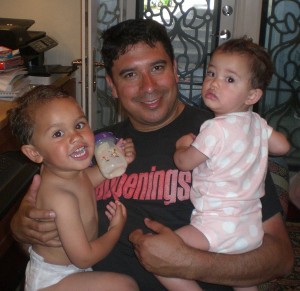 Robert Briseno – Is a father of three little ones who finds constant joy in their discovery of both cardboard and all the wonders and mysteries of the world.
 Celebrating Survivorship
 Into the Oven We Go
 – By Regina Briseño Recognized for her work with her family and talent for seeking out good food and wine. She also invites everyone to come and enjoy the adventurous ride with her!
 ESTATE PLANNING AND TRUSTS: ONE SIZE DOES NOT FIT ALL
 Stephen Gizzi is the Managing Partner of Gizzi & Reep, LLP in Benicia. He is an attorney, mediator and serves on the faculty of the National Judicial College in Reno, NV. The information in this article is intended to be general in nature and does not constitute legal advice. Consult your own legal counsel for your particular circumstances.
 Gary Truelsen is a long-time Vallejoan who graduated from Vallejo High School and the University of California at Berkeley. He worked in government management for 30 years and has spent the last 5 years doing consulting work, primarily helping areas destroyed by disasters to recover.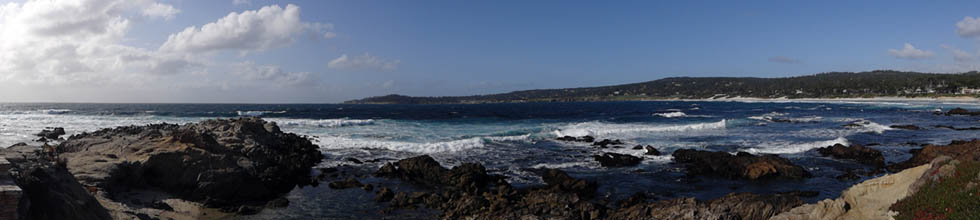
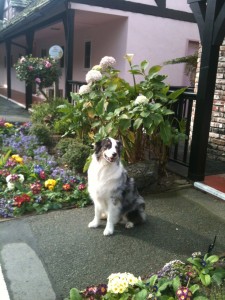
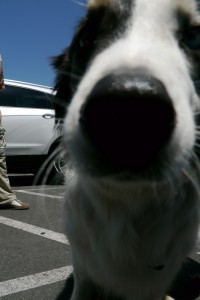
 Deanna Baillie and Ben, her Australian Shepherd, are great travel companions. She invites you to keep up with her and Ben on her blog at www.localhappeningsmagazine.com.
 Deanna Baillie and