[weaver_extra_menu menu=’diningMenu’ style=’menu-horizontal’ width=’100%’ css=’menu-horizontal’]
Tales of the Kitchen
I was all set to write about salt, but then thought since it was so close to the holidays, eggs would be a much more appropriate subject. Sure! Don’t you see it? Eggs. Holidays. The two are a pair, like salt and pepper … No, I am not losing it, but with all your holiday baking, eggs will be on the shopping list.
If you bake a lot you’ll know eggs have 2 main components – white and yolk, and both have their own function. So in the spirit of Christmas I have decided to write about the magic of this porous wonder. Because the egg shell is made of calcium carbonate and is porous, it will lose moisture and take on flavors of the refrigerator when it is stored improperly or for too long. There is nothing worse than an onion flavored cake or cookie. The American Egg Board recommends 40° for storage, so the best place in your refrigerator for the egg is the top shelf. Leave them in the carton you purchased them in, which also helps maintain the humidity, which should be 70-80%.
A “large” egg weighs about 2 ounces, the white equals about 1 oz., mainly made of water and protein, has vitamins and minerals and only about 17 calories. The yolk weighs in at about half an ounce, contains all the fat in the egg, cholesterol, little protein and vitamins A, D, and E (the egg is one of the few natural resources for vitamin D and minerals) and is around 60 calories. I have read the egg is a “potent nutrition powerhouse”, containing the highest quality food protein. And because I know this I don’t feel too guilty when I make one of my favorite quick meals – a no cream carbonara. All you do is boil off some pasta (preferably linguine) and have a sauté pan ready. When the pasta is just about ready, drop 2 or 3 eggs in the hot sauté pan with some garlic and olive oil and transfer the pasta along with a little of the pasta water into the pan and swirl until the eggs make a simple sauce. Then plate, finishing with your cheese of choice and parsley and it is done. It is too yummy and one of my favorites.
Ok, so now some of the facts. Whole eggs are for giving structure in baked goods and dishes like meatloaf and hold sauces. They are also a leavener. If you beat the egg to a ribbon stage the egg will puff during baking to leaven whatever you’re making. They also glaze and color. By brushing an egg wash on breads or pastries it will give a shiny glaze and, because of the protein, it browns your product.
Egg yolks bind and thicken. As an emulsifier, it holds fat and water together. Think of a hollandaise or mayonnaise. They also give smoothness to dishes like custards by binding liquids with fats.
Egg whites are dry and crisp because they have no fat, creating a dry protein lattice when they are baked, like in my favorite, Pâté á Choux, aka cream puffs. They also clarify. When making a stock you can add egg whites and, when slowly heated, the whites coagulate and gather the impurities. Then, when they become firm, rise to the top. I always got an “A” in culinary school when making a consommé with this little trick. Something I just learned while writing this article was that unbeaten whites can be a better choice when a recipe calls for stiff whites to be folded into the batter. Beaten whites make your cake lighter, but it may also make your cake fall. Stiff whites are partially cooked, which means your cake will rise due to the bubbles in the foam, but they no longer have the structure to hold up the cake which means the cake will fall once it cools. Raw egg proteins are needed to hold the cake.
Eggs come in 6 sizes: Peewee, small, medium, large, extra large and jumbo. Medium-jumbo is what most stores carry while Peewee is normally for commercial food use. The size of the egg pretty much tells the age of the chicken, “the bigger the egg the older the chicken”. There are 3 grades for an egg: AA, A and B. The grade of an egg is determined by the size of the air cell in the egg. The air cell is located at the large end of the egg between the white and the shell.
Ok, so now that I have given you a few facts about the “egg” it should make your holidays a little less stressful, right? Well maybe not, but at least I tried. Anywho, one last fact: when cracking eggs and you find part of the shell in your batter or whatever your making, use an egg shell to fish out the pesky piece. The shell piece will naturally float right into the bigger piece, it really works!
By Chef K. Marie Paulk
Education: A Private Matter?
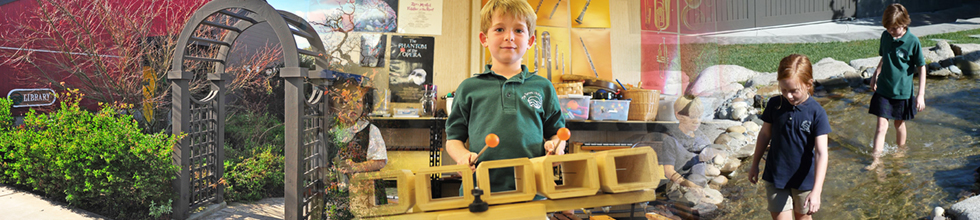
Is it the smaller class sizes and low student/teacher ratio? Perhaps it’s the wide variety of arts and athletic extracurriculars, or maybe it’s simply family tradition. Whatever the rationale, there are many reasons why families choose a private school education for their children.
“I think everything really boils down to the smaller environment,” says Lafayette resident Nicola Hemmerling, who currently has two boys attending Bentley – the Lafayette private school known for academic excellence. (Her two older boys are Bentley grads and are now attending college.) “Teachers have very close, caring relationships with students. Small class sizes allow for a vibrant, discussion-based style of learning. One of my boys also describes Bentley as a place where he can really be himself, and not try to fit into any particular group: ‘It’s much less cliquey,’ he says.”
Mary Murphy, Director of Communications at Seven Hills School, cites this sort of diversity as just one of the appealing factors for which families choose this independent preschool through 8th grade private school, located on nine acres of former ranchland, just up the hill from Heather Farm Park in Walnut Creek. “Seven Hills students are a diverse bunch, along racial, ethnic, socioeconomic and family structure lines,” says Murphy. “There is no specific profile. What Seven Hills families have in common though is the belief that, from the preschool play yard all the way through the 8th grade trip to Japan, our teachers have created an academic environment in which curiosity, exploration, experimentation, responsible risk, creative problem-solving, success and failure are all part of a foundational learning experience. It all starts here.”
With pride, Murphy points out one of the more ethereal features of her school – the sheer beauty of the surroundings. With a creek running through the playgrounds, gardens here and there, and views of Mt. Diablo and its foothills at every turn, there is plenty of space to explore.
But it takes more than beauty and small class sizes to lure families to spend hard-earned money on hefty annual tuition fees rather than education that is offered freely in the public sector. In the three counties served by this publication, there are 31 public school districts, encompassing a multitude of elementary, middle and high schools. Several of these public school districts are consistently rated among the top in the state. Lamorinda and Diablo corridor residents routinely cite the excellent public schools as the number one reason for their move to the area. “Many high-performing public schools/districts demonstrate outstanding student success,” says retired Acalanes Unified High School District Superintendent John Stockton. “Unfortunately, private schools are not subject to the same level of assessment required of public schools. There are many high schools that offer highly successful advanced placement programs, experience great student success in college entrance exams and demonstrate exemplary student achievement on standardized assessments, while serving diverse communities.”
Stockton, who now consults on education issues, also notes that many private schools are cost prohibitive to the average-income family, citing that some Bay Area private schools cost more than public post-secondary schools. “I do believe that parents are justified in seeking out the school environment in which their students will achieve their full potential,” says Stockton. “However, I do believe that public schools can provide excellent educational experiences for almost every student.”
Nicola Hemmerling concedes that public high schools offer a lot more bells and whistles than the smaller private schools. Big bands, football teams with homecoming hype, and large musical and theater productions are typical high school aspects that her boys miss. She also cites the social convenience of a local student body. “With classmates in your neighborhood, getting together with school friends is easy,” she says.
At St. Patrick-St. Vincent diocesan Catholic preparatory high school in Vallejo, students typically score above the national, state and local averages on tests such as the PSAT, SAT and ACT. Virtually all of the graduating seniors go on to college with approximately 70% of the class going straight to four-year colleges. The student body is an ethnically diverse group composed of 530 boys and girls. Students enjoy class sizes ranging in number from 24 to 32 students.
Sheila Williams, director of admissions at St. Patrick-St. Vincent, is a third generation alumna of the school and the parent of two children who have had the SPSV experience. “My daughter, a recent graduate and currently a freshman in the UC system, would say that she was able to really develop and hone her skills as a writer at SPSV,” says Williams, whose son is currently a sophomore at SPSV. “And my son enjoys the classroom, but his true passion is on the playing field.” SPSV produces student athletes – there were 10 college signings last year from the school. Over 70% of the student body is involved in sports and an even higher percentage participates in multiple extracurricular activities.
Though Williams cites the previous statistics as reason enough for families to choose SPSV, she references “community” as a major factor. “SPSV grads make connections to classmates, faculty and staff that will last a lifetime,” she says. “I still have close contact with many of my classmates 26 years after graduating. I see many of the kids who graduated around me hold positions of leadership in our grammar schools, civic groups, even raising money for local and national charities. We currently have more than 17 alumni who have returned to SPSV to work as faculty/staff and many more who help coach.”
At Seven Hills (which celebrates its 50th anniversary next fall), faculty and staff often say it’s the teachers who create the school’s special environment. “What we mean is that well-trained, experienced, motivated and engaged teachers, who are encouraged to find professional development opportunities and work in an environment of collaboration and collegiality, will bring all that perspective to bear in the classroom,” says Murphy. “Our teachers have created an educational continuum on which a student moves from one grade to the next with great confidence and competence. Our teachers do not use state standards as a goal but just as a jumping-off point. This autonomy allows teachers to guide students in the mastery of content while teaching them to think critically, articulate clearly and express themselves uniquely.”
With 384 students currently enrolled, Seven Hills is below state-mandated teacher/student ratios for each age. Kindergarten through 5th grade classes have 18 students while middle school classes count 19 per classroom. When asked what Seven Hills offers that a public school education cannot, Murphy cites a) a clearly stated mission, shared by administrators, teachers, parents and trustees, guides every decision; b) a strategic map for the future; c) financial stability; d) smaller class size; e) professional development that inspires and energizes their teachers; e) a tight parent community; f) teachers who love what they do; and g) a spirit of philanthropy, which funds physical and program improvements, as well as socio-economic diversity.
“Add to all of this, a warm, nurturing school community in which each child is really known and we graduate students who are ready academically, socially, and emotionally for their next academic adventure,” says Murphy.
Sheila Williams acknowledges that while a student can receive a great education in a public school, many public schools are cutting back on enrichment and extracurricular activities due to state budget issues. SPSV fine arts programs such as drama, visual arts and choir are programs that are fully supported at her school. “SPSV students are able to take advantage of all that High School has to offer,” she says. “We have seven award-winning choirs that have competed in Washington DC and Europe. We have 18 different sport programs. Students may be a part of our Campus Ministry, ASB or Retreat Team which participate in a school wide leadership program.”
Noting the financial constraints that a private education might create for many, Williams acknowledges her own decision to invest in her children’s education, “There are things that we as a family might not be able to do as a result of making this SPSV education a reality for our kids. But it is the right choice for our family and the investment has a superb rate of return.”
A Third Choice – Charter Schools
In addition to traditional public schools and private options, there exists a third choice: Charter Schools. A charter school offers a twist on public education – there is no tuition and charters are open to any student and are funded with public dollars. The difference from traditional public schools is that charters are given the flexibility to make decisions at the school level, allocating budgets and designing curriculum to best meet the needs of the students attending the charter school. In a traditional public school, these decisions are made at the district level.
Another difference is that charter schools are schools of choice, meaning that parents and students choose to attend the charter school. They are not assigned as in the traditional district-run system. Families are making a decision that a charter school provides the curriculum, culture and learning environment in which their particular student will thrive. When demand for spots at a charter school exceeds the spots available, the charter school then holds a random lottery to determine which students will be offered a spot.
There are nine charter schools in Contra Costa County, five in Napa County and seven in Solano County. Adam Miller is Chief Operating Officer for the California Charter Schools Association where he provides management and strategic leadership, specifically in the areas of internal operations and membership services. Miller says that each parent and student have different reasons for attending a specific charter school depending on the student’s needs and what the charter school offers. “The reasons will be as unique as each and every charter school,” says Miller. “For example, reasons could vary from the emphasis on a college prep curriculum at a high school charter to a unique learning model such as Montessori at another charter, to an appreciation for the smaller school size at another.
“Generally speaking, parents appreciate the flexibility that a charter school has to align all of its resources to meet its mission of providing a high quality education to its specific group of students,” continues Miller. “Parents also appreciate the increased accountability at charter schools. In exchange for more flexibility, charters have increased accountability. A charter school must continually seek renewal from its authorizer, usually on a five-year cycle. If the charter school does not meet certain benchmarks, for example, academic performance, the charter school may not be renewed, so the stakes are higher. Also, of course, as a school of choice, charter schools are accountable to parents. If the charter school is not providing a quality education to its students, the parents will vote with their feet, pulling the students out of the school. Charter schools empower parents.”
For more information on California’s diverse charter school choices, visit www.calcharters.org.
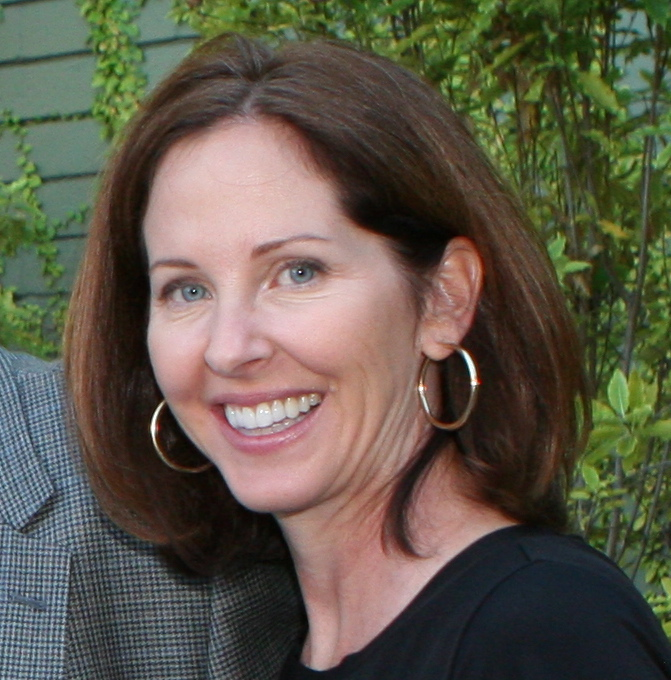 Fran Miller is a freelance writer and regular contributor to Lafayette, Alamo and Danville Today newspapers. She lives in Lafayette with her husband, Dan and two teenaged boys, Aaron and Ben.
Guitars Not Guns
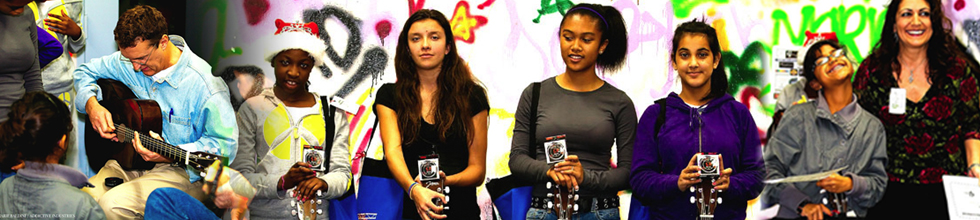
When jamming on-stage during Wednesday night Rock Jam at Vinnie’s Bar and Grill in Concord, Barbara Gorin, Jay Kirkland and Brooks Lundy might not look like lifesavers and healers. Performing rock classics, as well as original material, Gorin and Kirkland, aka “The Breedloves” and Lundy, who is part of Vinnie’s house band, as well as a member of “Stung”, a Police tribute band, are right at home in front of the crowd that gathers nightly at the popular venue to hear some of the best live music in the East Bay. While they thoroughly enjoy their moment in the rock spotlight, Gorin, Kirkland and Lundy experience similar gratification in the company of the at-risk youth with whom they share their love of music, specifically the guitar.
Gorin, Kirkland and Lundy are volunteers with “Guitars Not Guns”, a non-profit organization seeking to prevent youth violence by providing foster kids and at-risk youth with focus and self-actualization – by means of weekly guitar instruction. Using music as a catalyst, Guitars Not Guns (GNG) encourages children and teens ages 8 – 18 to use creativity to foster personal development and to help divert them from self-destructive influences such as drugs, alcohol and gang-related activities. In addition to learning how to master chord changes, children learn perseverance, discipline and self-esteem.
Jimi Hendrix or John Mayer they’ll likely never be, but the kids who participate in the program don’t seem to care. Most are simply pleased to have some positive adult attention – something to which most are not accustomed.
GNG California Vice President and lead guitar instructor Randall Davis recalls a particular lesson session in Martinez, attended by three sisters, who all had different fathers, each in prison. Due to their mother’s drug issues, the girls lived with their grandmother. “About halfway into their eight-week course, the girls did not appear for class although they were always eager to attend and had each made great progress,” says Davis. “We inquired and learned that the County’s Child Welfare Service Agency had made a surprise visit to the home and found the grandmother smoking crack cocaine. Thus, the three girls were separated for the first time and sent to three different foster homes. Their guitars remained in their grandmother’s home.
“The girls so wanted to play guitar and see each other, that they insisted the agency retrieve their guitars and that their foster home guardians bring them to class. Thereafter, they came to virtually every session we held in Martinez, to learn guitar and to see each other. Their new guardians told us it was the GNG courses that were a stabilizing force in their fractured lives.”
Founded by Ray Nelson, GNG is headquartered in Georgia, with branches across the United States and Canada. The completely volunteer-run program consists of eight consecutive weekly classes with a maximum of 10 students and three adult instructors. Those who complete the full program are allowed to keep their guitar.
“We are providing these kids with adult attention, discipline to deal with their stress and circumstances without resorting to violence, and the skills to critically think about the consequences of their actions – all this simply by teaching them to play guitar,” says GNG California President Frank Darling.
A retired paper company executive and Orinda resident, Darling learned of the program through his wife, who attended an event at which GNG was being promoted. Before he knew it, Darling was hooked. “One of my favorite parts of this program continues to be the smiles I see when we tell the students at the end of the course that they get to keep their guitars.”
Darling emphasizes the ulterior benefits of the program. “Over time, we have come to know that this is much more than guitar instruction. We know that the learning of music assists with learning in school. We also feel that we are providing life lessons such as responsibility (they are assigned a guitar to take care of for 8 weeks), focus and perseverance (they come to class and have a purpose), discipline (practice, practice, practice), feeling valued (instructors are volunteering their time to be with the kids), and finally, the feeling of completion (most of these kids have never completed anything in life).”
“I applaud Frank’s program,” says Stuart McCullough, Executive Director of Youth Homes in Walnut Creek, who has seen first-hand the positive effects on his charges. “It is very difficult to make a highly traumatized foster care adolescent do something they do not want to do,” says McCullough. “All of our kids who participated in the program did so willingly and really enjoyed learning. About half of the kids finished the course, and the celebratory evening was a wonderful event. Our kids have so few such successes in their young lives and I believe that night will be something they will never forget.”
For instructor Davis, the greatest reward is when the light goes on and the student willingly applies himself to learn. “Playing guitar is physically hard on the fingers,” says Davis, who has been playing guitar for 42 years. “It requires dexterity that only comes with repetition and practice, and these kids are provided little or no support at home. It’s cool when it all comes together for them.”
In addition to being an instructor, Barbara Gorin is the group’s Vice President of Fundraising and Public Relations. She annually attends the National Association of Music Merchants show held in Los Angeles where she meets music company manufacturers and artists, many of whom are successfully swayed by her enthusiasm about GNG. And, she organizes a variety of fundraisers at venues such as Walnut Creek’s Red House Studios, Slims, outdoor festivals and, of course, the site of her regular gigs – Vinnie’s in Concord.
A Diablo Magazine “Threads of Hope” award winner for her work with GNG, Gorin is tireless in her fundraising efforts and has managed, through her connections, to obtain and auction autographed guitars from some of the biggest names in rock music – Slash, Ann and Nancy Wilson of Heart, Sammy Hagar and Blondie’s guitar player are all GNG converts. Gorin’s passion for the program makes it an easy sell.
“I love this program so very much,” says Gorin. “Inspiring kids and building encouragement is very rewarding to me. It is always about the kids. I feel a sense of accomplishment when a shy kid begins the class and eight weeks later opens up into a little future rock star. Learning to play guitar is a fun part of this program, and we will definitely make participants better players, but we are also mentors, helping kids to understand that dedication, commitment and responsibility are important life lessons as well.”
Gorin, one of the programs few female instructors, recalls story after story of young lives touched by GNG, and she was pleased when a former student recently contacted her via Facebook to update her about his life. “This former student is now working at a full-time job, and he told me that although at the time it did not seem he appreciated what I did for him, I (and the program) helped him grow as a person. It meant so much to me to see he is doing well in society and that the program had a positive impact on him.”
Guitars Not Guns is seeking to start a Solano County chapter; if interested in helping to organize, teach or fundraise, please contact Frank Darling at fndarling@aol.com. (No music experience necessary.) For more information on the program, visit www.guitarsnotguns.org, or http://guitarsnotguns.blogspot.com.
Fran Miller is a freelance writer and regular contributor to Lafayette, Alamo and Danville Today newspapers. She lives in Lafayette with her husband, Dan and two teenaged boys, Aaron and Ben.
Photos © Ann-Marie Baldini for Addictive Industries
Watch for Black Chicken
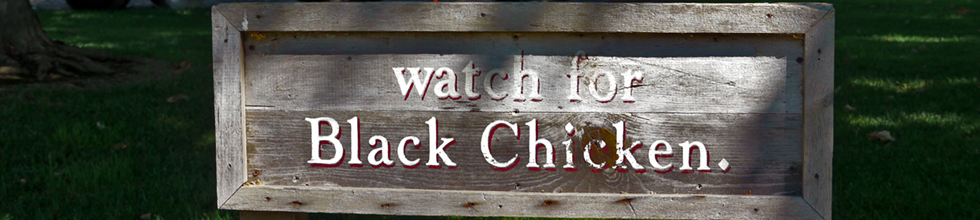
A few years ago I was at a dinner with several friends where we all had brought bottles of wine to share. One of the guests sitting next to me had brought a bottle of wine that was soon to become one of my favorites, Biale Black Chicken.
Never having heard of Black Chicken before, I had no preconceptions of how this wine should taste or what the bottle actually cost. Would it be good, great or fabulous? Well, my all-time favorite wine is always a red blend, something with Cabernet, Cab Franc, Merlot or Bordeaux. I like Merlots, Chiantis, Pinot Noirs and Sangiovese, but I love Cabernets and Zinfandels. When I first tasted Black Chicken I thought it was a blend of some kind, smooth and full of flavor. I was surprised to learn that it was a Zinfandel because it was so smooth and I was used to Zinfandels being a little more robust and spicy. I had taken the turn in the road to find the Black Chicken!
The road was not a straight one. Though I had lived not more than 15 minutes away from Black Chicken home winery all of my life and had even bought my annual Christmas tree from a farm right down the street, I’d never noticed the signs before. After my initial tasting of Black Chicken I was soon asking my friends Dennis and Connie Klimisch (the culprits who have made me a slave to this red wonder that night I first tasted it) to bring their Black Chicken whenever we were doing dinner. It was definitely a treat and I was having an affair with this dark red wonder.
A few years ago when we were planning the first issues of Local Happenings Magazine it was a no-brainer to have a wine article in each issue—our entire family and all of our friends are winos. We scheduled out the stories and within a couple of issues, wineries were asking us to feature them in our colorful publication. Then one day I was driving down Big Ranch Road in Napa to a client and I drove right by the Biale Winery sign that I had, of course, seen many times prior but never put it together that this is the Black Chicken winery. Simple and nondescript, you can pass right by and not know it, but when I saw it I yearned to go down the simple lane and see what I could see. One thing you should know is that you have to have an appointment to come to the tasting room. It is a small, intimate family winery that guards its privacy well. I drove out on to Big Ranch Road again and decided I needed to know the story of “Black Chicken.”
To tell the story we need to go back a little to a simpler time in winemaking history.
The Biale family, immigrants from Northern Italy, began growing Zinfandel grapes in Napa in the 1930’s. Biale Winery’s fruit was sold for bulk “jug” wine. Their small farm produced its share of prunes and walnuts along with eggs and vegetables.
OK, I’m still not getting “Black Chicken”! Patience Deanna.
I called up the tasting room manager, Austin Pitzer, and asked if I could come interview the family and do a story on the winery. I soon was sitting on the veranda of the tasting room overlooking the famous vines and the entire Napa Valley. It is amazing how close they are to town and yet so far. Austin and I got comfortable in very large rocking chairs and he told me that we were expecting the owners to join us. I was so close to knowing the story I could feel it. Little did I know that the story would come from a small, Italian matriarch, Clementina Biale. Clementina was wife to Aldo, original owner and the heart behind Black Chicken.
March 1954
“I had only just arrived from Italy, only two weeks had I been here and my husband would deliver eggs and wine from our farm. Customers would call in their orders and I answered the phone and took an order for ‘two dozen eggs and a black chicken.’ I told them we didn’t have black chickens, we were on a party line back then and then I asked my husband why they would order a black chicken when we didn’t have any. That’s how I found out that “Black Chicken” was the code word for a gallon of wine!”
This is just one of many stories I am sure of how Black Chicken and the Biale Winery came to be. Aldo Biale was an Italian immigrant living in Napa and had a small farm with his mother, which sold eggs and homemade wine to their fellow Italian neighbors.
Committed to the tradition of farming grapes, the Biales decided in 1991 to form a partnership with the goal of producing a world-class wine from the oldest Zinfandel vines on the ranch. The team: Al Perry, winemaking; Dave Pramuk, Marketing; Aldo and Bob Biale, farming. The wine, named after longtime farmer Aldo Biale, was called “Aldo’s Vineyard”.
The inaugural wine from “Aldo’s Vineyard” was a quantity of 400 cases produced from about eight acres of 60-year-old vines. Now, 12 years later, Biale is recognized internationally as being among California’s very finest producers of Zinfandel. This wine was recreated in 1999.
In 2009, the Black Chicken was recreated and there was a special bottling of “Bravo Aldo!” Aldo was the first to “fishspear”, a procedure that punches down the stock which allows you to blend the skins and stems without tearing. This creates deeper textures. This wine represents a tribute to Aldo.
Biale Wine grapes are grown on site and also a couple miles away. The Oak Knoll District has a very cool, long season. The Biale library consists of 14 different Zinfandels and four Petite Sirahs. (Petite Sirah grapes are related by history – but that’s another story!)
“Zinfandel grapes are unique in that no grape expresses itself from place to place like a Zinfandel. There is a big difference of the Zinfandel grape on different ranches right here in Napa.” Dave Pramuk adds.
We must remember that Napa is only 2% Zinfandel and accounts for only 4% of the world’s wines – that is how special Biale Winery is since they have the biggest Zinfandel of the valley.
Steve Hall, winemaker, started work after the original winemaker retired in 2008. He was already a fan and friend of the Biale Winery, so it was a compliment to be asked to join the team. A Cabernet winemaker by trade, the Biale Zinfandel wine was already in his blood.
“Zinfandel becomes more intense closer to Napa because they have thicker skins,” Hall says. “The best way to describe it is that Zin is more masculine in Napa and Cabernet is more feminine and soft here in the Valley. Cabernet has more regional flavors of different climates and Zinfandel has completely different status from ranch to ranch.”
We had set up a wine tasting to compare some of their famous Zinfandels. They poured a 2009 Black Chicken, 2009 Old Kraft Vineyard Zinfandel, 2009 Monte Rosso and 2009 Grande. I must say I was totally surprised to find out there were other Biale Wines that I actually liked as much, or better, than the Black Chicken. Could that be possible? (See sidebar for complete tasting notes and menu ideas.) It didn’t stop there though, when I went to their release party in September there were three or four more wines that I liked as well.
What really struck me was how in tune this winery and founders were to their home and neighboring ranches. I grew up in a very tight-knit family and this is how the Biale’s seemed to me with their arms embracing their neighboring wineries.
At Biale the estate vineyards comprise 30 percent of the winery’s wines. The majority of their wines are sourced from other family vineyards throughout Napa and Sonoma Valleys that share the same dedication to farming for quality that they do. Here are the ranches that are currently being used:
Aldo’s Vineyard. Oak Knoll District Estate. The old vines planted in 1937 on the Biale ranch in Napa produces their signature wine.
The Biale Ranch (a prime source for Black Chicken grapes). Oak Knoll District Estate. “Black Chicken” was for the old code name for Aldo’s secret Zinfandel, younger vines behind Aldo’s home.
Grande Vineyard. Napa. Planted in 1920 on Napa’s Silverado Trail, named for the Italian immigrant father of Dorothy Rossi and the grandfather of Tony Rossi – Theodosio Grande.
Stagecoach Vineyards. The Biale Block. Napa Valley. The four-acre Zinfandel site planted at this acclaimed mountain ranch above Oakville. Aldo’s and Old Crane clones on St. George rootstock.
Old Crane Ranch. St. Helena Appellation. Planted on west St. Helena’s gravel-rich soils in the 1880’s by Dr. Crane, a Napa Valley pioneer.
Old Kraft Vineyard. St. Helena Appellation. Planted in the 1890’s and rescued and restored by Bill and Margie Hart.
Varozza Vineyard. St. Helena Appellation. Jack Varozza continues a family tradition at this historic site along York Creek.
Falleri Vineyard. Calistoga Appelation. Sonja Spencer’s one acre planted by her grandmother in 1924 in the town of Calistoga near the hot springs.
Valsecchi Vineyard. Carneros Appellation. Century-old vines near the town of Sonoma once farmed by Ron Mick’s grandfather John Valsecchi.
Monte Rosso Vineyard. Sonoma Valley. Legendary mountain vineyard farmed by the Louis M. Martini family for three generations and now owned by the Gallo family.
Moore Vineyard. Napa Valley. Scenic and historic vineyard preserved by Bill Moore near Coombsville in Napa along Hagen Road first planted in 1905.
Rockpile Rocky Ridge Vineyard. Rockpile. The Rockpile appellation has quickly become renowned for its great Zinfandels. The fifth generation Mauritson family is leading the way.
Pagani Ranch Vineyard. Sonoma Valley. The Pagani Ranch in the Sonoma Valley is an iconic landmark for lovers of Zinfandel. The fruit from century old head-trained vines is prized by winemakers.
Biale is also home to Petite Sirah. With four Petite Sirahs on their order form, this is not just a passing fancy. They also produce red blends and Zinfandel using Petite Sirah. Here are the ranches for this varietal:
C.C. Ranch (Carpy Connolly Vineyard). Rutherford Appellation. This vineyard, in the heart of Rutherford, produces Petite Sirah with the substance, character and finesse this appellation has made famous.
Thomann Station Vineyard. St. Helena Appellation. St. Helena’s soils and sun are a perfect haven for Petite Sirah. Power and precision are the hallmarks of the Thomann Station vineyard.
Palisades Vineyard. Calistoga Appellation. Calistoga’s eastern bench is home to the great Palisades Vineyard where head-trained vines on an old creek bed produce Petite Sirah as dramatic as the setting.
When visiting Biale Winery, wine will not be the only thing you get a chance to buy. Thanks to Clementina Biale you can also own your very own Black Chicken apron. I bought two, one for my sister-in-law, Regina and the other for my mother, Genevieve. Both were received with genuine admiration for the handiwork and bright vivid colors. These are a must for the cook and/or gourmet in your life.
Biale is a genuine family winery that makes you feel right at home and special as soon as you get there. The tasting room is open only by appointment since it is an intimate winery, so call for your tasting at (707) 257-7555. The winery is located at 4038 Big Ranch Road in Napa.
Bob Biale said it best when describing Biale Winery, “We have always considered ourselves part winery, part farming and part historic preservation society.”
Wine Tasting – The Wines:
2009 Black Chicken Zinfandel – Food recommendation from Bob Biale: “Anything Gorgonzola!”
2009 Old Kraft Vineyard Zinfandel – Food recommendation from Dave Pramuk: Grilled Lamb or very rare beef.
2009 Monte Rosso Vineyard Zinfandel – Food recommendation from Steve Hall: Grilled Italian sausages, zucchini or eggplant.
2009 Grande Vineyard Zinfandel – Food recommendation from Bob Biale: Lamb Stew with polenta.
Taster #1 – He rated the 2009 Grande as his favorite, The Old Kraft was his second choice, Black Chicken was his third choice and the Monte Rosso coming in fourth.
Taster #2 – She rated the 2009 Old Kraft Vineyard as her favorite, the Grande came in second, Black Chicken came in third and Monte Rosso was fourth.
Taster #3 – He rated the Black Chicken as his #1 favorite, the Kraft was his second choice, Grande came in third and the Monte Rosso was fourth.
Taster #4 – She rated the Old Kraft as her #1 favorite, Black Chicken was her second choice, Grande was third and Monte Rosso was fourth.
It should be noted that all of these wines were exceptional – but we were forced to rate them!
Foods that love Biale Zinfandel:
Polenta with Rabbit – Bob Biale
Roast on BBQ – Steve Hall
Rack of Lamb – Dave Pramuk
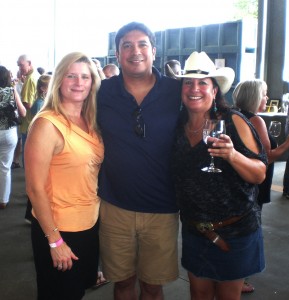 Deanna Baillie loves good wine and great conversation – but her family and Ben, her Australian Shepherd, always come first. Here she shares a glass of wine with Regina and Robert at the Biali Family Winery Release Party.
Real Estate: 23’s a charm? Could this be my final move?
23’s a charm? Could this be my final move? I sit down, pen in hand, to list the number of residences in which I’ve dwelled during my half-century lifetime. My list is based on what I’ve been told of the pre-kindergarten years, what I very vaguely recall of the following five years, and what I can distinctly remember from age ten and on. I come up with 23 – half of these being prior to high school graduation and thus, beyond my control. The other half, no doubt, the result that which I’d merely become accustomed. Up until I bore my children, I thought that packing all my worldly belongings into large boxes was just a regular chore, like doing the laundry or clearing the table.
As a minor, led by my parents to one residence after another, it never occurred to me that children might live in just one home before leaving the nest. The idea of residential permanence simply didn’t exist for me. The only consistent thing in my young life was always being the “new girl”. Yet, I thrived. I even recall the most painful of all our moves (in the middle of high school) with fondness. Those two years at Skyline High School are when I fell in love with Oakland.
But now, many years and many moves later, I find myself firmly ensconced in my Bay Area suburb, living happily for the past 13 years in our rancher-turned-craftsman home. My kids started, and will end, their public school education in Lafayette. They have friends with whom I have no doubt they will know for the rest of their lives. The fields and swimming pools in the area are alive with memories of their various sports endeavors. They are grounded here and will forever have a history in this one place. I can’t really relate.
My frequent childhood moves were precipitated, and necessitated, by my dad’s job. We moved mostly during the summers, only once during the middle of a school year. We once moved to a different home in the same town, which entailed a school change. My two brothers and I thought nothing of it. It was all we knew. I found myself actually welcoming these new starts. A fight with a best friend meant nothing to me – I knew I’d be moving away shortly anyhow. Everyone in our family was adept at packing our belongings, and equally adept at purging. To this day, I have a hard time holding onto anything that has outgrown its usefulness. (I’m still ashamed that I gave away the outfit worn by my first born when he returned from the hospital.)
Reality settled in after our last family move – the summer between my sophomore and junior years of high school. I was no longer the malleable young girl who eagerly entered into each new adventure. I spent the first trimester in tears, missing friends and feeling profoundly lonely. I finally became aware that it was not standard practice to uproot and move during the middle of one of the most tumultuous periods of life. I tried to maintain my previous friendships, but in a pre-cyber world without texting, email or Skype, it took a great deal of effort.
Despite this difficult high school experience, I couldn’t get the rolling stone out of my system. I moved five times during my four years in college. It had become habit. I blew through seven more abodes between graduation and marrying my husband, whose big brown eyes were the initial attractant. Psychologists might surmise that the underlying allure was the stability he represented. Born and raised in the San Francisco home in which his parents still live, Dan had told me early-on during our dating that he had no intention of ever leaving the Bay Area. I was intrigued. Who ever heard of such perpetuity?
During our 21 years of marriage, we have lived in only three homes – and our children have only known our current one. I’ve never lived in one place for so long, and it has taken some meditation and deep breathing to be comfortable with the concept of a future in this one town and one home. Admittedly, the value of community longevity has often been lost on me. But I’m learning. The girl who once simply turned and walked away from misunderstandings has finally learned the value of real friendships, and the need to nurture them. I’ve learned to not pass judgment, and I’ve learned to avoid gossip. I’ve learned what it’s like to really become vested in a community and to be an active participant in civic and school affairs. And I’ve learned the value of providing roots to my two boys.
A couple of years ago, we had the opportunity to purchase a different home in our same town. We had always admired this particular home’s mature oaks that were visible from the bike path – oaks, that my astute son pointed out, left prickly leaves on the huge lawn. “Why have a big backyard if you can’t run around barefoot?” he asked. Prickly oak leaves-be-damned, and with a sure-buyer ready to pounce on our home, we were poised to sign the paperwork when my younger son, eyes filled with tears, asked, “Why are we moving? I love our house; I love my room; I love our street!”
As a child, it had never occurred to me to voice such opinions. It was revelatory for me to hear my own child’s plea for permanence. In that moment, I wanted to provide him the option that had never been available to me – the option to plant his roots a little deeper. At the eleventh hour, we backed out and did not make an offer.
My lack of attachment to any one residential area equals a fuzzy memory. Anything prior to age ten is a blur. I can remember a few faces and names, but I can’t recall details. I love that my boys’ roots allow them to easily recount all of their grade school teachers. I love that the kids who were in their kindergarten class are now in their high school classes. I love that our daily drive past the little league field sparks my son’s homerun memory. And I love that my boys are, and always will be, the “cool big kids” to the three little cuties that live next door.
During my childhood moves, we never looked back. It was always about moving forward. The constant packing and resulting Goodwill giveaways didn’t allow for much reflection. My pack-rat husband and I, with my in-bred purge mentality, have managed to strike a balance. Through him, I’ve learned the value of one’s own history and that my boys just might be interested some day in holding their first and much-worn and loved teddy bears. The favored, and practically antique, children’s books which continue to fill the shelves of my in-law’s home, and which were a rich source of entertainment for my own boys, inspire me when the spring cleaning bug sets in. Through me, my husband has learned that less “stuff” means fewer headaches and that it is okay to part with the sentimental moth-eaten sweater that served no purpose but to gather dust.
So, here I am at dwelling number 23, and even though 23 is my son’s lucky number, it is still a bit early to say whether our grandchildren will come to this home to pull their parents’ favorite childhood books from the shelf. There might be one more move left in us, but for now I’m okay with having gathered a little moss. It feels right for now.
By Fran Miller – Fran is a freelance writer and regular contributor to Lafayette, Alamo and Danville Today newspapers. She lives in Lafayette with her husband, Dan and two teenaged boys, Aaron and Ben.
In the 1969 Woody Allen movie Take the Money and Run the main character, Virgil Starkwell, played by Allen, is sent to a maximum-security prison for a failed bank robbery. The narrator describes the brutal conditions in prison as follows:
“The discipline is harsh and the men are not even allowed to faint without written permission.” Even so, Virgil complains and is sent to the sweatbox with an insurance salesman, who represents the Ajax and Widget Insurance Company.
Insurance, while a necessary fixture of modern life, is often viewed with a certain eye-rolling cynicism as something you’ve got to do whether you like it or not. It is the butt of many jokes because it is, let’s face it, boring, confusing and at times frustrating. There is no escape from the stereotypical minions of balding grey-suited drones, enthusiastically proffering folders containing the answers to our fears and insecurities for a price. And yet, no matter how much is explained, sections and sub-sections of policy documents highlighted, paragraph’s initialed, payments deducted from paychecks and so on, there is still a feeling of slight uneasiness or even outright revulsion … like when mother made you eat your peas – every last one.
Ok. Try to clear canned peas from your collective memory and let’s go down the rabbit hole of insurance history with a visit to Babylonia in the year 1750 B.C. when one of the earliest mentions of insurance was described in the Code of Hammurabi. Mediterranean sailing merchants of the era often procured a loan to fund a shipping venture. For an additional fee, the lender would agree to forgive the loan should the shipment be lost at sea or stolen by pirates. Hammurabi does not speak about the penalty for fraud … you know … if maybe you had a brother-in-law with a “pirate-looking” ship or something. But considering he is the guy of “an eye for an eye, a tooth for a tooth” fame, let’s not even go there. Even before the Babylonians, in the second and third centuries B.C., the Chinese would limit their risk by distributing goods among as many boats as possible when traversing rapids with merchandise. While this early Chinese approach was not insurance in the modern sense, it does illustrate the motivation of people throughout the ages to mitigate risk in some way.
Administered insurance was practiced in ancient Persia, the first recorded and formalized form of government. The heads of different communities would present gifts to the king and court to curry favor and provide a combined form of insurance and credit. The court scribe recorded the amount of the gift, and if that person got into trouble, or needed money to build a structure or other project for their community, the king and court would help them out in an amount as much as twice the offering. This transaction was a form of insurance, but it was also mixed with some aspects of a banking transaction. And while insurance is no longer directly integrated with finance, many modern insurance companies do in fact finance commercial ventures, or in some cases, offer investments to their clients. It was not until some time later, however, that the insurance policy as a document resembling what we have today came into being.
The city of Genoa, Italy is largely considered the birthplace of the modern insurance policy. The first known document that could be considered a true “insurance policy” was signed in 1347. The document of insurance was signed at the bottom by several moneyed gentry who agreed to guarantee against loss in exchange for a monetary consideration. This is where the term underwriter comes from. Get it? They wrote their names under the body of the document! I wonder if insurance agents in Genoa were much different from today’s breed. I imagine they had more swanky hats though. Oh, and Christopher Columbus is a native son of Genoa. Do you suppose he had a rider for “uncharted waters”? Probably not. Although Columbus explored much of the New World, it does not seem that he brought the concept with him for trade with the Indians. Blankets and beads, but no fire, life or “lame horse” policies.
Insurance grew as an industry in England, flourishing under the auspices of Edward Lloyd, a coffee shop owner in late 17th century London. Ship owners and other merchants and businessman would meet at Lloyd’s and negotiate the terms of “policies of insurance.” With the growth of Britain as a marine trade and military power, the insurance industry continued to grow. Today, Lloyd’s of London is one of the largest insurance markets in the world, specializing in marine and unusual policies.
Traversing the Atlantic from England to the colonies, insurance came to America. Even founding father Benjamin Franklin got into the act by founding the Philadelphia Contributionship for the Insurance of Houses from Loss by Fire, which is the oldest property insurance company in the United States. The company even sent representatives to advise building owners against hazards and considered risks in much the same way as modern insurers.
Now What?
So now that you’re an expert (or nearly) on the genesis and birth of modern insurance, you probably don’t feel any better. Say the word “insurance agent” quietly to yourself. Go ahead. You can do it. There it is … that slight revulsion. You might say “dentist” and get a similar feeling of slight dread. But both are needed in modern life. I mean seriously, who wants to end up toothless and broke?
What you need when navigating the world of insurance is someone who will take away the chaos and frustration. (No, not Christopher Columbus.)
When I got this assignment to write about insurance I was sent to the office of State Farm Agent Ann Buringrud. Upon first walking in, I immediately noticed a homey feel. It is a small office with three employees, plus Ann.
Ann greeted me with a smile from behind her desk. Of course, I felt compelled to seek anecdotal tales of wild and swashbuckling exploits from the world of insurance. I tried every angle: Any cases of fraud you uncovered during your career? Exploits? Tales of rogue insurance agents roaming the countryside? Weird policies to cover strange activities? There must be something wild and dark!
Ann looked at me, smiling again, paused and answered calmly: “Not really.”
I sat for a moment, slightly puzzled, wondering what I was going to write about. There must be something. Ann explained that she has been in the business for over 30 years and that she mostly sells home and auto policies: The bread and butter.
“So Ann, how many policies do you sell in a month?” I asked, trying to take the statistical tact.
“About 40. Some agents sell a lot more, but I guess I’ve gotten a bit lazy.”
I thought to myself, What am I going to write about? This is going to be really unexciting.
And then it hit me. Boring is good in an insurance agent. You don’t want a wild and radical insurance agent. And that comment about getting lazy is good too, you don’t want a pushy insurance agent either. You don’t want someone like the guy from the Ajax and Widget Insurance Company Woody Allen got locked in with.
So I shifted out of the magazine interviewer mode and just started to yak with Ann, her employees Teresa and Karen, and Teresa’s son, D.J. who was helping out in the office and considering getting his license.
A couple of customers came in and each was greeted by name. They even looked pleased to be there on some level … like they were dropping in on friends. The folks working here actually like dealing with the public. They take pride in customer service. They swore it to me and I believe them. Even though that sort of thing is getting old fashioned, the demeanor of the customers seems to verify it.
Bottom line, these are nice, down to earth folks who actually want to be helpful without being pushy.
Pretty soon we were all laughing together. I think they were a little flattered by the attention, but I get the impression that Ann and her crew have a knack for setting folks at ease.
As I was preparing to leave, Ann perked up. “Do you want an atlas?” she asked.
Huh?
“An atlas. Here they’re nice. I guess a lot of people look things up on the internet, but it’s nice to have anyhow,” she said, holding forward an oversized glossy publication with the State Farm logo on it.
The offices of Ann Buringrud are located at 701 Southampton Road, Suite 101, Benicia, CA 94510
She has been there for over 30 years. The phone number is: (707) 746-0350 or (707) 746-0351. The office hours are Monday through Friday, 8:30 AM – 5:30 PM.
I for one, intend to give Ann a shot the next time I need a quote. A visit to her office is no sweatbox treatment.

By Marc Garman – Marc is a watch repairer and videographer who lives in Vallejo, CA. He grew up crewing on and racing sailboats in upstate New York, mostly on the Hudson River.
[weaver_extra_menu menu=’featuresMenu’ style=’menu-horizontal’ width=’100%’ css=’menu-horizontal’]
From a friend . . .
October is upon us and we are entering into fall. Soon the holiday season and shopping will start (actually I think holiday shopping starts as soon as they clear up the back to school signs in late August!) and 2011 will soon be coming to a close. Another end is upon us too; this issue marks the end of our second year! It has all rolled by so quickly. Ends also mean starts, and we are looking forward to a wonderful 2012 and our third year. We have rolled out our Local Happenings Awards which will be in our February/March issue. Make sure to go online to LocalHappeningsMagazine.com and vote/nominate your favorite business today! You will be able to vote until the end of the year, so make sure to get online ASAP to let us know who should be the winners – and remember that you can vote EVERY DAY!!
I always enjoy this time of year in the San Francisco Bay Area as our summer finally arrives and with our ever-present cool breeze, we can still enjoy our wonderful weather well into November. I just love sitting outside on a warm, if not hot, afternoon in late October and early November while I think of all those poor souls in the upper Midwest and New England states who are already using their snow blowers and flannel sheets. Oh well, we will just have to suffer with our great weather! Sadly our nephew Christopher, his wife Megan and their son Jack have decided to move from Napa to Oklahoma and they have just embarked on their new adventure. So, they will be partaking in some of that bitter cold that they experience out East. Hopefully they will all stay warm and safe in their new home.
Our weather, however, is still so wonderful, festivals always pick up during this time and this year is no different. There is a myriad of great activities to enjoy around the Bay Area so make sure to check out the calendar both here in the magazine as well as online to make sure you have the latest information about all that is going on around us. There are Oktoberfests, Halloween and holiday events to fill every weekend, come to think of it there always a HUGE amount of events that occur almost every day (which is exactly why we started the magazine!!). Thanksgiving is creeping up fast too so make sure to start planning your menus now – we have even put together some suggestions for you for your holiday (and everyday) parties on page 54, so make sure to check that out as well.
In the spirit of Thanksgiving we would like to take this time to thank our very faithful advertisers for all of their support, and all of our readers who are the reason that we continue to grow with each issue! We couldn’t do it without your support and encouragement. Keep the emails and letters coming in with your suggestions and ideas and we will try to stay focused on making the magazine the best it can be. We are now in 13 cities and 3 counties (with a few more cities being touched with each issue) and this would not have been able to happen without all of you.
Enjoy the magazine and remember to enjoy all that we have here in the most fabulous part of the country. (If we do so say ourselves!) So, get out and enjoy all of the Local Happenings and let us help you discover some new ones as well … cheers!
Happy Birthday to Christopher, Clara, Caroline, Lee, Rory, Michelle, Jeannie, Connie, Lissa and Ben! Happy Anniversary to Mom and Dad on your 58 years together!
Cheers,
 Deanna Baillie

& Robert Briseno
[weaver_extra_menu menu=’featuresMenu’ style=’menu-horizontal’ width=’100%’ css=’menu-horizontal’]
Art, Crafts and Kids: Fall Fun in the East Bay
The East Bay is always bustling with activity, and this fall is no exception. Young, old and everyone in between will have plenty of opportunities to get out of the house and have some fun. Whether you like art, crafts or time with the kids, there is a local happening you won’t want to miss.
Art … William Keith Exhibition, Saint Mary’s College Museum of Art, October 2 through December 18
It doesn’t take a trek through the tunnel under the Bay and into the city to see fine art up close. Contra Costa County has its own fine art destination – Saint Mary’s College Museum of Art. Nestled in the Moraga hills at the heart of the campus, the museum is one of the area’s cultural gems. The fall exhibit, of some 145 works by Western landscape painter William Keith, is sure to connect with East Bay locals. Keith was a leading artist in San Francisco at the end of the 19th century and a master of the California panorama. The exhibit, which runs from October 2nd through December 18th, is part of a 100-year anniversary celebration of the Saint Mary’s College Collection of his artwork.
Much of Keith’s artwork reflects his love of nature, the outdoors and California. He was a longtime friend and camping companion of famed naturalist John Muir. Both Scotsmen, the two kindred souls shared a passion for exploring and documenting the Western landscape – Muir capturing it in words on paper and Keith employing paint on canvas. Muir greatly admired Keith’s work and called him the poet painter, referring to the evocative, lyrical quality of his art.
Brother Fidelis Cornelius, a professor at Saint Mary’s College, first saw Keith’s artwork while visiting John Muir at his Martinez home in 1908. Cornelius, still a young graduate student at the time, was immediately impressed. “The Muir ideals of truth, character and grandeur of nature, especially in the mountains, became Keith’s aim,” said Cornelius, who went on to devote his professional life to the study of Keith’s art and to establish Saint Mary’s as a permanent home and exhibit space for his work.
The Keith exhibit coincides with the opening of the Saint Mary’s College Museum of Art, part of a recent expansion project that incorporates the College’s existing Hearst and Keith Galleries into the new museum and adds 50% more exhibit space. Two new rooms in the museum will display black and white fine art photographs by Stanley Truman and an exhibit of ethnic masks, costumes and jewelry. While there is much to see, the museum is very accessible and won’t overwhelm.
Saint Mary’s College Museum of Art is open Wednesday through Sunday from 11:00 a.m. to 4:30 p.m. Admission is $5 for adults and free to members and students. Several special events and lectures are scheduled throughout the Keith exhibit. For more information, go to www.stmarys-ca.edu/museum.
Crafts … Danville Fall Crafts Festival, October 22-23
Get a jump on the holiday buying season at the 20th annual Danville Fall Crafts Festival. Take a stroll down Hartz Avenue in downtown Danville and choose from an array of artisan crafts and unique works by over 200 artists from across the United States. Open Saturday and Sunday October 22nd and 23rd from 10:00 a.m. to 5:00 p.m. each day, the festival offers fun for the entire family.
The weekend kicks off with a Halloween costume parade on Saturday at 10 a.m. starting at Hartz Avenue and School Street. The local dance troupe Next Step will perform later that day at 1:30 p.m. New to the festival this year will be the Avenue of the Giants, a must-see exhibit of large metal sculptures by artists Phillip and Chad Glasshoff. This artistic duo’s whimsical works will be on display at Prospect and Hartz avenues. In addition to the endless art, festivalgoers will be entertained by street-corner musicians and sustained by an abundance of fine food, wine and microbrews. Hosted by the Danville Area Chamber of Commerce and the Town of Danville, admission to the festival is free and parking limitations will not be enforced during the weekend.
And Kids…
Walnut Creek is the place to be with kids from Halloween through the winter holidays. Treats, trains, snow, ice and a parade of lights – there are several fun outings for families over the next two months.
Halloween, October 28 and 31
The kids can get a jumpstart on trick-or-treating at the Walnut Creek Downtown Business Association’s Halloween event on Friday, October 28th. From 2:00 p.m. to 6:00 p.m. children can parade through the streets in costume and collect treats from local retailers on the north side of Mt. Diablo Boulevard between California Boulevard and Broadway and along the cross streets. Participating merchants will have a balloon out front to signal goodies are inside.
Then, on October 31st, Broadway Plaza Shopping Center in Walnut Creek hosts a Halloween Community Trick-or-Treat for kids of all ages from 5:30 p.m. to 7:00 p.m. Children and parents can walk South Main Street and Mt. Diablo Boulevard collecting candy from the many merchants. As many as 1,500 people are expected to join in on the fun in Broadway Plaza, which has provided a safe, fun place for families to trick-or-treat for over a decade.
Walnut Creek on Ice starts November 11
The ice skating rink will be back in action in Civic Park (located at Civic Drive and North Broadway) starting November 11th for young and old to test their skills by staying erect on two blades. Presented by the Walnut Creek Chamber of Commerce and Visitors Bureau and the Downtown Business Association the ice rink will be open daily from mid-morning through the evening hours until mid-January, 2012. Group and private ice skating lessons will be offered, and the rink can be rented for private parties during select times. Skate rental is included in the admission price. For more information on parking and a convenient place for skater drop off and pick up go to www.iceskatewalnutcreek.com.
Walnut Creek Model Railroad Society Holiday Shows, starts November 18
Steam trains, diesel locomotives, electric street cars and much more will be on display at the Walnut Creek Model Railroad Society, which hosts several holiday shows during the last two weeks of November. The 1,800 sq. ft. display is one of the largest model railroads in California. The trains traverse over 4,000 feet of hand-laid track through mountainous terrain. And, once an hour, the sun goes down and there is a thunderstorm.
The Model Railroad Society is located at 2751 Buena Vista Avenue off Geary Avenue in Larkey Park in Walnut Creek. Show dates and times: Friday 11/18, 8:00 p.m. to 10:00 p.m.; Saturday and Sunday 11/19-20, 11:00 a.m. to 6:00 p.m.; Friday 11/25, 2:00 p.m. to 6:00 p.m.; and Saturday and Sunday 11/26-27, 11:00 a.m. to 6:00 p.m. Admission is $3 for adults, $2 for seniors and kids 6 to 12 years old, and children under six years of age are free. For more information go to www.wcmrs.org.
Holiday Parade of Lights, December 1
Head back to Broadway Plaza in Walnut Creek on Thursday, December 1st to celebrate the start of the holiday season with the annual parade of lights and community tree lighting. Retailers will be distributing goodies. Plus there will be face painting, carriage rides, and the forecast calls for “snow”. The highlight of the evening will be a visit from Santa Claus. The Merchants’ Open House starts at 6:00 p.m. and the parade with Santa starts at 7:00 p.m.
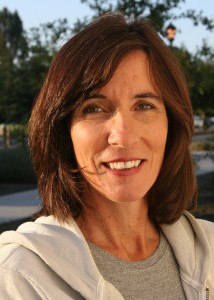
By Andrea Firth – Andrea is a freelance writer based in Moraga, CA. She likes to spend her free time running, hiking, golfing, traveling … and occasionally shopping.